
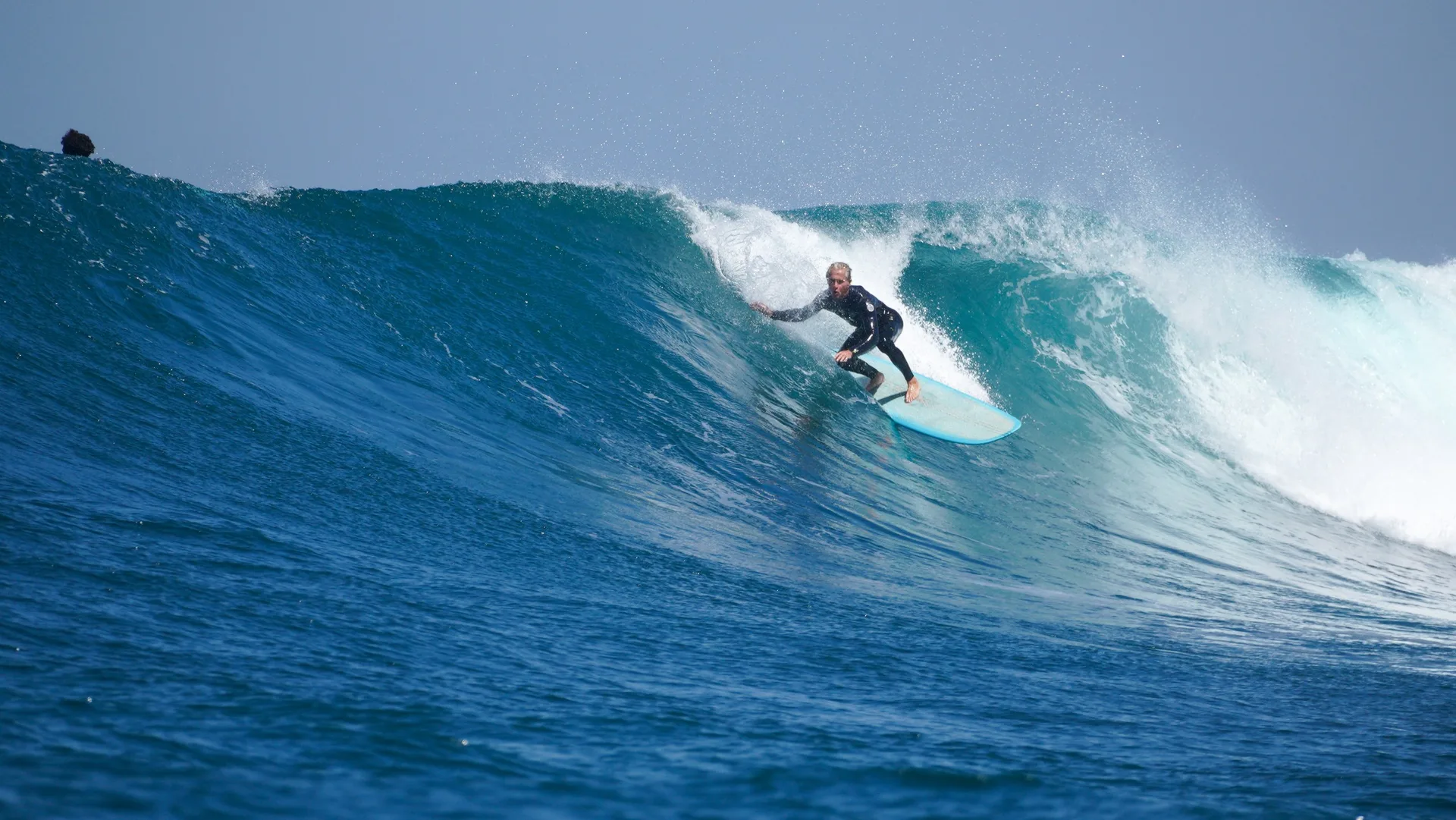
If you are planning a surf trip to Senegal, one decision shapes the whole experience before you even wax a board: do you stay on Ngor Island, or on the Dakar mainland? It sounds like a simple accommodation choice, but in practice it changes your relationship with the waves, your daily rhythm, and how much time you spend surfing versus organizing your life around surfing.
For most surfers, especially those coming to score the classic setups around Ngor, the answer becomes obvious once you have done both. Dakar mainland gives you city convenience and a wider choice of rooms. Ngor Island gives you what surfers usually travel for in the first place: immediate access to the ocean, a tighter surf routine, and a sense that the day revolves around the tide instead of traffic.
Why this choice matters more in Dakar than in other surf cities
In some surf destinations, staying ten or fifteen minutes from the beach is no big deal. In Dakar, the difference is more pronounced because the best-known breaks around Ngor are tied to a particular geography. Ngor Island sits about 400 meters off the coast, reached by a quick five-minute bateau ride from Ngor beach on the mainland. That tiny crossing creates two very different surf-trip realities.
On one side, you have mainland Dakar: busy streets, taxis, restaurants, nightlife, urban energy, and lots of movement. On the other, you have Ngor Island: quieter mornings, sea air everywhere, boards close at hand, and the feeling that the surf is part of the place rather than a day trip from it.
If your focus keyword is literally where to stay surfing Dakar, this is the practical heart of the matter. You are not just choosing a bed. You are choosing whether your trip feels like a city holiday with surfing added in, or a surf trip with Dakar close enough when you want it.
In Dakar, distance is measured less in kilometers than in friction.
Staying on Ngor Island: the surf-first option
Ngor Island is the obvious base if your main priority is surfing consistently and being close to the breaks. It is small, easy to understand quickly, and deeply tied to the local surf culture. Once you arrive, the rhythm changes. You notice the tides. You watch the wind. You check the lineup with your coffee. You hear boards moving before breakfast.
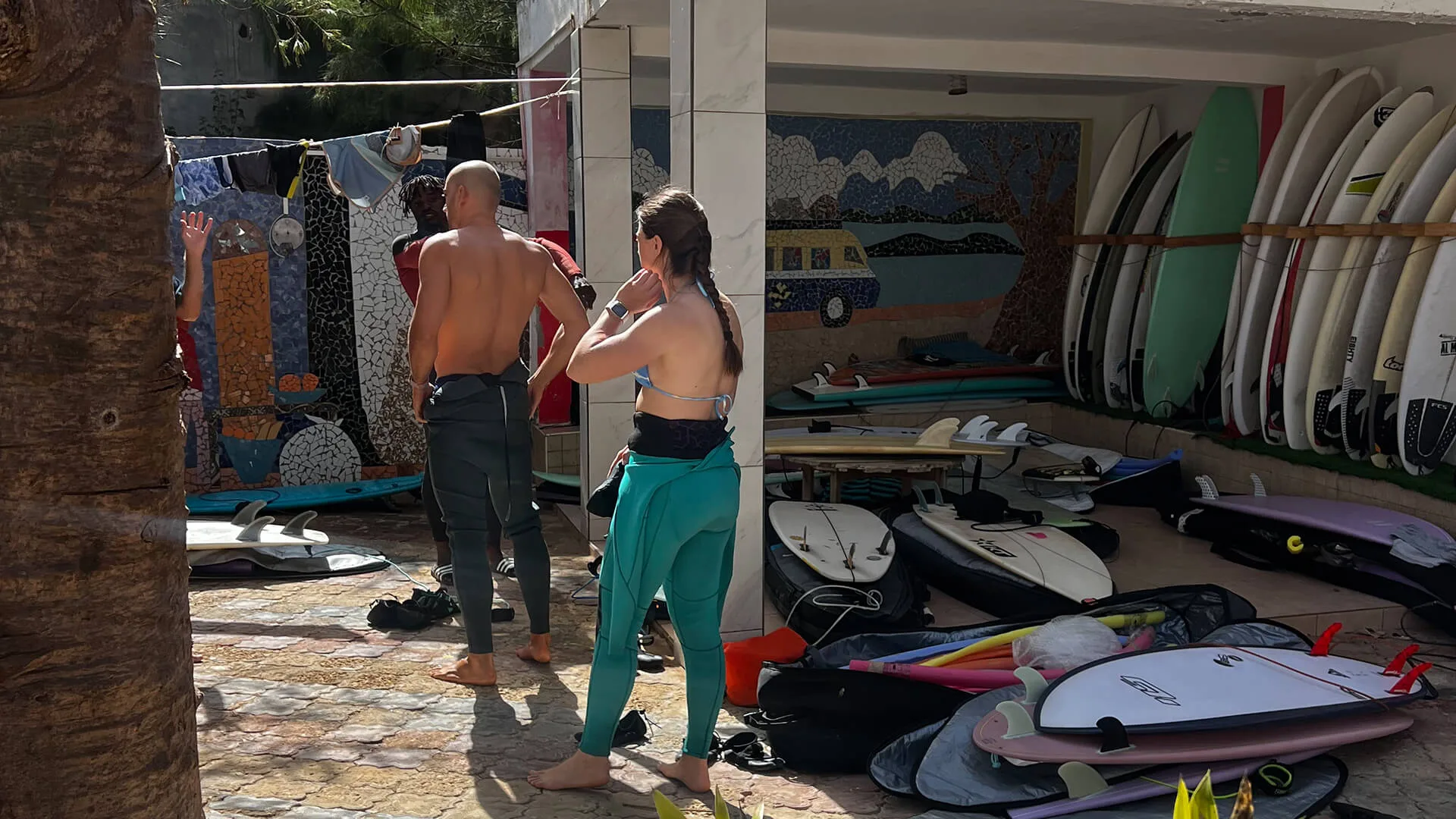
Ngor Surfcamp Teranga is based here, on Ngor Island, and that matters because it puts you where the classic local routine actually happens. The camp includes private rooms, shared rooms, and dorm options, plus breakfast and dinner, surf guiding, theory sessions, and a pool. For surfers who want structure without stiffness, that setup removes a lot of small travel headaches.
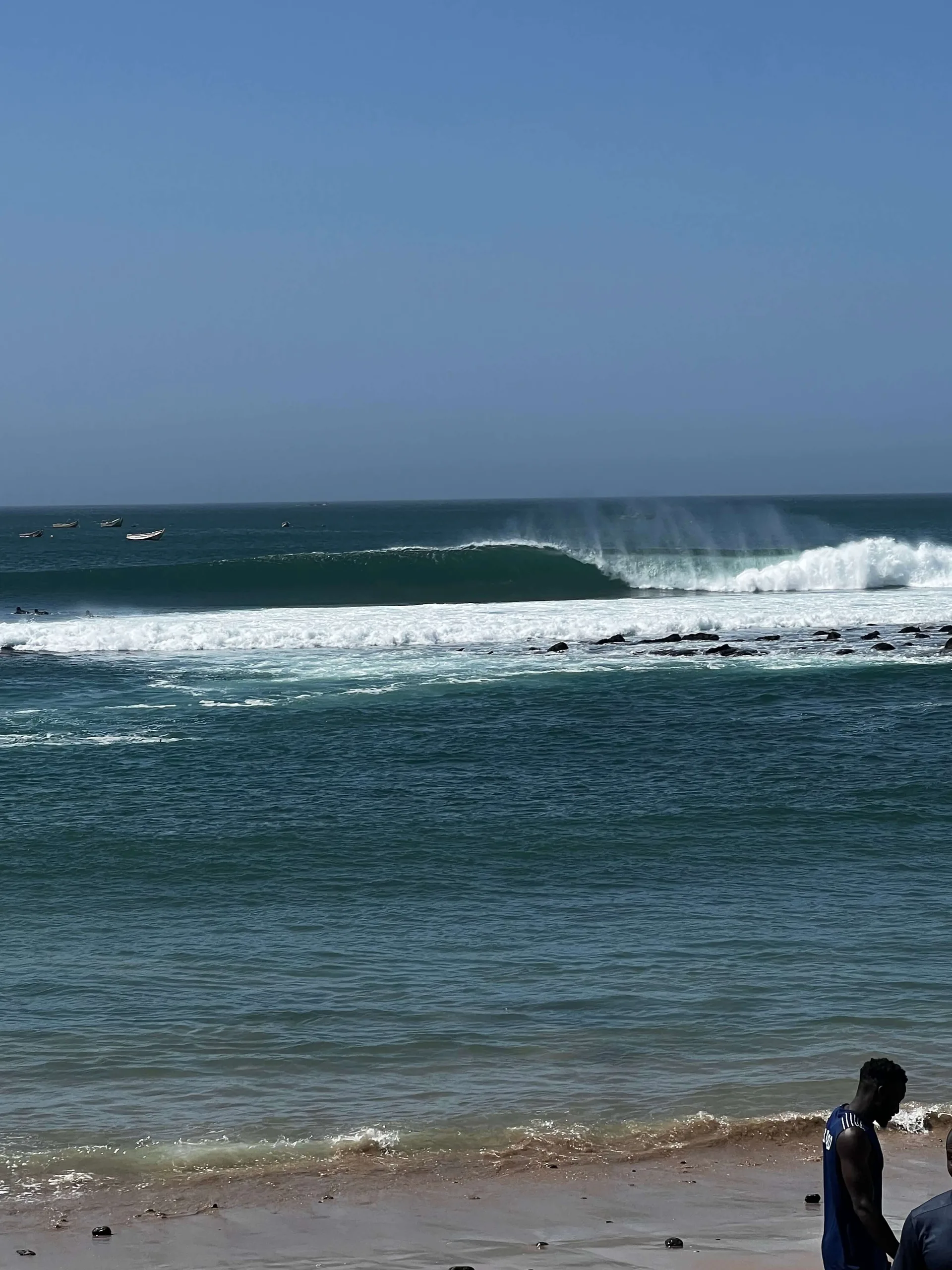
The biggest advantage is wave proximity. The two names visitors hear first are Ngor Right and Ngor Left. Ngor Right is the more famous, performance-oriented reef break: fast, hollow, and often best appreciated by confident intermediates through advanced surfers. Ngor Left is mellower and longer, with a more forgiving shape on the right swell, making it more approachable for a wider range of surfers.
Staying on the island means those waves are not abstract spots on a map. They become part of your daily decision-making. You can be more responsive to conditions. If the tide is lining up, you are already close. If a session opens unexpectedly, you are not battling the mainland to get there.

Ngor Island sits just 400m off Dakar, and the bateau crossing from Ngor beach usually takes about five minutes.
That convenience has an effect on the number and quality of sessions you get. Surfers staying in the city often imagine they will surf dawn and late afternoon every day. In reality, city logistics, transport timing, meals, and simple inertia often eat into those windows. On the island, it is much easier to slide into a second surf or paddle out when the light and wind improve.
There is also an atmosphere difference that is hard to fake. Ngor Island feels separated from the city without being remote. You are still close to Dakar, but the moment you cross by bateau, the sensory load changes. Less traffic noise, more water movement. Less rushing, more watching the ocean. That is not luxury marketing language; it is the practical truth of staying somewhere with a natural buffer from the city.
For people coming to improve, island accommodation also supports better surf progression. At Ngor Surfcamp Teranga, guided sessions, theory, optional surf coaching, and video analysis create continuity between what you surfed in the morning and what you understand by dinner. That kind of loop is much harder to create when everyone disappears back into different parts of the city.
You can learn more about the island setup through Ngor Island life and how the camp works day to day at the surf house.
Staying on mainland Dakar: convenience, variety, and city energy
Mainland Dakar appeals to a different type of traveler. If you want a broader range of accommodation prices, easier access to city restaurants, nightlife, embassies, coworking spots, and urban life beyond surfing, then staying on the mainland can make sense.
There is no denying the practical advantages. You have more hotels, apartments, guesthouses, and different neighborhoods to choose from. If you are traveling with non-surfers, or mixing business with a surf trip, mainland Dakar is easier to explain and easier to organize. Airport arrivals can feel simpler too, because you can just drive straight to your accommodation rather than time a transfer and crossing.
From the mainland, you can still surf Ngor. You can still reach the beach, take a bateau, and make it happen. Many surfers do exactly that. But you need to be honest about your temperament. If you are the kind of traveler who does not mind planning each session, coordinating gear, and building in travel margins, city stays are workable. If small bits of friction drain your motivation, that same plan starts to feel heavy by day three.
The mainland can also be better if surfing is only one part of your Dakar trip. Maybe you want museums, meetings, nightlife, and surfing when the conditions line up. In that case, staying in the city gives you more flexibility. You can surf selectively rather than shape the whole trip around the swell.
What mainland Dakar usually lacks is immersion. You are near the surf scene, but not inside it in the same way. You commute into the surf day instead of waking up in it.
Proximity to the waves: where the island wins clearly
When surfers ask where to stay surfing Dakar, what they often mean is: where will I get the most water time with the least hassle? On that question, Ngor Island is the stronger answer.
The reason is not just raw distance. It is timing. Surfing in Dakar can reward responsiveness. Wind shifts, tide windows, crowd changes, and swell pulses all matter. The closer you are, the more likely you are to paddle out at the right moment rather than merely at the time you had planned.
Ngor Right especially is a wave that deserves proper timing and local understanding. It is a reef break with speed and hollow sections, and it is not a place where you want to arrive flustered or late and simply throw yourself in. Staying on the island allows for a more measured approach. You can watch, ask questions, enter with better information, and choose your session with more confidence.
Ngor Left, being mellower and longer, gives a broader range of surfers a chance to enjoy the zone. But even there, proximity helps. More chances to surf generally means more chances to surf when it is clean.

If your main goal is to maximize wave count during a one-week trip, stay as close to the break as possible and treat city visits as side missions, not the other way around.
This is where a licensed camp has a real advantage. Ngor Surfcamp Teranga is FSS licensed, which is important not just as a badge, but as a sign that you are surfing with an established, recognized operation connected to the local ecosystem. Add surf guiding and optional coaching, and the gap between “I know where the wave is” and “I know how to surf it well” becomes much smaller.
Daily logistics: the invisible factor most surfers underestimate
People often compare destinations by room price alone. They forget to price in effort. Daily logistics are where mainland stays quietly become more expensive in time and energy, even if the room rate looks lower at first glance.
On Ngor Island, the routine is simple. Wake up, check conditions, eat, surf, recover, review, repeat. With breakfast and dinner included at the camp, much of the day already makes sense. If you need board rental, it is available for €15 per day. Wetsuit rental is €5 per day. Extras like airport transfer, lunch, coaching, and video analysis can be added as needed. That kind of setup makes budgeting and planning cleaner.
On the mainland, every surf day tends to involve more moving pieces. How are you getting to Ngor beach? When are you crossing? Are you carrying your own equipment through the city? What happens if the conditions change while you are elsewhere? None of these are impossible. They are just cumulative.
For experienced independent travelers, those extra steps may feel normal. For surfers on limited vacation time, they often become the main reason sessions are missed.
The easiest surf trip is usually the one where your hardest decision is whether to paddle out now or in twenty minutes.
Atmosphere: island calm versus city pulse
This category comes down to personality, but the difference is striking. Ngor Island has a self-contained feeling. Even when there is activity, it remains intimate. You see the same faces, share reports naturally, and settle into a slower cadence. The Atlantic is visually present almost all the time. For many surfers, that ambient calm improves the whole trip.
Mainland Dakar is energetic, social, and stimulating. That can be a huge plus if you thrive on movement. There are more options for eating out, more neighborhoods to explore, and more of Senegal's urban culture immediately around you. If your ideal trip includes a lot of non-surf exploration, the mainland may suit you better.

Surfers who stay on the island usually end up surfing more because the ocean is always part of their day. On the mainland, a good session can become a plan. On Ngor, it can just become the next hour.”, The Ngor coaching team
There is also a social difference. Surf camps naturally create community. Shared meals, post-session debriefs, theory sessions, and relaxed evenings around the pool give solo travelers and small groups an easy way into the local surf rhythm. If you stay independently on the mainland, you may have more privacy, but you will need to work harder to build that same sense of connection.
Cost: cheaper on paper versus better value in practice
Let us be honest: mainland Dakar can offer more accommodation variety at both the budget and upper-end extremes. If your only metric is nightly room rate, the city will often look more flexible.
But value for surfers is not just the cheapest bed. It is the total cost of a working surf trip. That includes food, transfers, board logistics, lost sessions, and whether you need to book guiding or coaching separately.
At Ngor Surfcamp Teranga, the package structure makes value easier to see. You get accommodation, breakfast and dinner, surf guiding, theory sessions, and access to the pool. You can then add the extras you actually need instead of improvising the whole week from scratch. For many traveling surfers, especially first-time visitors to Dakar, that ends up being more efficient than piecing together city accommodation, meals, transport, and surf logistics independently.
A mainland stay may be cheaper if you already know Dakar well, have your own transport strategy, and are comfortable operating completely independently. But for a typical surfer flying in for a prime-season trip between November and April, the island often delivers better real-world value because it converts more of your budget into actual surfing.

- Mainland Dakar can look cheaper at first glance because it offers more room options
- Ngor Island often gives better surf-trip value through proximity, meals, guiding, and fewer wasted hours
- The best choice depends on whether you are optimizing for city convenience or water time
Who should stay on Ngor Island
Ngor Island is the better choice for most surfers whose trip is primarily about waves. That includes:
Intermediates who want to surf more often and improve faster. Being close to both Ngor Right and Ngor Left, with guidance available, creates a much better progression environment than trying to decode everything alone from the city.
Advanced surfers who care about timing and consistency. If you are chasing quality sessions rather than just logging time in the water, proximity matters. So does local knowledge.
Solo travelers who want an easy social setup. Surf camp life lowers the barrier to meeting people, sharing sessions, and not overthinking the day.
Short-stay travelers. If you only have five to seven days, every bit of friction matters more. Staying on the island protects your surf time.
Surfers who want Dakar nearby but not all around them. You can still access the city, but you return to a quieter base.
This is also the right fit for anyone who values a surf-first atmosphere with some comfort. Ngor Surfcamp Teranga is not trying to be a generic hotel. It is a premium licensed surf camp built around the actual needs of people surfing Senegal.
Who should stay on mainland Dakar
The mainland makes more sense for certain travelers, and it is worth saying that clearly.
Stay on mainland Dakar if surfing is only one part of a broader city trip. If you are visiting friends, working remotely with city commitments, traveling with family members who do not surf, or planning to spend most evenings out in different neighborhoods, the mainland may suit your priorities better.
It can also work for highly independent surfers who know exactly what they are doing. If you are comfortable managing transport, timing, and gear without assistance, and you enjoy building your own rhythm, then city accommodation can be a valid base.
Mainland Dakar may also appeal to travelers who want a wider dining and nightlife scene every night. Ngor Island is about focus and ease, not endless options after dark.
Still, most first-time surf visitors overestimate how much city access they need and underestimate how valuable immediate wave access becomes once they arrive.
Season matters: choose your base according to why you are coming
Dakar's surf season is not equally active all year. Prime season runs from November to April. That is when staying close to the waves makes the biggest difference, because you are here for surfable, often rewarding conditions. In that window, Ngor Island is especially compelling.
From May to October, the off-season is flatter. If you are coming in those months, the argument for staying directly on the island becomes more lifestyle-based than wave-based. You may still enjoy the atmosphere and the sea access, but if surfing is your main purpose, it is important to set expectations honestly.
Prime surf season in Dakar runs from November to April; from May to October, conditions are often much flatter and less reliable.
This is where experience matters in recommendations. A lot of travel content avoids saying when a place is less consistent. We would rather be direct. If you are booking for surf, aim for prime season. If you are coming outside it, think of the surf as a possible bonus rather than a certainty.
What a typical day feels like on the island
One of the best ways to answer where to stay surfing Dakar is to imagine the day itself.
On Ngor Island, a good day starts with the ocean already in view. You eat breakfast, check the swell and wind, and head into a guided session. After surfing, there is time to rest, review, and actually absorb what happened. Theory sessions help make sense of local wave behavior, positioning, and timing. If you add coaching or video analysis, the whole day becomes part of the learning process rather than a few disconnected surfs.
In the late afternoon, you might paddle out again if conditions line up, or sit with other surfers discussing the morning. Dinner is there. Your room is there. The pool is there. The next session feels close because it is.

- Decide whether your trip is surf-first or city-first before you book
- If waves are the priority, choose accommodation with the fewest daily transport steps
- Travel in November to April for the best chance of scoring Dakar consistently
That kind of simplicity is not accidental. It is what good surf bases are meant to provide.
So, where should most surfers stay?
If you are coming to Dakar mainly to surf, stay on Ngor Island. That is the short answer, and after multiple trips, it is the honest one.
The island gives you cleaner access to the breaks, a more immersive surf atmosphere, and a better chance of turning travel days into actual surf days. It reduces the quiet frictions that steal energy from a trip. It also puts you in the right environment to progress, especially if you take advantage of guiding, coaching, and video analysis.
The mainland remains a valid option for travelers whose priorities are broader than surfing. But if you are searching for where to stay surfing Dakar with the intention of maximizing waves, improving your surfing, and experiencing the local scene with depth rather than distance, Ngor Island is the stronger choice.
Stay in the city if you want Dakar with some surfing. Stay on Ngor if you want surfing with Dakar within reach.
For a closer look at the experience, browse the gallery, read more on the blog, or get practical trip details in the FAQ. When you are ready to base yourself where the surf actually starts, book your stay with Ngor Surfcamp Teranga.