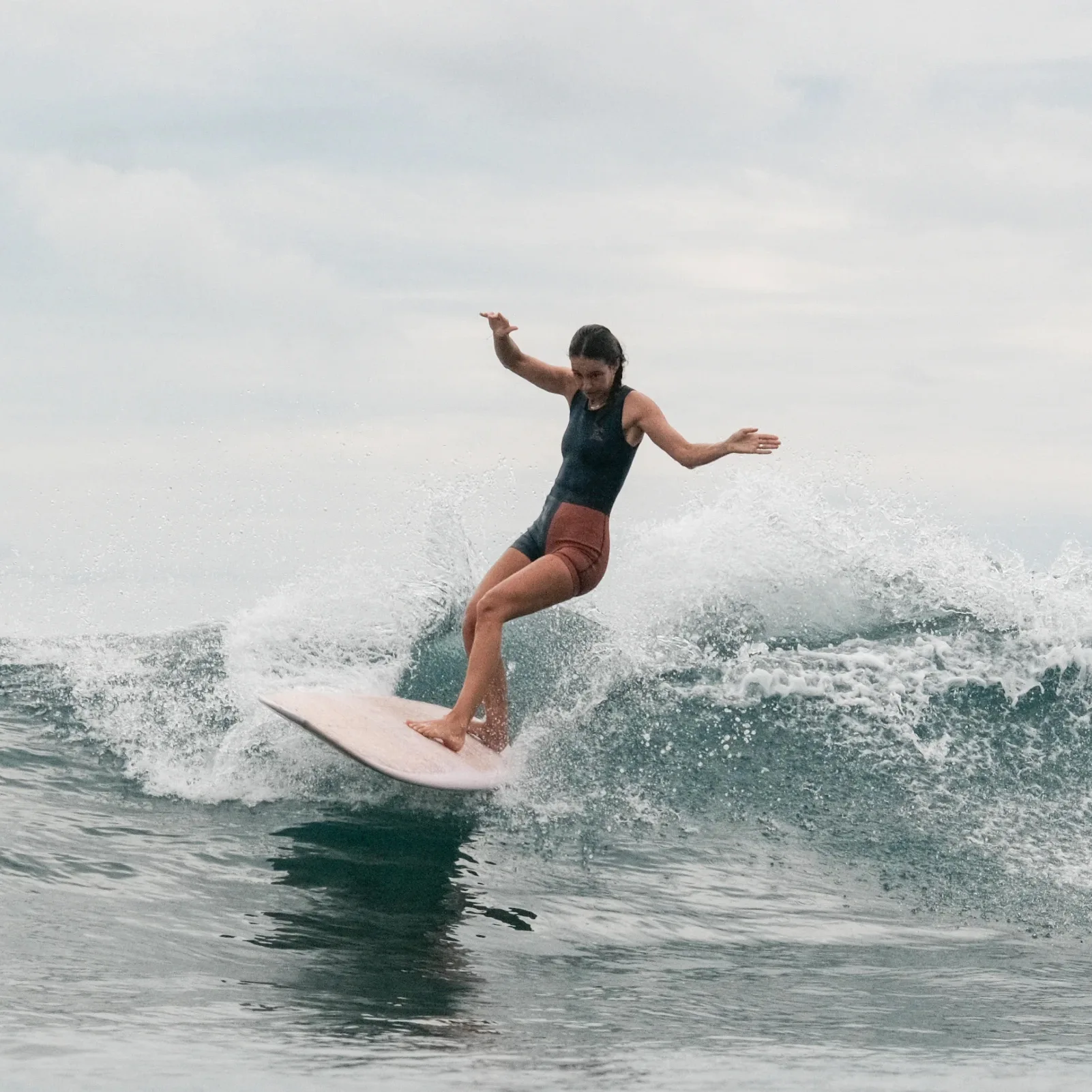
For many European surfers, the shortlist is predictable: the Canaries, Morocco, Portugal. Senegal rarely makes the first cut, which is precisely why it deserves a closer look. Just off Dakar, with warm-water seasons, a deep surf history and a line-up that still feels tied to local life rather than mass surf tourism, this is one of the most compelling cases for a nearby Atlantic escape.
What makes a senegal surf destination stand out is not one single claim but the combination of geography, access and atmosphere. You can be on the western edge of Africa within a relatively short flight from western Europe, then crossing by bateau to an island where surfing sits alongside fishing heritage, volcanic geology and one of the most recognisable wave names in African surf culture.
Closer than many surfers think
Senegal sits on the Cap-Vert peninsula, with Ngor Island 400 metres off the village of Ngor on the Pointe des Almadies, near Dakar. On a map, that matters. For Europeans used to looking south for winter sun, Senegal is not some far-flung expedition; it is a practical Atlantic option with a very different feel from the standard surf circuit.
The Guardian has described Dakar as being three to four hours from western Europe, a useful shorthand for why the country deserves more attention from surfers planning a short break or a one-week trip. That kind of travel time changes the equation. It means less time in transit, more time in the water, and a destination that can work not only for long holidays but also for focused surf trips built around a good forecast.
For surfers based in cities such as Paris, Madrid or Lisbon, the appeal is obvious even without turning the journey into a numbers contest. Senegal is close enough to feel realistic, far enough to feel like a genuine change of scene, and culturally distinct enough that the trip does not blur into another version of the same Atlantic surf holiday.
Senegal makes sense the moment you stop thinking of it as distant and start thinking of it as nearby Africa on the Atlantic edge.
That geographical advantage is one reason the country remains underrated. Many surfers still default to familiar names because they know the airport routine, the car hire process and the line-up. Senegal asks for a little more curiosity, but not necessarily much more effort.
Ngor Island lies 400 metres off the village of Ngor near Dakar, and the bateau crossing from the mainland takes about five minutes.
Warm-water appeal without the tropical fantasy
There is a tendency in surf travel writing to oversell warmth as if every destination were a postcard. Senegal is better understood in practical terms. Across the year, water temperatures range from about 18 to 26°C, which gives it a warm-water identity for much of the surf season without pretending every session is trunk-only.
That matters especially for Europeans escaping colder winters. A destination does not need to be tropical to feel liberating after months of grey weather and thick rubber. Senegal offers a softer climate equation than many Atlantic alternatives, and that changes the rhythm of a trip. More time in the water feels comfortable. Beach time becomes part of the day rather than an afterthought. The whole experience is less about enduring the elements and more about settling into them.
At Ngor Surfcamp Teranga, that seasonal logic is built into the camp itself. The prime surf season runs from November to April, while May to October is flatter and more off-season. For travellers trying to line up European winter with reliable surf travel, that window is one of Senegal's strongest cards.
Warm water alone, of course, is not enough. Plenty of places are warm. What gives Senegal its edge is that the climate comes with a serious surf backdrop rather than a purely leisure-first beach scene. This is not a destination where surfing feels imported as an accessory. Around Dakar and Ngor, it is part of the coastal identity.
A surf history that carries weight
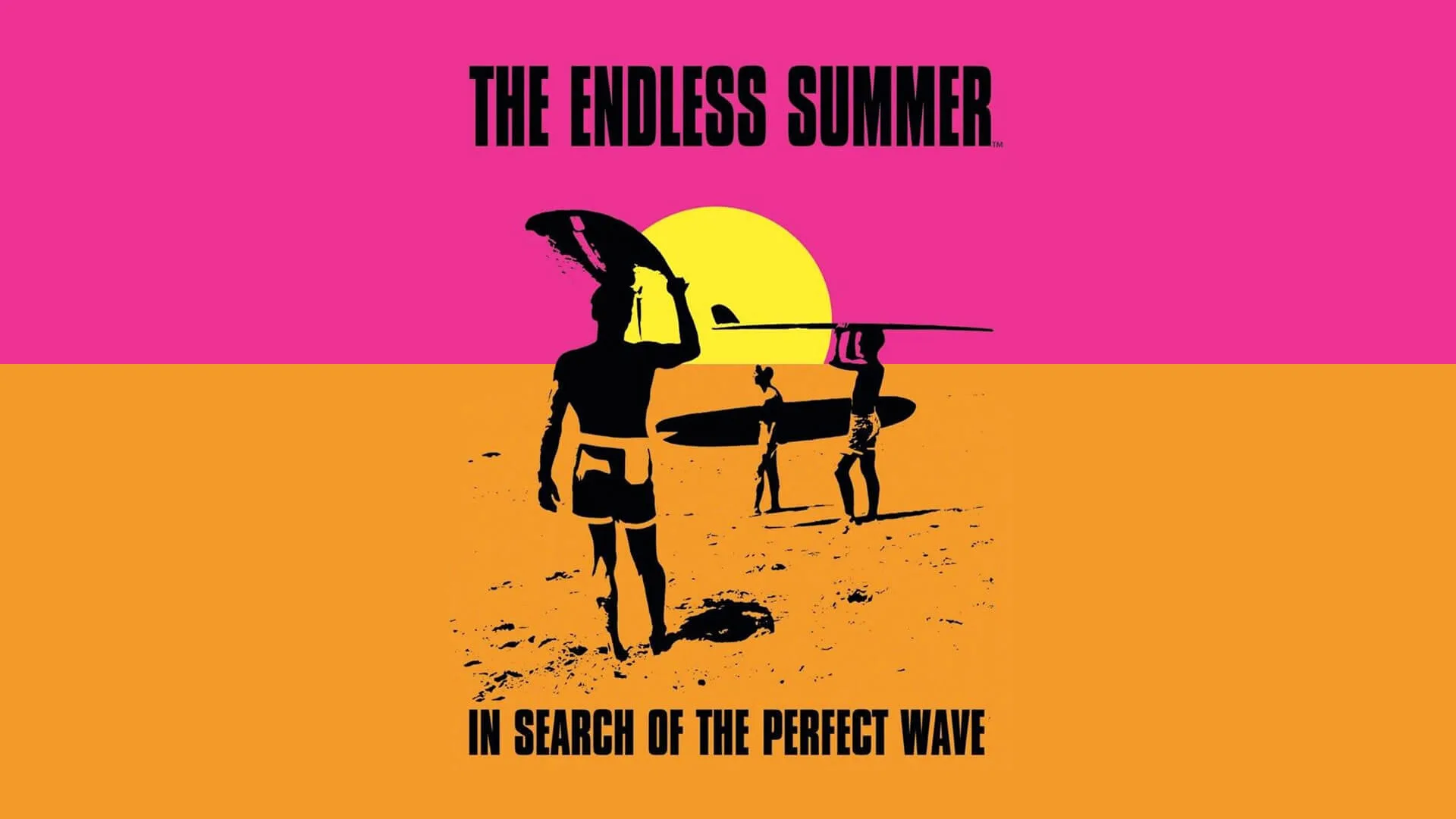
Ngor's place in surf imagination is not accidental. In 1964, The Endless Summer was filmed here, before the film's release in 1966 helped make the island famous to generations of surfers. That connection still matters because it anchored Senegal in global surf culture long before many European surfers began looking beyond the usual Atlantic routes.
The point is not nostalgia for its own sake. It is that Senegal has a documented surf lineage. The island is not a newly discovered scene dressed up as hidden. It has been known for decades, but somehow remains less crowded in the European imagination than destinations with far more marketing behind them.
The New York Times, writing about Dakar's wave riders, highlighted surfers including Ngalla Samba, Babou Gueye, Cherif Fall and Khadjou Samba, underscoring that the city's surf culture is rooted in local talent and continuity. That local grounding is one of the reasons a trip here feels different from a destination built mainly around visiting surfers.
Ngor is not underrated because nobody knows it exists; it is underrated because too few European surfers have understood how accessible and culturally rich it is.
There is also something important in the way surfing sits beside the island's older identity. Ngor is a small island with Lébou heritage, linked to the Samb clan from the 15th and 16th centuries. It remains a place shaped by fishing village life, not a purpose-built surf enclave. That context gives the surf experience texture. You are not arriving in a resort zone detached from its surroundings; you are entering a lived coastal environment where surfing shares space with everyday island rhythms.
The wave quality is real, not theoretical
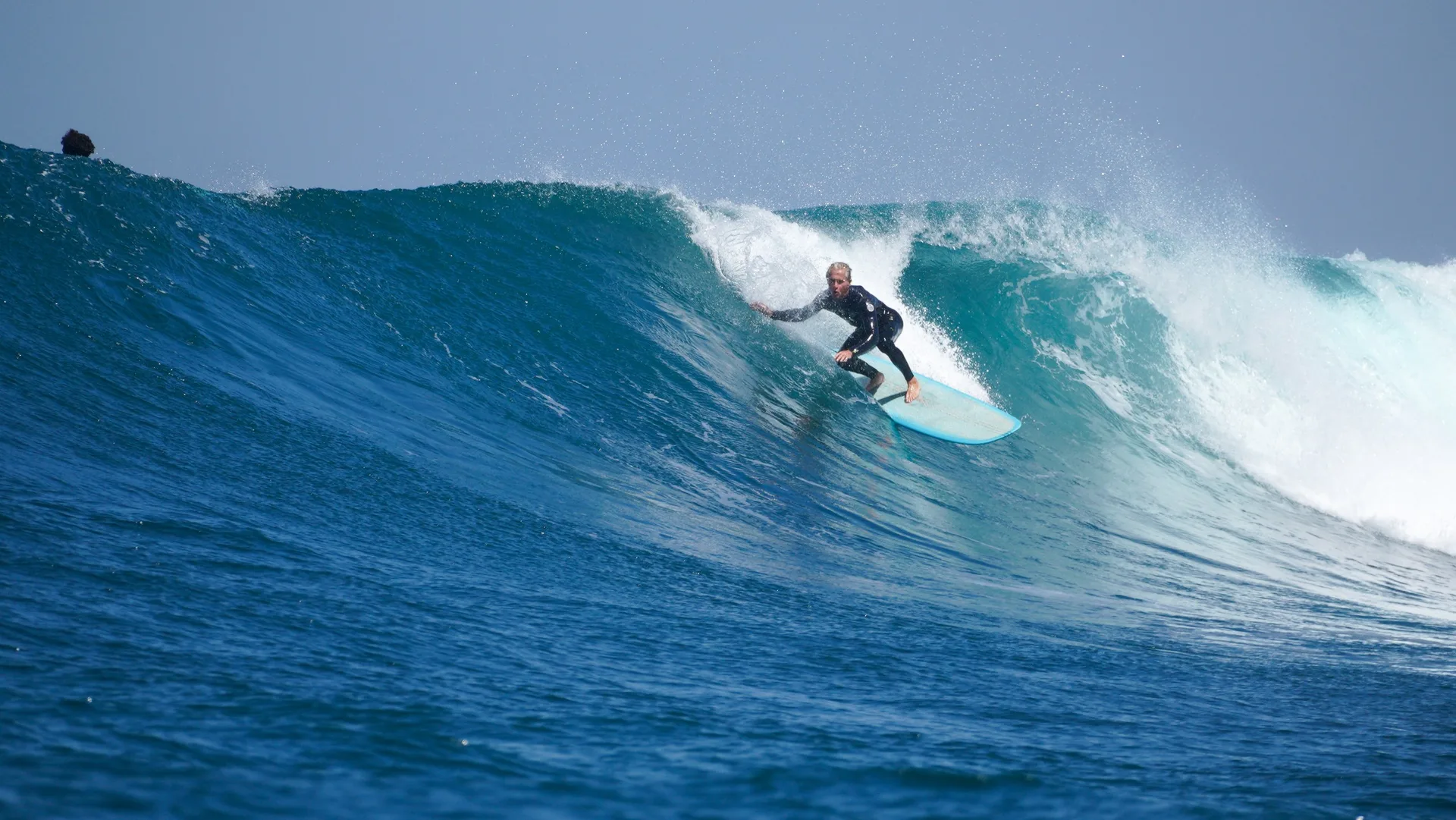
Any argument for Senegal has to move beyond romance and into wave quality. The strongest case begins with Ngor Right, the island's canonical break. The Independent described it as fast, hollow and heavy, with reef beneath. That is the kind of language that immediately tells experienced surfers what they need to know: this is not a soft novelty wave for the travel brochure.
Ngor Right is the break that has carried the island's reputation for decades. It is a reef wave with consequence, and it suits advanced surfers best. The same source notes Mami and Papi, two enormous spiky rocks along the line of the break, details that reinforce the seriousness of the setting. This is a wave to respect.
Ngor Left offers a different option. At Ngor Surfcamp Teranga, it is described as mellower and longer than the Right, which broadens the island's appeal and helps explain why the camp can welcome all levels while being especially well suited to intermediates and advanced surfers. That balance matters. A destination becomes more useful when it is not defined by a single all-or-nothing wave.
On the mainland, the wider Dakar area adds range. Cross-source reporting points to Almadies, Yoff, Ouakam and Virage as established surf zones. The Guardian described Yoff as a beginner break and Almadies, Ouakam and Virage as more challenging, while the Independent called Virage an easy beach break on the mainland. The exact choice depends on conditions, but the broader point is clear: a trip based around Ngor does not lock you into one wave.

- Senegal combines a short European flight with a genuine Atlantic surf culture.
- Ngor Right gives the destination credibility for experienced surfers.
- The wider Dakar coastline adds variety beyond a single island break.
Fewer assumptions, often fewer crowds
One of the quiet advantages of an underrated destination is psychological as much as physical. Because Senegal is not the first place many European surfers think of, it often escapes the automatic pressure that builds around heavily publicised surf zones. That does not mean empty line-ups can be promised; no honest surf guide should claim that. But it does mean the destination has not been flattened into a single mass-market image.
That difference shows up in the feel of a trip. In more established European surf circuits, the experience can become highly standardised: airport, transfer, apartment, crowded peak, repeat. In Senegal, especially around Ngor Island, the journey itself still feels part of the story. You cross by bateau. You orient yourself around island and mainland breaks. You move through a place where surf travel has not erased local character.
For many surfers, that is the real luxury now: not exclusivity in the resort sense, but a destination where the line-up still belongs first to the place itself.
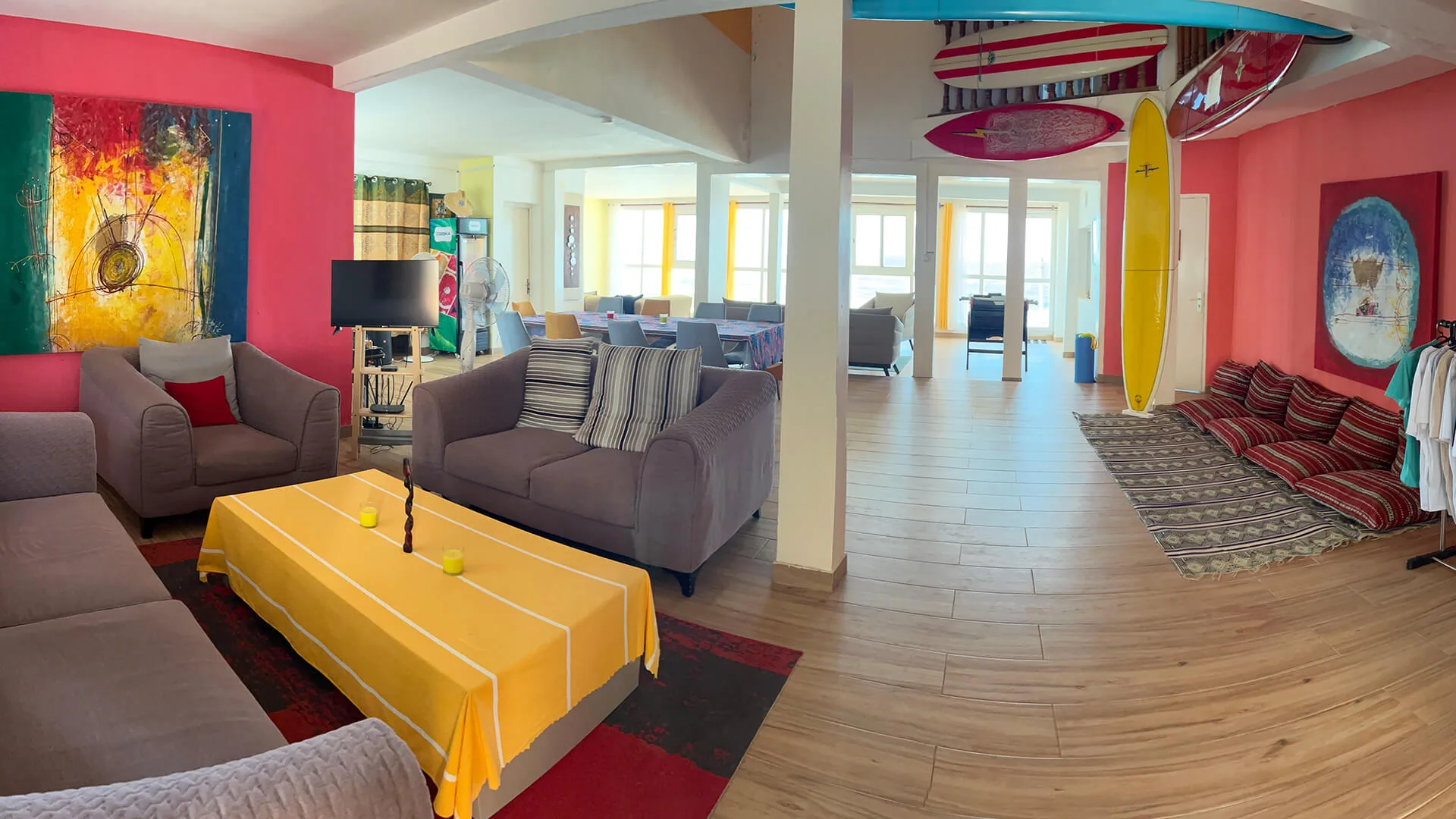
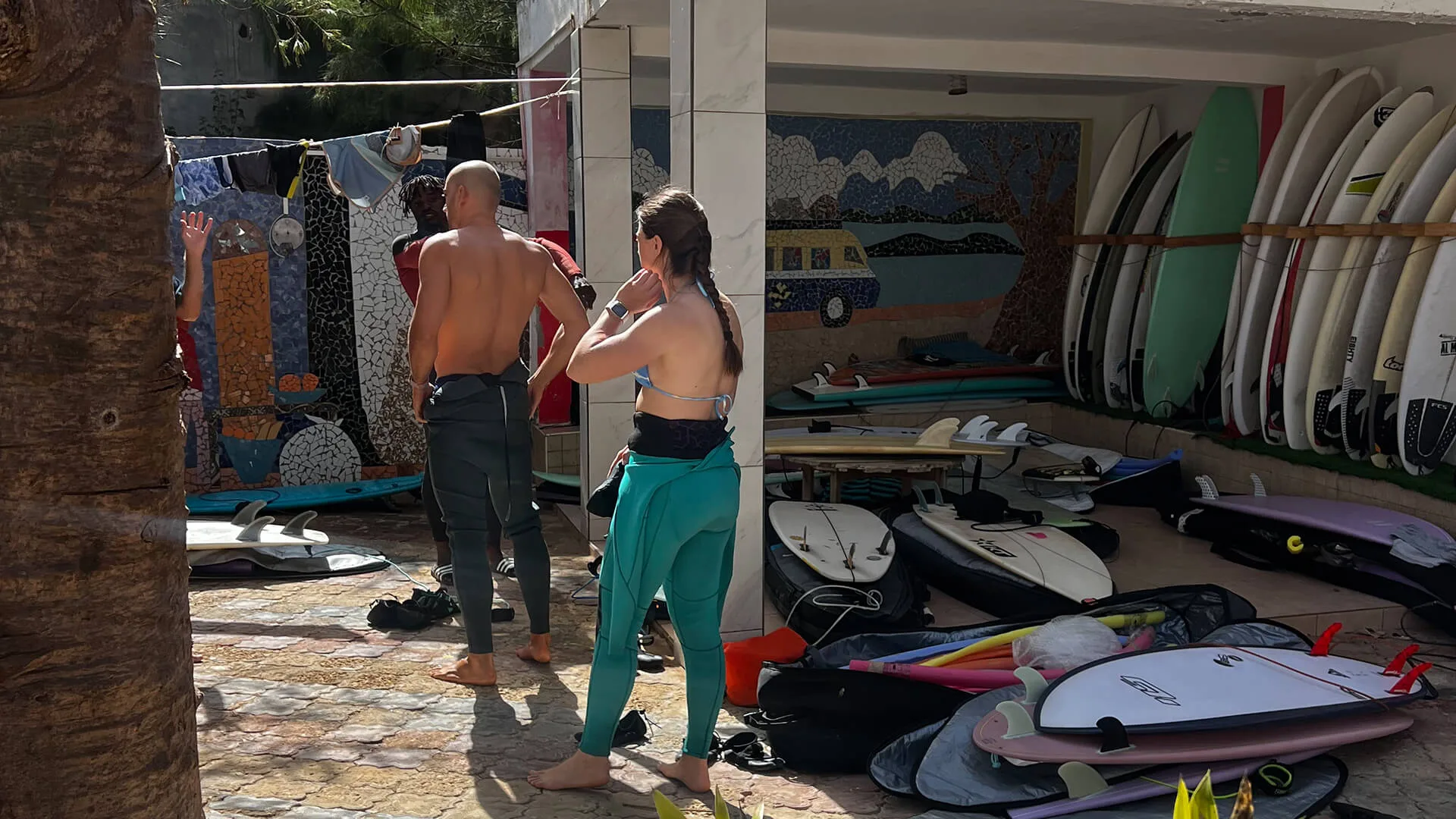
At Ngor Surfcamp Teranga, that sense of place is immediate. The camp is on Ngor Island, reached by a five-minute bateau from Ngor beach on the mainland. It includes private, shared and dorm rooms, breakfast and dinner, surf guiding, theory sessions and a pool, with extras such as airport transfer, surf coaching, video analysis, board rental, wetsuit rental and lunch. The structure is practical, but the setting remains the draw.
Culture is not a side note here
A surf trip to Senegal is not only about wave count. It is also about being close to Dakar, one of West Africa's major coastal cities, while staying on a small island with a distinct identity. That combination is unusual. You get access to a capital's energy and a fishing island's slower cadence in the same trip.
Ngor itself is tiny: the island alone covers 0.1 square kilometres, with about two kilometres of coastline and roughly 100 inhabitants according to the verified facts. It has no grid electricity, relying instead on solar panels and generators. Those details matter because they shape expectations. This is not a polished, anonymous beach development. It is a small inhabited island with practical limits and a strong sense of self.
That scale changes how visitors experience the place. Distances are short. The sea is always present. The crossing to and from the mainland becomes part of daily life. Even the geology adds character: the island is formed of volcanic hawaiite from the Mamelles. For surfers, that volcanic reef setting is not just scenic background; it is part of what creates the wave environment.

If you want the best feel for Ngor, treat the bateau crossing as part of the experience rather than just transport; it frames the island as a place apart from the city.
The cultural appeal also lies in what Senegal is not. It is not a destination where surf travel has fully detached the coast from local life. Fishing heritage remains visible. Lébou history remains part of the island's story. The result is a surf trip with more depth than a simple warm-water break.
A smarter alternative to the usual winter circuit
When European surfers compare destinations, they often focus on habit rather than fit. The Canaries are familiar. Morocco is established. Portugal is easy to understand. Senegal deserves to be in that conversation because it offers a different blend of access, climate and atmosphere.
Compared with more saturated surf circuits, Senegal can feel less over-scripted. The trip is not only about chasing a famous wave and ticking a destination off a list. It is about entering a coastal culture where surfing has history, where the island setting is genuinely distinctive, and where the Atlantic still feels broad rather than over-managed.
Cost is part of the conversation too, but it is also where travel writing often becomes sloppy. Without inventing comparisons or pretending one destination is always cheaper than another, it is fair to say that Senegal can appeal to surfers looking for a practical trip structure rather than a high-friction holiday. At Ngor Surfcamp Teranga, the core package includes accommodation, breakfast and dinner, surf guiding, theory sessions and pool access, while extras are clearly defined, including board rental at €15 per day and wetsuit rental at €5 per day. That kind of transparency helps travellers plan without guesswork.
The more important point is value, not bargain hunting. Value in Senegal comes from what the trip combines: a short-haul Atlantic journey from Europe, warm-water seasons, iconic waves, island life and access to Dakar's broader surf coastline.
Why Ngor works as a base
For surfers trying to understand Senegal, Ngor Island is one of the clearest entry points. It is close to Dakar, historically significant, and directly connected to one of the country's best-known waves. Staying there simplifies the trip while keeping you close to the action.
Ngor Surfcamp Teranga is licensed by the Fédération Sénégalaise de Surf, which matters in a destination where visitors may be looking for a reliable local base rather than improvising logistics on arrival. The camp is suited to all levels, though especially to intermediates and advanced surfers, which reflects the reality of the local wave mix.
The practical advantages are straightforward. Surf guiding helps visitors navigate conditions and spot choice. Theory sessions and optional video analysis add structure for surfers who want to improve rather than simply free-surf. The room options make it workable for solo travellers, friends or couples. And because the camp is on the island itself, the surf day begins from within the setting rather than from a distant urban base.

Senegal rewards surfers who stay flexible, respect the reef and let the conditions guide the day,", The Ngor coaching team
That flexibility is important because the Dakar coastline offers options. A trip can include the island's signature waves and mainland alternatives depending on swell, wind and level. For visitors, that means the destination is not a one-note proposition.
If you want to understand how the camp fits into the wider experience, browsing the gallery and the practical details on surfing gives a clearer sense of the island rhythm than generic destination lists ever could.
The underrated factor: perception lag
So why is Senegal still underrated? In part because surf travel tends to follow established narratives. Once a destination becomes standard for European surfers, it keeps reproducing itself through word of mouth, package deals and social media familiarity. Places outside that loop can remain oddly invisible even when they are geographically close and historically important.
Senegal suffers from that perception lag. It is famous enough to have surf mythology, but not mainstream enough to dominate winter planning. It is close enough to be practical, but still imagined by some travellers as complicated or distant. It has serious waves, but not the same volume of marketing as more commercial surf regions.
That gap between reality and perception is exactly what makes it interesting now. For surfers willing to look beyond the default map, Senegal offers something increasingly rare: a destination that feels both established and underexplored.
The best underrated surf destinations are not unknown. They are simply under-chosen.
There is also a broader travel appeal here. Even non-surfing hours feel distinct. The island setting, the bateau crossing, the proximity to Dakar, the volcanic reef, the fishing heritage, all of it adds up to a trip with narrative, not just sessions.
Who Senegal suits best
Not every destination is for every surfer, and Senegal is best understood honestly. If your ideal trip is a highly packaged resort holiday with every variable flattened out, this may not be the right fit. If, on the other hand, you want a surf trip with character, local grounding and a strong sense of place, Senegal makes a persuasive case.
It suits intermediates and advanced surfers particularly well, especially those drawn to reef setups and to destinations where wave quality comes with context. Beginners can still find options, especially with guidance and mainland alternatives such as Yoff or Virage in the wider Dakar area, but the island's reputation rests above all on the seriousness of Ngor Right and the broader credibility of the local surf scene.
It also suits travellers who value a mixed experience: surf, island life, city access and cultural texture in one journey. That combination is harder to find than many surfers realise.

- Travel in the prime season from November to April.
- Choose a base on Ngor Island for quick access to the breaks.
- Add guiding or coaching if you want help reading the local setup.
The case for choosing Senegal now
There is a particular pleasure in arriving somewhere before it becomes an obvious choice for everyone else. Senegal offers that feeling without requiring a leap into the unknown. The surf history is there. The access is there. The warm-water appeal is there. The island atmosphere is there. What is missing, if anything, is only wider recognition among European surfers.
That is why the phrase senegal surf destination deserves to move from curiosity to serious consideration. For a winter or shoulder-season trip from Europe, Senegal combines practical travel time with a setting that feels genuinely different from the usual Atlantic shortlist. It offers iconic waves without reducing the experience to a single break. And around Ngor, it gives surfers something many established destinations have lost: a sense that the place still leads the trip, rather than the industry around it.
If you are weighing your next Atlantic surf escape, start with the map, then look closer at the island. Browse island life on Ngor, explore the camp at Ngor Surfcamp Teranga, and when you're ready to plan a stay, head to booking to organise your trip.