Eating on Ngor Island
Food on Ngor Island is one of its great unsung pleasures. The island sits at the edge of the Atlantic with fresh fish landed daily, a strong Senegalese culinary tradition, and a handful of small restaurants that serve some of the most honest, flavourful meals you will find in the Dakar area. Whether you want a quick grilled fish after a surf session or a long, unhurried lunch looking out at the ocean, the island delivers.
This guide covers what to eat, what to drink, where to find the best local cooking, and how food fits into the rhythm of life at a place like Ngor Surfcamp Teranga.
The Senegalese table: what to expect
Senegalese cuisine is built around a few core dishes that appear everywhere across the country. On Ngor Island, you will encounter these daily, cooked with fresh local ingredients and served simply.
Thiéboudienne is the national dish of Senegal. It translates roughly as rice and fish, and it is exactly that, though the description understates how good a properly made version can be. Fish, usually fresh and whole, sits on a bed of rice that has been cooked in a rich tomato broth with onions, chillies, fermented shellfish paste, and whatever vegetables are available that day. It is filling, fragrant, and deeply satisfying. Eating thiéboudienne on Ngor Island, made with fish caught that morning a hundred metres away, is an experience worth having.
Yassa poulet is chicken marinated in lemon juice and onions, then grilled or braised until tender. The sauce is tangy and slightly caramelised. It is commonly found at local restaurants and is a good option if you prefer poultry.
Mafé is a peanut-based stew, typically cooked with lamb or beef, root vegetables, and a rich sauce that is savoury, slightly sweet, and deeply flavoured. It is common throughout Senegal and appears occasionally on island menus.
Dibi refers to grilled meat, usually lamb, cooked over an open fire or charcoal. Simple, seasoned with salt and a touch of Dijon-style mustard, it is a popular late snack and is common on the mainland in Dakar.
FACT: Thiéboudienne was recognised by UNESCO in 2021 as an Intangible Cultural Heritage — the first African dish to receive this designation.
Grilled fish and the freshness advantage
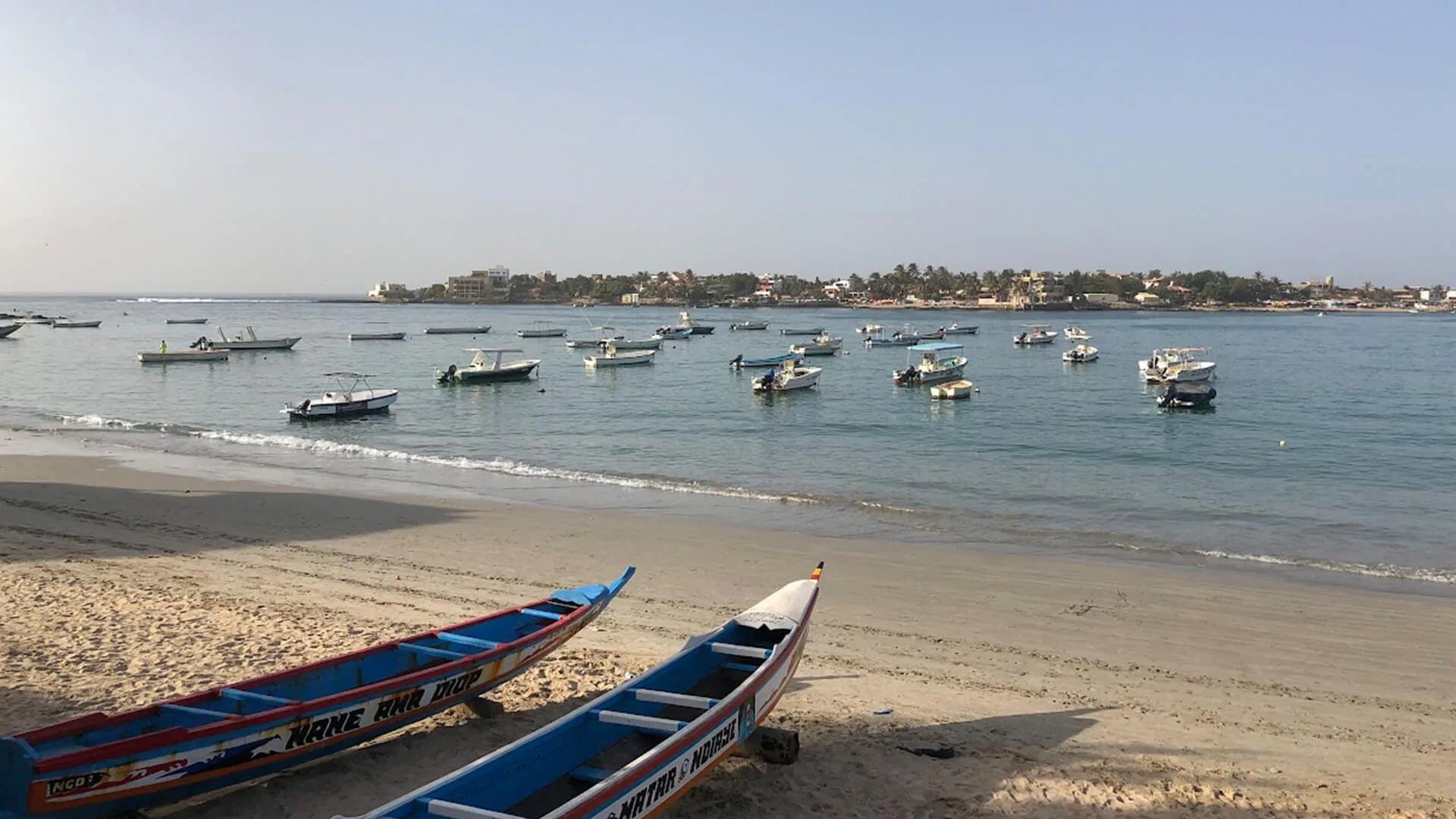
For visitors coming from Europe or further afield, the sheer freshness of the fish on Ngor Island is one of the most immediately striking things about eating here. Pirogues land catches on the beach every morning. The fish goes directly from boat to market to kitchen, often within hours.
Common species you will encounter include thiof (white grouper), which is the prestige fish of Senegalese cuisine, barracuda, sea bream, and various other Atlantic species depending on the season. Whole grilled fish are a staple offering at most island restaurants, served with fried plantain, chips, rice, or fresh salad.
Grilled fish is particularly well suited to the island setting. You eat it outside, often on a terrace facing the sea, with a cold drink and no rush. The preparation is simple: marinated in lemon, garlic, oil and spices, then cooked on a charcoal grill to order.
TIP: Ask what fish came in that morning before ordering. The freshest catch of the day is almost always the best option, even if it means trying a species you do not recognise.
Café Touba and what to drink
Senegal's national drink is café Touba, a spiced coffee made with ground coffee and cloves, often with additional spices such as djar (selim pepper). It is dark, aromatic, slightly sweet, and served in small cups. You will find it everywhere, sold from small stalls and poured through strainers. It is an essential part of the morning ritual and a good introduction to local food culture.
Attaya is the equally important tea ceremony. Three rounds of Senegalese mint tea are brewed in a small pot over charcoal, each one progressively sweeter. The process is slow and social, and sharing attaya with someone is a genuine act of hospitality. It is not fast food in any sense, it is a shared ritual, and accepting the invitation to sit and drink it is a good thing to do.
For something cold, Gazelle is Senegal's main local lager and the most common cold beer on the island. It is light, crisp, and very well suited to warm evenings on a terrace facing the Atlantic. Flag is another local option. Both are typically available at restaurants that serve alcohol.
Fresh fruit juices are widely available: bissap (hibiscus juice), bouye (baobab juice), and gingembre (ginger juice) are all worth trying. They are refreshing, naturally sweet or tart, and give you a real taste of Senegalese flavour profiles beyond the main dishes.
EXPERT: Start the day with café Touba at a street stall before your morning surf check. It costs almost nothing, warms you up fast, and gives you an immediate sense of how the island wakes up.
Where to eat on Ngor Island
The island's restaurant scene is small and intimate. You will not find a row of tourist-facing establishments with laminated menus and inflated prices. What you will find is a handful of genuine local spots, a couple of slightly more polished terraces, and the option to eat at your accommodation.
Most restaurants on the island operate without a fixed menu — what is available depends on what came in that day. This keeps things fresh and honest. Prices are generally very reasonable. A full plate of grilled fish with rice can cost between 3,000 and 7,000 XOF depending on the fish, the size, and the establishment. A simple local lunch is often at the lower end of that range.
For visitors staying at Ngor Surfcamp Teranga, breakfast and dinner are included as part of the stay. Meals are prepared daily by the camp kitchen, drawing on Senegalese recipes, seasonal ingredients, and a consistent approach to local flavour. This removes the daily logistics of finding food from scratch while still giving you a genuine experience of Senegalese cooking. Lunch is typically freeform, allowing guests to explore the island's restaurants independently.
FACT: Ngor Island has no supermarket. Everything on the island comes in by boat. This limits options but also keeps the food remarkably local and seasonal.
Eating etiquette and the shared bowl
In many Senegalese homes and informal restaurant settings, food is served in a large shared bowl or platter placed in the centre, and everyone eats from it. This is the traditional way of eating, particularly for thiéboudienne. Guests eat from the section of the bowl closest to them, and it is considered polite to leave the best pieces of fish near those who are eating more slowly.
In tourist-facing restaurants, individual portions are more common. But if you are invited to eat with a local family or at a small informal place where a shared bowl appears, participating is both welcomed and appropriate. Hands or a spoon are the instruments of choice, not a knife and fork.
A word on timing: meals on the island follow Senegalese rhythms rather than European schedules. Lunch is the main meal of the day and typically happens around midday or early afternoon. Dinner tends to be lighter and later. If you arrive at a restaurant and no one is cooking yet, it is possible you are simply early. Patience and flexibility go a long way.
CHECKLIST: Try thiéboudienne at least once for lunch Order the fish of the day rather than a named species Drink café Touba in the morning from a local stall Try bissap, bouye or gingembre juice Accept attaya tea if offered — it is part of how the island connects Bring small notes for street food and snacks
Eating at Ngor Surfcamp Teranga
For guests staying at the camp, daily Senegalese meals are one of the practical advantages of basing here. Breakfast is served before morning surf sessions, dinner in the evening after the day's activity. The food is prepared fresh each day, often includes a main Senegalese dish alongside rice, salads, and accompaniments, and reflects a genuine effort to offer real cooking rather than a generic tourist spread.
Having meals included removes a significant daily friction for visitors who want to focus on surfing and exploring rather than logistics. It also means you eat well without having to figure out where to go on arrival. For guests who want more variety at lunch or who want to explore the island's own restaurants, that is easy to do on your own.
SUMMARY: Ngor Island's food scene is small but genuine — fresh Atlantic fish, daily rice dishes, and honest Senegalese cooking Thiéboudienne is the dish to try — rice and fish cooked in a rich broth, best when very fresh Grilled fish is the daily default and almost always excellent Café Touba is the morning ritual — small, spiced, and essential Bissap, bouye and gingembre are the local cold drinks of choice Restaurants are small and informal; what's available depends on the day's catch Ngor Surfcamp Teranga includes daily Senegalese breakfast and dinner, removing the food logistics from your stay Bring enough XOF for snacks and independent lunches — there are no ATMs on the island
Thiéboudienne, arroz e peixe cozidos em um caldo de tomate temperado, é o prato nacional do Senegal e a refeição básica da ilha, geralmente disponível no horário do almoço.
Sim, há vários pequenos restaurantes locais. Os menus dependem da captura do dia e dos ingredientes disponíveis. Os preços são geralmente muito razoáveis pelos padrões europeus.
As opções totalmente vegetarianas são limitadas em restaurantes tradicionais. Pratos de arroz, saladas, banana-da-terra e ovos geralmente estão disponíveis, mas a culinária local se concentra fortemente em peixe e carne.