Long before surf travel became a familiar idea, a small island just off Dakar entered the imagination of wave riders around the world. The story of The Endless Summer and Ngor is now part of surfing folklore, but on the water the appeal is still strikingly real: a short bateau crossing, a volcanic reef, and a lineup that connects Senegal's Atlantic coast to one of the most enduring films in surf culture.
For visitors arriving today, the history is not sealed behind glass. It lives in the geography of Ngor Island, in the shape of Ngor Right and Ngor Left, and in the rhythm of a place where surfing still sits alongside island life rather than replacing it.
Why Ngor mattered to surf history
The phrase "endless summer" has long outgrown the film that made it famous, but Ngor's place in that story is unusually concrete. In 1964, The Endless Summer was filmed at Ngor with Robert August; the film was released in 1966. That sequence helped make the island famous and fixed Senegal in the global surf imagination at a time when many viewers would have known little about the country's coastline.
What made Ngor such a compelling setting was not only the novelty of the destination. It was the visual clarity of the place. Ngor Island sits 400 metres off the village of Ngor on the tip of the Almadies, near Dakar. It is a petite island off the Cap-Vert peninsula, with about 2 kilometres of coastline and an island area of 0.1 km². Small enough to feel self-contained, close enough to the mainland to remain connected, it offered exactly the kind of cinematic contrast that travel films seek: a nearshore island, open Atlantic energy, and a reef break with character.
The result was lasting. Decades later, surfers still use Ngor as shorthand for a certain kind of surf dream: warm light, a crossing by bateau, and a wave that feels both accessible in myth and demanding in reality.
In 1964, The Endless Summer was filmed at Ngor with Robert August; the film was released in 1966.
The island behind the image
It is easy to talk about Ngor only as a surf location, but that misses what gives the place its depth. Ngor Island is part of a much older human landscape. The island and the nearby village are tied to Lébou heritage, with settlement linked to the Samb clan in the 15th and 16th centuries. That matters because the island's identity was never created by surfing. Surfing arrived within an existing world of fishing, family life and coastal tradition.
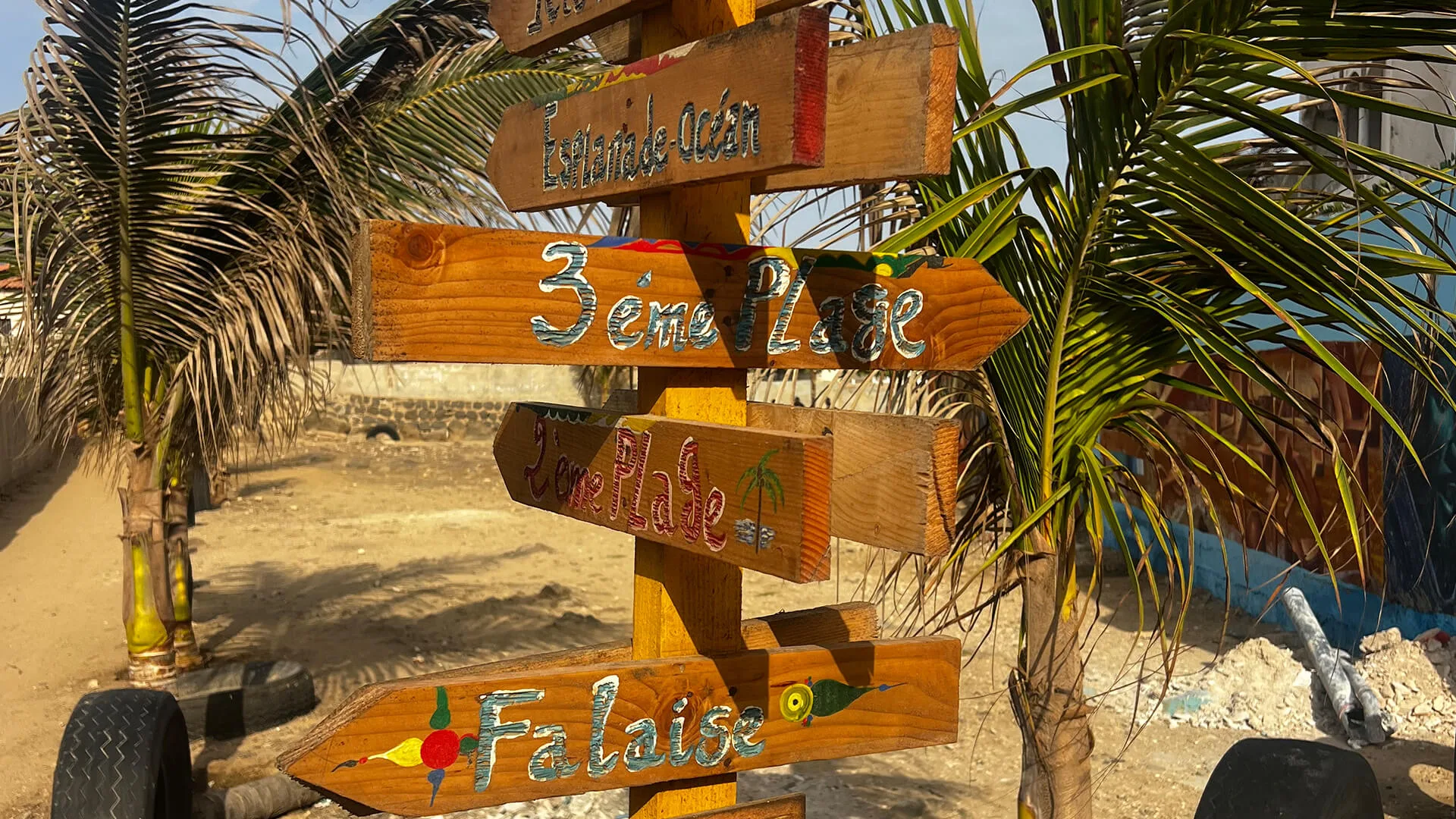
Even now, Ngor does not feel like a purpose-built resort zone. The crossing itself helps preserve that distinction. From the mainland beach, the island is reached by a bateau ride of about five minutes. That short trip is one of the defining gestures of a stay here. It is practical, of course, but it also changes your sense of distance. Dakar remains close, yet the island feels separate enough to slow the day down.
There are other details that reinforce the sense of place. Ngor Island does not have grid electricity; power comes from solar panels and generators. Geologically, it is formed of volcanic hawaiite from the Mamelles system. Those facts are not decorative. They help explain why the island still feels distinct from the city skyline nearby: physically close to Dakar, but shaped by different constraints and rhythms.
Ngor became famous through cinema, but its character comes from the island itself.
For surfers, that distinction matters. A wave can draw you in, but a place is what makes you return.
What the film captured, and what it left out
Part of the enduring power of The Endless Summer is that it presented surfing as a search. The film moved from coast to coast in pursuit of waves and weather, and Ngor appeared as one stop in that larger journey. In doing so, it gave viewers a memorable image of Senegal: Atlantic swell, reef, island, and possibility.
But films compress reality. They turn lived places into scenes. What they often leave out are the layers that become obvious only when you spend time there: the island's small scale, the practicalities of getting across, the local surf knowledge needed to read the reef, and the fact that not every wave here is for every surfer.
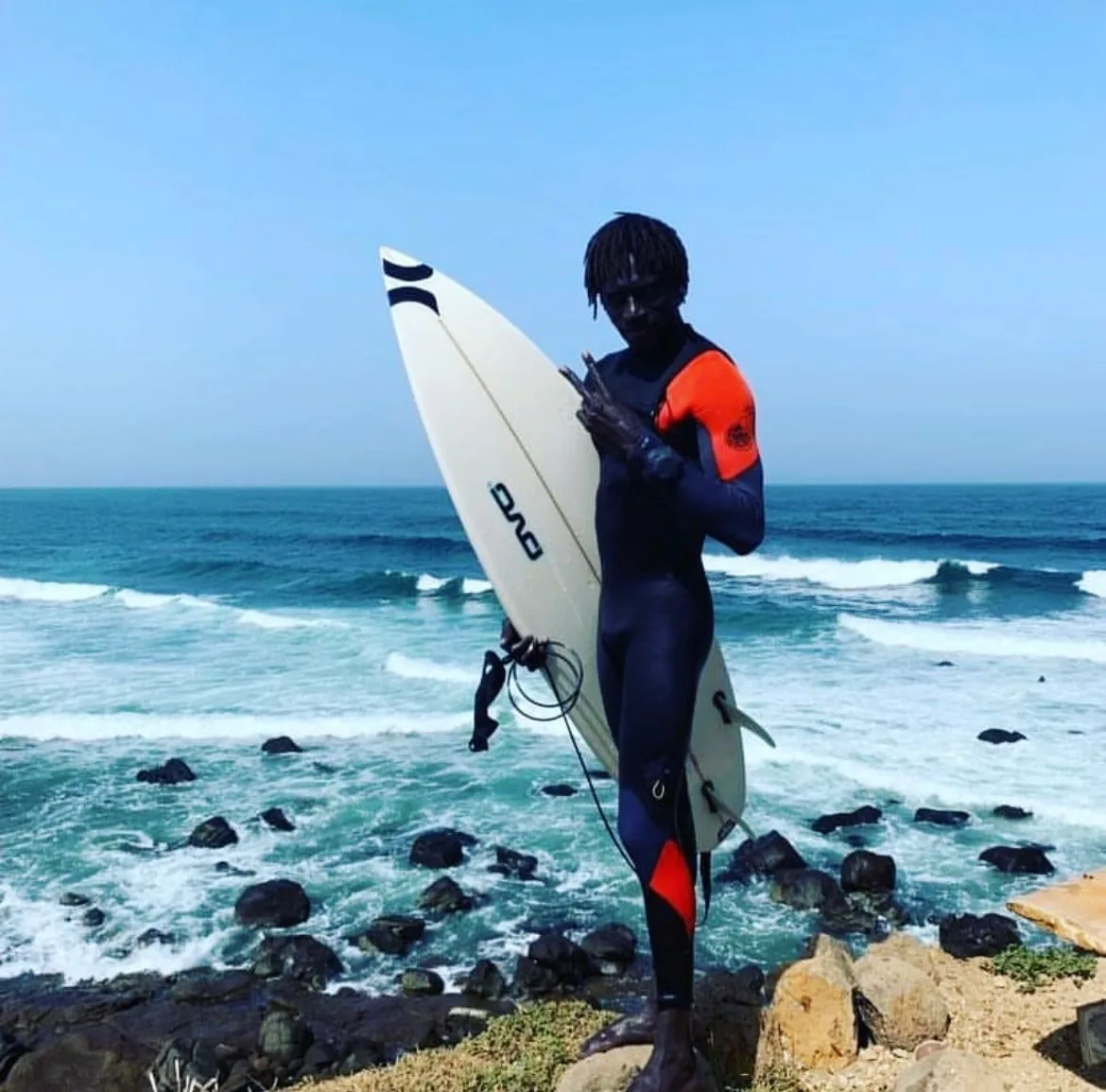
Ngor Right, the island's best-known break, has a reputation for good reason. Verified reporting describes it as fast, hollow and heavy, with reef beneath. Along the line of the break are two enormous spiky rocks known as Mami and Papi. This is not a soft-focus fantasy wave. It is a serious reef setup that rewards timing, positioning and confidence.
Ngor Left offers a different mood. At Ngor Surfcamp Teranga, it is understood as the mellower, longer option beside the more demanding right. Together, the two waves explain why Ngor has remained relevant beyond its film history. The island is not iconic only because a camera once pointed at it. It is iconic because the breaks themselves have shape, contrast and personality.

If you are drawn to Ngor because of its film history, treat that as the beginning of your research, not the end; the island's waves still demand local knowledge and honest self-assessment.
Ngor Right: the wave that became legend
Every surf destination has one wave that carries the story. At Ngor, that wave is Ngor Right. Across travel writing and surf conversation, it is the canonical break: the one most closely associated with the island's image and with the legacy of The Endless Summer.
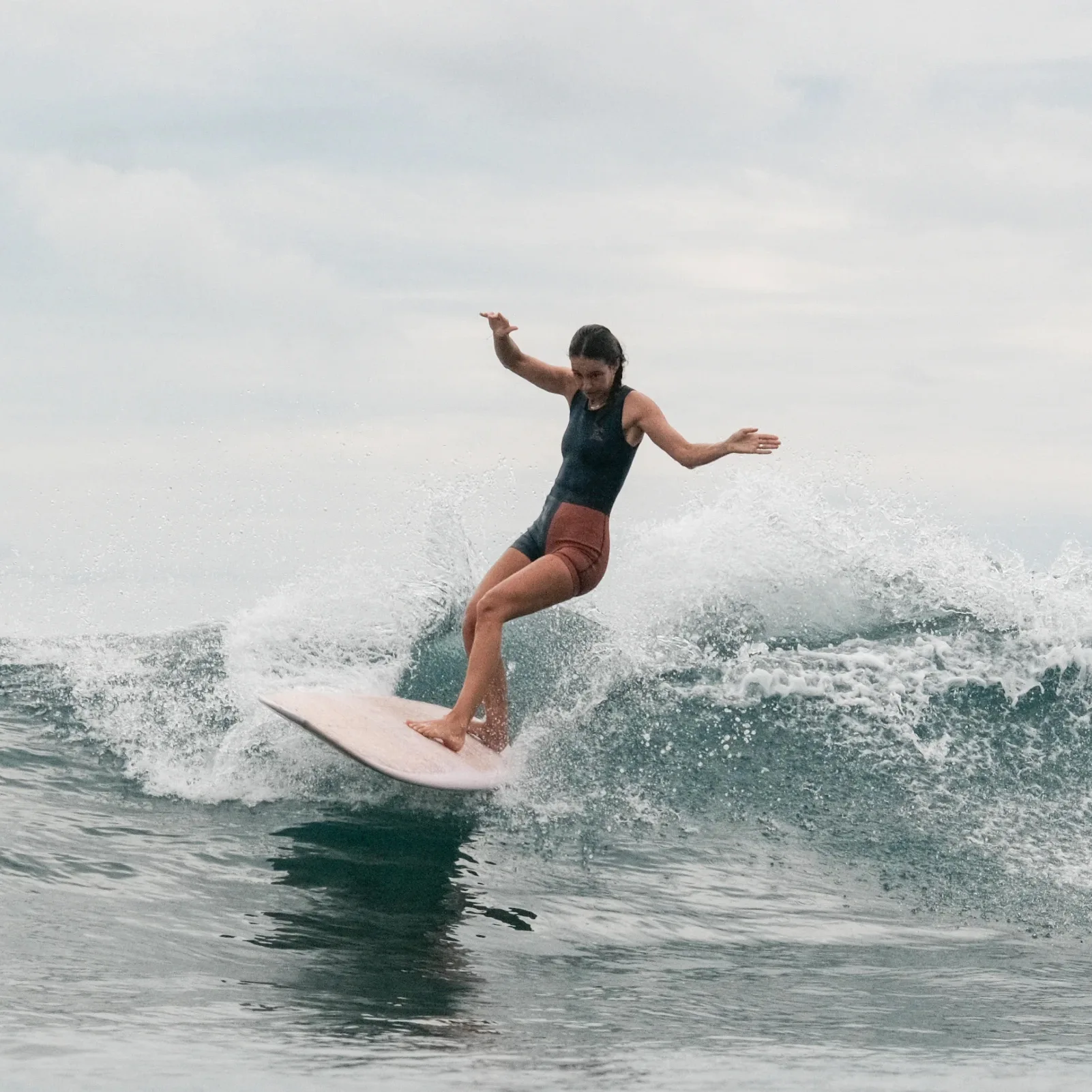
Descriptions of Ngor Right tend to circle the same qualities. It is a reef break. It is fast. It is hollow. It can be heavy. Those are not interchangeable adjectives. Together they tell you that this is a wave with consequence. The reef beneath changes the feel of every takeoff and every section. Speed matters. Commitment matters. So does restraint, knowing when not to go.
That is why Ngor Right is best understood as an advanced wave, even if the island as a whole can suit a range of levels. At Ngor Surfcamp Teranga, the setup works especially well for intermediates to advanced surfers, with guiding, theory sessions and optional coaching helping guests make sense of conditions rather than simply chase them.
The mythology around Ngor Right can sometimes flatten it into a postcard. In reality, the wave is more interesting than that. It is not famous because it is easy to consume. It is famous because it has edge. The same features that made it cinematic in the 1960s still make it compelling now.
And yet the island is not only about intensity. The presence of Ngor Left changes the tone of a surf trip here. A mellower, longer wave beside a faster, hollower right gives the island a more rounded surf identity. It also reflects a broader truth about Senegal's coastline: variety matters. On the mainland, nearby zones such as Yoff, Ouakam, Virage and Almadies add further range, with reporting noting that Yoff is a beginner break, Virage is an easy beach break, and Almadies, Ouakam and Virage can offer different levels of challenge depending on conditions.
Dakar's surf scene beyond the movie frame
One reason Ngor's story still resonates is that it sits within a larger Dakar surf culture rather than in isolation. The city and its peninsula have multiple surf zones, and over time a local scene has grown around them. Reporting has highlighted surfers including Ngalla Samba, Babou Gueye, Cherif Fall and Khadjou Samba, showing that Dakar's surf identity is not simply inherited from a foreign film crew. It is lived and developed locally.
That broader context matters when people talk about the "spirit" of The Endless Summer. If the phrase means anything useful today, it should not mean freezing Ngor in the 1960s. It should mean recognising the continued life of surfing around Dakar and on Ngor Island: local instructors, local knowledge, and a coastline that supports different kinds of sessions depending on swell, wind and ability.
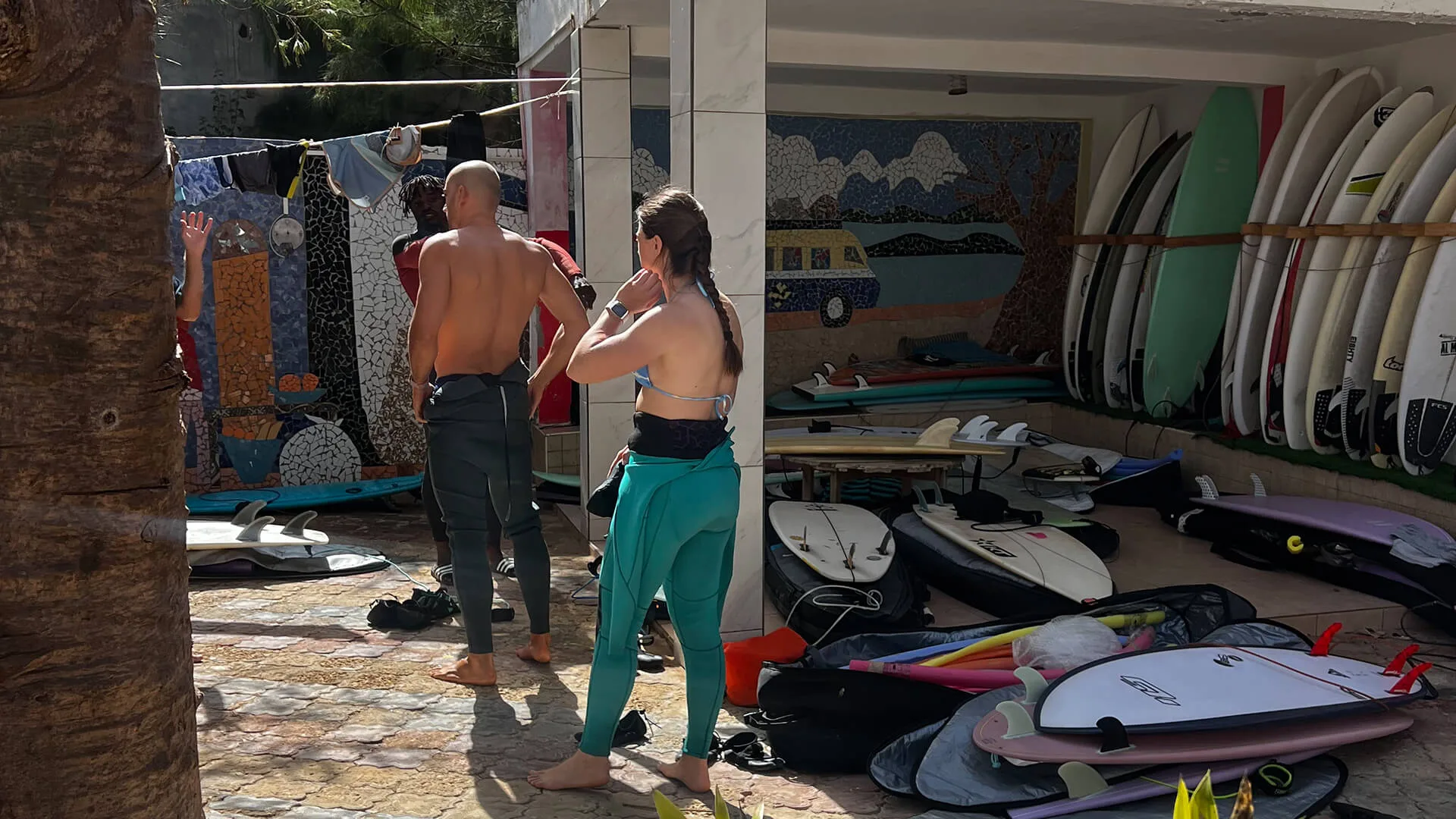
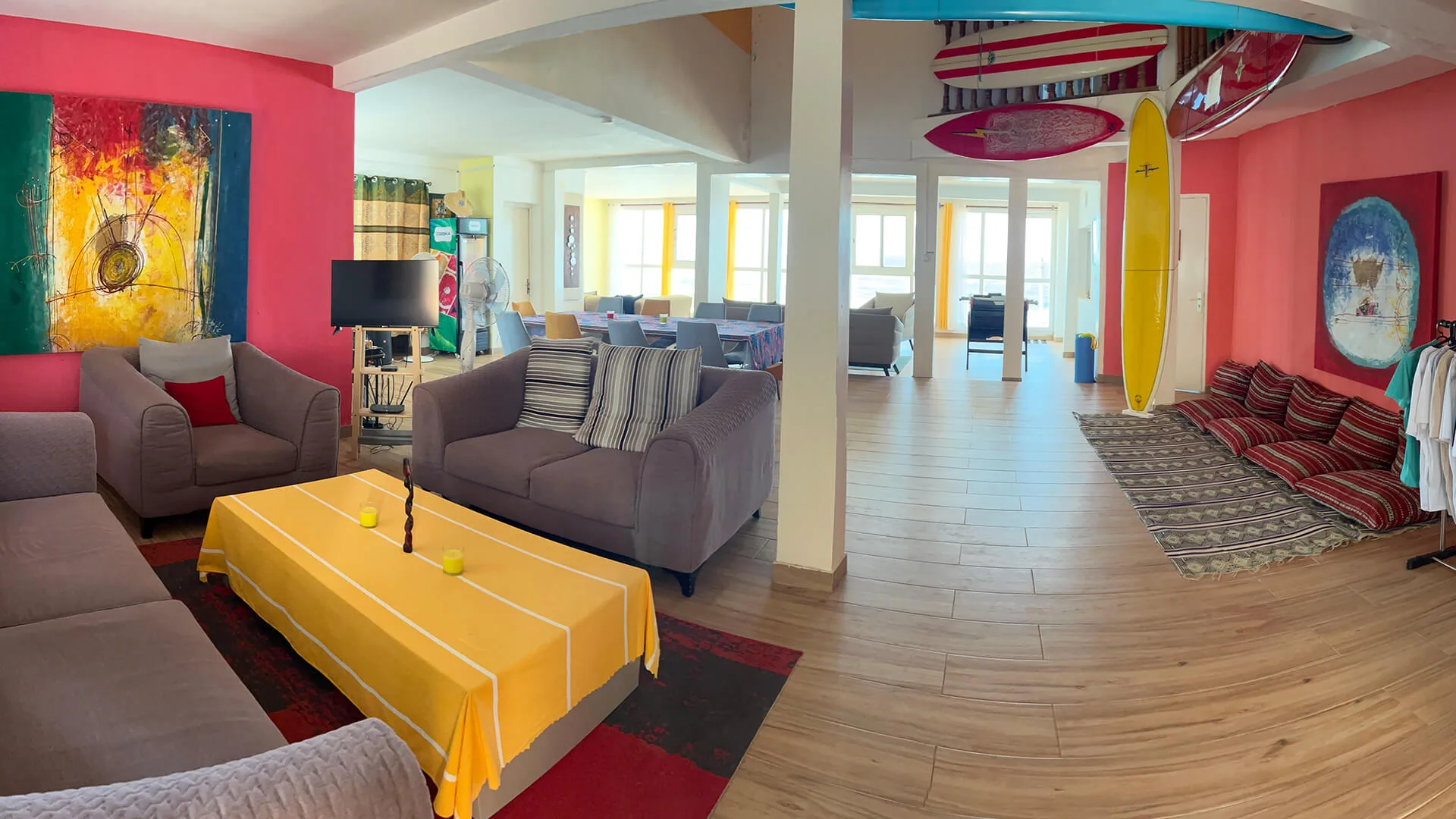
At Ngor Surfcamp Teranga, that contemporary side of the story is central. The camp is based on Ngor Island and is licensed by the Fédération Sénégalaise de Surf. Guests stay in private, shared or dorm rooms, with breakfast and dinner included, along with surf guiding, theory sessions and access to a pool. Extras such as airport transfer, surf coaching, video analysis, board rental, wetsuit rental and lunch make it possible to shape a trip around both the island and the wider Dakar area.

The history brings people here, but every session is about reading the conditions in front of you and surfing the right wave for your level," says The Ngor coaching team.
That is a useful corrective to nostalgia. The best surf travel experiences do not ask you to reenact the past. They help you understand the present.
What has changed since the 1960s
The obvious answer is almost everything. Surfing is no longer a fringe curiosity in the way it was when The Endless Summer first circulated. Travel is more connected. Images move faster. Destinations that once felt remote in the surf imagination are now widely discussed, photographed and mapped.
And yet Ngor has not become unrecognisable. Some of the essential coordinates remain the same: the island still sits just offshore; the bateau crossing still frames the approach; the reef still shapes the wave; the Atlantic still delivers the conditions that make the area work best from November to April, with May to October considered flatter and off-season at the camp.
What has changed most meaningfully may be the way visitors can engage with the place. In the film era, a destination could be consumed as a revelation. Today, a more responsible approach asks for context. Who lives here? What traditions predate surfing? How do you move through the island respectfully? How do you choose waves that suit your level rather than your fantasy?
Ngor rewards that kind of attention. Because the island is small, its scale is impossible to ignore. Because the crossing is short but distinct, arrival feels intentional. Because the surf options around Dakar are varied, there is less need to force every session into the same iconic frame.

- Ngor became globally famous through The Endless Summer, filmed there in 1964 and released in 1966.
- The island's identity is older and broader than surfing, with deep Lébou heritage.
- The spirit of Ngor today lies in surfing it with context, respect and local guidance.
The spirit of the Endless Summer in today's lineup
So what does the phrase mean now, on a practical level, for someone paddling out at Ngor? Not endless perfection. Not a guarantee. And not a museum-piece version of surf culture.
Instead, the spirit survives in a few simpler ways.
First, there is the sense of approach. A five-minute bateau ride is short enough to be routine and memorable enough to feel ceremonial. You leave the mainland, cross a narrow stretch of water, and arrive at a lineup that still feels anchored to an island rather than absorbed by a city.
Second, there is the contrast between waves. Ngor Right asks for precision and confidence. Ngor Left offers a longer, mellower alternative. That pairing keeps the island from becoming one-dimensional. It also mirrors the best kind of surf travel: not just hunting the most famous section, but understanding the full range of what a place offers.
Third, there is the atmosphere of shared learning. At a camp like Ngor Surfcamp Teranga, surf guiding and theory sessions matter because they turn a historic destination into a readable one. Optional coaching and video analysis can help surfers connect what they imagine a wave to be with what it actually requires. For many visitors, that is where the romance of surf history becomes useful rather than abstract.
Finally, there is the simple fact that Ngor still asks you to be present. Reef breaks do that. Island settings do that. Places with strong local identity do that. You cannot really surf Ngor well while treating it as a backdrop.
The real inheritance of The Endless Summer at Ngor is not fantasy. It is attention.
Planning a surf trip with history in mind
If you are coming to Ngor because the film sparked your curiosity, timing and expectations matter. The prime surf season at Ngor Surfcamp Teranga runs from November to April. May to October is flatter and considered off-season. That seasonal rhythm is one of the most important practical facts to understand before booking.
The camp is suited to all levels, but especially to intermediates and advanced surfers. That distinction is worth taking seriously. The island's best-known wave, Ngor Right, is not the place to overstate your ability. A better approach is to use the camp's guiding and coaching structure to match conditions to your level, whether that means focusing on Ngor Left, exploring suitable mainland options, or building confidence through theory sessions and video review.
Accommodation is flexible, with private, shared and dorm rooms available. Breakfast and dinner are included, which helps create a steady rhythm around dawn checks, crossings and evening debriefs. Extras such as board rental and wetsuit rental are available if needed, along with airport transfer and lunch.
For travellers interested in the island beyond surfing, it is worth making time simply to observe the setting. Ngor is a small island with a distinct identity, and part of the pleasure of staying here is that surf sessions are framed by ordinary island life rather than separated from it.

- Travel in the November to April prime season if surfing is your priority.
- Be honest about your level before targeting Ngor Right.
- Use guiding or coaching to understand both island and mainland options.
Why Ngor still stands apart
Many famous surf spots become trapped by their own image. They are visited more for recognition than for understanding. Ngor has partly avoided that fate because the island experience remains specific. You do not simply drive up to a viewpoint, take a picture and leave. You cross by bateau. You orient yourself to a small island. You learn the reef. You notice the difference between the right and the left. You begin to understand how close Dakar is, and how separate Ngor can still feel.
That combination of accessibility and distinctness is rare. So is the way surf history here intersects with a broader cultural and geographic story. Ngor is not just a famous break. It is a petite island off the Cap-Vert peninsula, shaped by volcanic geology, rooted in Lébou heritage, and still defined by practical island realities such as off-grid power.
For surf travellers, that makes the destination richer. The film may be the headline, but the island is the substance.
There is also something refreshing about the scale of the place. In an era when surf travel can become a race for novelty, Ngor offers a reminder that one island, one crossing and two contrasting waves can still hold a great deal of meaning. You do not need endless options to feel the pull of a surf destination. Sometimes you need a place with a clear shape and a long memory.
Ngor Island lies 400 metres off the village of Ngor near Dakar, and the crossing by bateau takes about five minutes.
Staying at Ngor Surfcamp Teranga today
For travellers who want to experience this history from the island itself, Ngor Surfcamp Teranga offers a practical base rooted in the place rather than outside it. Being on Ngor Island changes the feel of a surf trip. You are not only visiting the break; you are waking up within the island environment that made the wave famous.
The camp combines accommodation with surf structure: rooms in private, shared or dorm formats; breakfast and dinner; surf guiding; theory sessions; and a pool. Optional extras such as coaching, video analysis, board rental and wetsuit rental allow guests to tailor the trip to their needs. Because the camp is FSS licensed, it also sits clearly within Senegal's organised surf landscape.
For many guests, the value of staying on the island is not just convenience. It is continuity. The same short crossing that once helped define Ngor's cinematic image still shapes the daily rhythm of a surf stay here. The difference is that now you can approach the place with more context, better support and a clearer understanding of what the waves demand.
If you want to explore more about the island itself, start with life on Ngor Island, browse recent sessions in the camp gallery, or read more practical planning advice on the Ngor Surfcamp Teranga blog. If your main goal is to surf, the overview on surfing in Senegal is the best place to begin.
A living piece of surf history
Ngor's place in surf history is secure. The Endless Summer gave the island a global audience, and the image has endured for good reason. But the most interesting thing about Ngor is that it has not remained only an image.
It is still a real island with a real crossing, a real reef and a real local surf culture around Dakar. It still asks surfers to distinguish between dream and ability. It still rewards those who arrive curious enough to look beyond the mythology.
That may be the truest version of the endless summer idea now. Not the promise of permanent perfection, but the chance to keep discovering depth in a place you thought you already knew from the screen.
If you want to experience that history from the water, and understand how it lives in the lineup today, explore availability and plan your stay at Ngor Surfcamp Teranga.