A stay at Ngor Surfcamp Teranga is not a hotel break with a surf lesson added on. It is a week shaped by tides, boat crossings, shared meals, and the particular rhythm of a small island 400 metres off Dakar, where the Atlantic and daily life are never far apart. For travellers searching surf camp senegal what to expect, the honest answer is simple: expect structure, local knowledge, and a setting where surfing is the centre of the day rather than an optional extra.
That difference matters. On Ngor Island, reached by a five-minute bateau from the mainland, the experience feels more connected to the place itself: the reef, the changing swell, the compact scale of the island, and the practical routines that make a surf trip run smoothly. At Ngor Surfcamp Teranga, that means accommodation, breakfast and dinner, surf guiding, theory sessions, and a pool, with extras such as airport transfer, coaching, video analysis, board rental, wetsuit rental, and lunch available when needed.
First, understand the setting
Ngor Island is a small island off the Cap-Vert peninsula, near Dakar, with a long place in Senegal's coastal life. It sits just off the village of Ngor on the Pointe des Almadies and is known in surf culture far beyond its size because of The Endless Summer, filmed here in 1964 and released in 1966. That film helped make Ngor famous, but the island's appeal is not only cinematic. It is also practical: close to the city, close to several mainland surf zones, and home to one of West Africa's most recognisable waves.
The camp's location is part of what makes the stay distinctive. You are not based in a generic urban district and driving to the beach each morning. You are on an island with about two kilometres of coastline, a small resident population, and a pace that naturally narrows your focus. The crossing itself becomes part of the routine. Bags, boards, people, and provisions move back and forth by bateau, and that short boat ride creates a useful mental shift between Dakar and camp life.
The best surf trips often begin when the crossing is short but the change of pace is immediate.
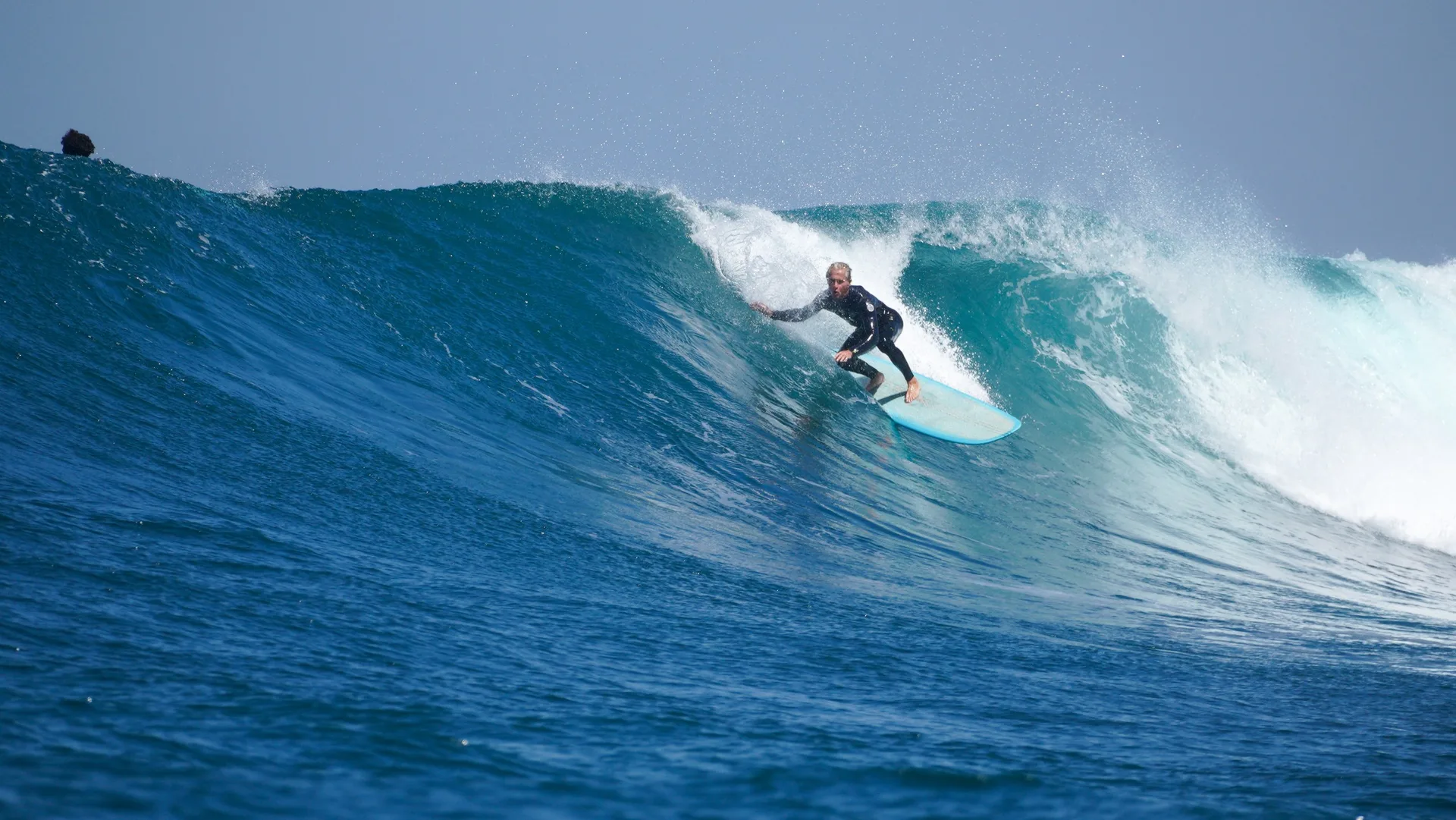
For surfers, the names that matter most are Ngor Right and Ngor Left. Ngor Right is the better-known wave: a reef break described in reported accounts as fast, hollow, and heavy, with reef beneath. Ngor Left is the mellower, longer option. Together they explain why the camp suits all levels but especially intermediates to advanced surfers. There is room for progression, but also a clear need for judgement, timing, and local guidance.

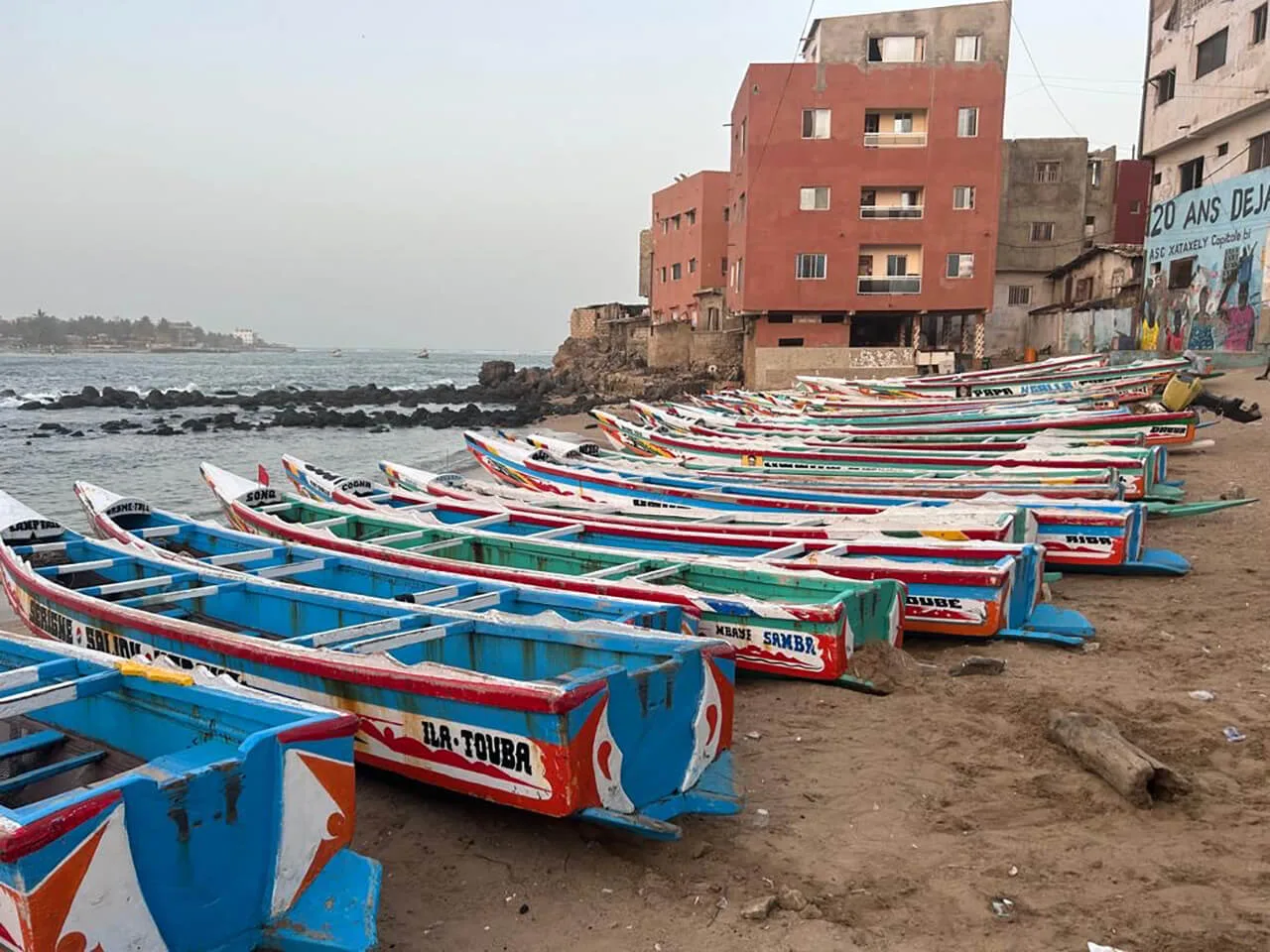
Ngor Island sits 400 metres off the Dakar coast and is reached by a five-minute bateau from Ngor beach on the mainland.
What a typical day feels like
A week at Ngor Surfcamp Teranga usually settles into a pattern quickly, even if no two surf days are identical. The prime season runs from November to April, while May to October is considered flat or off-season, so most guests arriving in the main surf window are coming with one purpose in mind: to surf as much as conditions sensibly allow.
Mornings tend to begin with the practical basics. You wake on the island, check the light and wind, think about the tide, and eat breakfast at camp rather than heading out to search for food. That sounds minor, but it changes the shape of the day. When meals are built into the stay, there is less friction between sleeping, planning, and paddling out. The camp format removes many of the small decisions that can dilute a surf trip.
From there, the surf plan depends on conditions and level. Some guests will be guided toward the island breaks. Others may head to mainland options around Dakar, where the wider coastline offers different kinds of waves. Reported coverage of Dakar's surf scene regularly points to Yoff as a beginner break, while Almadies, Ouakam, and Virage are part of the mainland surf map too, with Virage noted as an easier beach break. That broader geography matters because a good surf camp is not only about one famous wave; it is about choosing the right wave for the right surfer on the right day.
Back at camp, the middle of the day often becomes the reset: food, shade, rest, and discussion. Theory sessions are included, which is another sign that this is a surf-focused stay rather than simple accommodation. In practice, theory helps translate what happened in the water into something usable. Positioning, reading sections, understanding reef entry and exit, wave choice, and timing all become easier to improve when they are discussed away from the pressure of the lineup.
Afternoons can mean a second surf, more analysis, or simply time around the pool and around the island. Dinner brings everyone back together. By then, the day has usually become a shared reference point: who surfed where, what changed with the tide, which section ran faster than expected, and what to do differently tomorrow.
How guiding changes the experience
One of the biggest differences between a surf camp and a hotel stay is guidance. If you book a hotel in Dakar and organise surfing independently, you still need to solve the same questions every day: where to surf, how to get there, whether the conditions suit your level, what equipment to use, and how to make the most of a limited swell window.
At Ngor Surfcamp Teranga, surf guiding is part of the structure. That does not mean every session is rigidly managed. It means there is local knowledge built into the trip. On a coastline where conditions can vary between reef and beach breaks, and where a wave like Ngor Right has a clear reputation for speed and power, that knowledge is not a luxury. It is part of surfing well and surfing safely.
For intermediate surfers especially, this is often where the value of camp life becomes obvious. Many arrive able to catch waves consistently but not yet fully comfortable making quick decisions in a more technical lineup. A guide can narrow the learning curve by helping with entry points, take-off zones, timing, and the simple but crucial question of whether a spot is right for you that day.
Advanced surfers benefit too, though in a different way. They may need less basic instruction, but they still gain from local reading of conditions and from a setup designed around surf time rather than general tourism.

If you are unsure whether Ngor Right suits your level, treat the first sessions as observation as much as action and let local guidance shape your choices.
Coaching, theory, and video analysis
A premium surf camp should offer more than transport to the break. The real difference is whether the trip helps you surf better by the end of the week. At Ngor Surfcamp Teranga, coaching and video analysis are available as extras, while theory sessions are included. Together, those elements create a more complete learning environment.
Theory is often underestimated because it happens out of the water. Yet many surf problems are easier to understand on land. A surfer who keeps getting caught inside may actually be paddling out at the wrong moment. A surfer who misses the best part of the wave may be sitting too deep or too wide. A surfer who feels rushed on a reef may simply not yet recognise the visual markers that matter. Talking through those patterns can save hours of trial and error.
Video analysis adds another layer. Most surfers have a version of their own surfing in mind that is not quite the same as what they actually do. Seeing footage can be clarifying in a way that memory is not. It can show whether your stance closes off your shoulders, whether your take-off is late, whether you are looking down instead of through the section, or whether your line is flatter than it feels.

The best progress usually comes when surf time, theory, and feedback all connect. A good session in the water becomes more useful when you understand why it worked.”, The Ngor coaching team
This kind of setup is especially useful on a trip of one week. You may not have months to improve, but you do have enough time to identify one or two habits, work on them repeatedly, and leave with a clearer sense of what to keep practising.
Meals, accommodation, and the social side of camp life
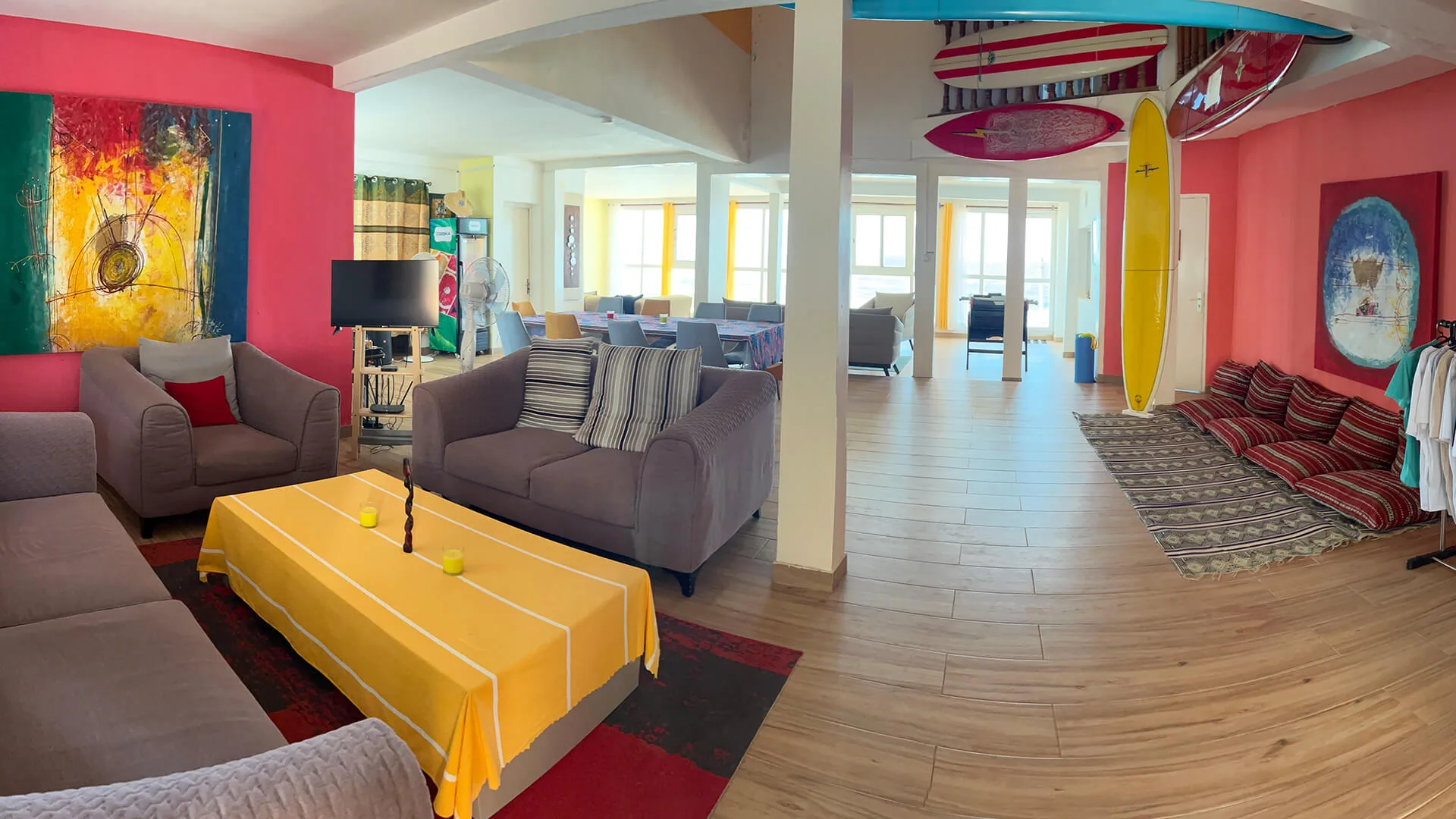
The camp includes rooms in private, shared, and dorm formats, plus breakfast and dinner. That combination shapes the atmosphere more than many first-time guests expect. Hotels can be comfortable, but they often scatter people into separate schedules. A surf camp tends to pull them back into a common rhythm.
Breakfast matters because it anchors the morning. Dinner matters because it closes the day collectively. In between, people compare notes, trade stories from the lineup, and often become useful company for the next session. Even if you arrive alone, the structure makes it easier to feel part of a temporary surf household rather than a solitary guest in a room.
Accommodation choice changes the feel of the week. A private room offers more quiet and recovery time. Shared rooms and dorms usually bring more conversation and a stronger sense of group energy. Neither is inherently better; it depends on whether you want privacy between sessions or a more communal trip.
The pool is another small but meaningful detail. On a surf-focused holiday, downtime still matters. A place to cool off, stretch out, or simply sit between sessions helps the week feel balanced rather than relentlessly scheduled.
What you should not expect is the anonymity of a large resort. Camp life is more personal and more participatory. You notice who is heading out early, who is renting a board, who is reviewing footage, who is taking a rest day, and who has just had the wave of the trip.
A surf camp works best when the practical details disappear into the background and the day revolves around the ocean.
What the island adds that a hotel cannot
Ngor Island is not just a scenic address. It changes the texture of the stay. Because the island is small and separated from the mainland by a short crossing, there is a natural sense of being somewhere distinct without being remote. Dakar remains close, but the island creates enough distance to make the trip feel immersive.
That matters for surfers because attention is a finite resource. In a city hotel, the day can fragment into traffic, restaurant decisions, logistics, and urban distraction. On the island, the focus narrows. You wake near the water, move through a compact environment, and return to the same surf-centred base after each session.
There is also a cultural layer. Ngor belongs to a wider Lébou coastal heritage, and the island's life is not built solely around visitors. That gives the place a grounded quality. It feels lived in rather than manufactured for tourism.
The island's infrastructure is also part of its reality. Reported sources note that there is no grid electricity on the island, with solar panels and generators used instead. For guests, that is less a hardship than a reminder that this is a small island environment with practical limits and a character of its own.

- A Ngor surf camp stay is built around tides, crossings, and surf decisions
- Included meals and guiding simplify the day and keep the focus on surfing
- Island life feels more immersive and less anonymous than a standard hotel base
Who this kind of trip suits best
Ngor Surfcamp Teranga is suited to all levels, but especially intermediates to advanced surfers. That is an important distinction. It does not mean beginners are excluded. It means the camp's location and wave options are particularly rewarding for surfers who already have some consistency and want to improve their reading of conditions, positioning, and confidence across different setups.
A typical guest profile often falls into one of a few broad groups. There are solo travellers who want a social but structured surf week. There are couples or friends who want a surf-led holiday without having to organise every detail themselves. There are intermediate surfers who have surfed beach breaks elsewhere and are ready for more guidance around reef and more varied conditions. And there are experienced surfers who value being based close to a famous wave while still having access to the wider Dakar coastline.
The camp can also suit remote workers or longer-stay travellers in principle, but the core appeal remains the same: this is a place for people who want surfing to shape the trip.
If your ideal holiday is room service, private seclusion, and a schedule untouched by swell or wind, a hotel may be a better fit. If you prefer a week where the best conversations happen after a session and the next day is planned around the ocean, camp life makes more sense.
Equipment, extras, and what to arrange in advance
The included package covers the essentials of staying and surfing, but some extras are worth planning before arrival. Board rental is available at €15 per day, and wetsuit rental at €5 per day. Coaching, video analysis, airport transfer, and lunch are also available as extras.
Whether you need a wetsuit depends on the time of year and your own tolerance, but Senegal's water temperatures range from 18 to 26°C across the year, so it is sensible to think seasonally rather than assume tropical warmth at all times. If you are travelling light, rental can simplify the journey. If you are particular about equipment, bringing your own board may still be preferable.
Airport transfer is one of those extras that can remove friction from the first and last day. The same is true of arranging coaching or video analysis in advance if progression is a priority. A week passes quickly, and the more clearly you know what you want from the trip, the easier it is to use the time well.

- Decide whether you want a private, shared, or dorm room
- Reserve board or wetsuit rental if you are not bringing your own gear
- Add coaching or video analysis early if improving your surfing is a main goal
A realistic week, day by day
No two weeks are identical, but it helps to imagine the trip in broad stages rather than isolated sessions.
The first day is usually about arrival and orientation. You make the crossing, settle into your room, understand the camp layout, and begin to read the island's pace. If there is time to surf, the first session is often as much about calibration as performance. You are learning the environment, not trying to force a highlight reel.
By the second and third days, the rhythm starts to click. Breakfast becomes automatic. The boat crossing, if needed, feels routine. You begin to recognise the difference between a session where you should push and one where you should watch, learn, and conserve energy. This is often when guiding and theory become most useful, because the initial novelty has worn off and the real learning begins.
Midweek is where many guests either plateau or improve sharply. Fatigue can creep in. So can overconfidence. A good camp week is not about surfing every possible minute; it is about surfing the right sessions with enough energy and attention to benefit from them. Rest, food, and feedback matter as much as wave count.
Later in the week, familiarity changes the experience again. The island feels less like a destination and more like a temporary home base. You know where to leave your things, how the day tends to unfold, and what kind of session suits you best. If you have taken coaching or video analysis, this is often when the first adjustments begin to feel natural rather than forced.
The final days usually bring a mix of satisfaction and unfinished business. That is normal. A good surf trip rarely ends with the feeling that everything has been mastered. More often, it leaves you with one memorable session, a clearer understanding of your surfing, and a strong sense of what you want to work on next.
Why premium here means something specific
The word premium can be vague in travel writing, but on Ngor Island it should be understood in practical terms rather than decorative ones. Premium does not have to mean excess. It can mean that the important parts of a surf trip are handled well: the location is right, the logistics are smooth, the accommodation options are clear, meals are built in, guidance is available, and the camp is licensed by the Fédération Sénégalaise de Surf.
That last point matters because it signals a formal place within Senegal's surf landscape. In a destination where visitors may know the famous wave but not the local structure around it, that kind of legitimacy is worth noting.
Premium also means the stay is designed around surfers' actual needs. You do not need endless facilities if what you really need is a reliable base, informed guidance, and a setting that keeps you close to the water. On Ngor, those things are more valuable than generic luxury.
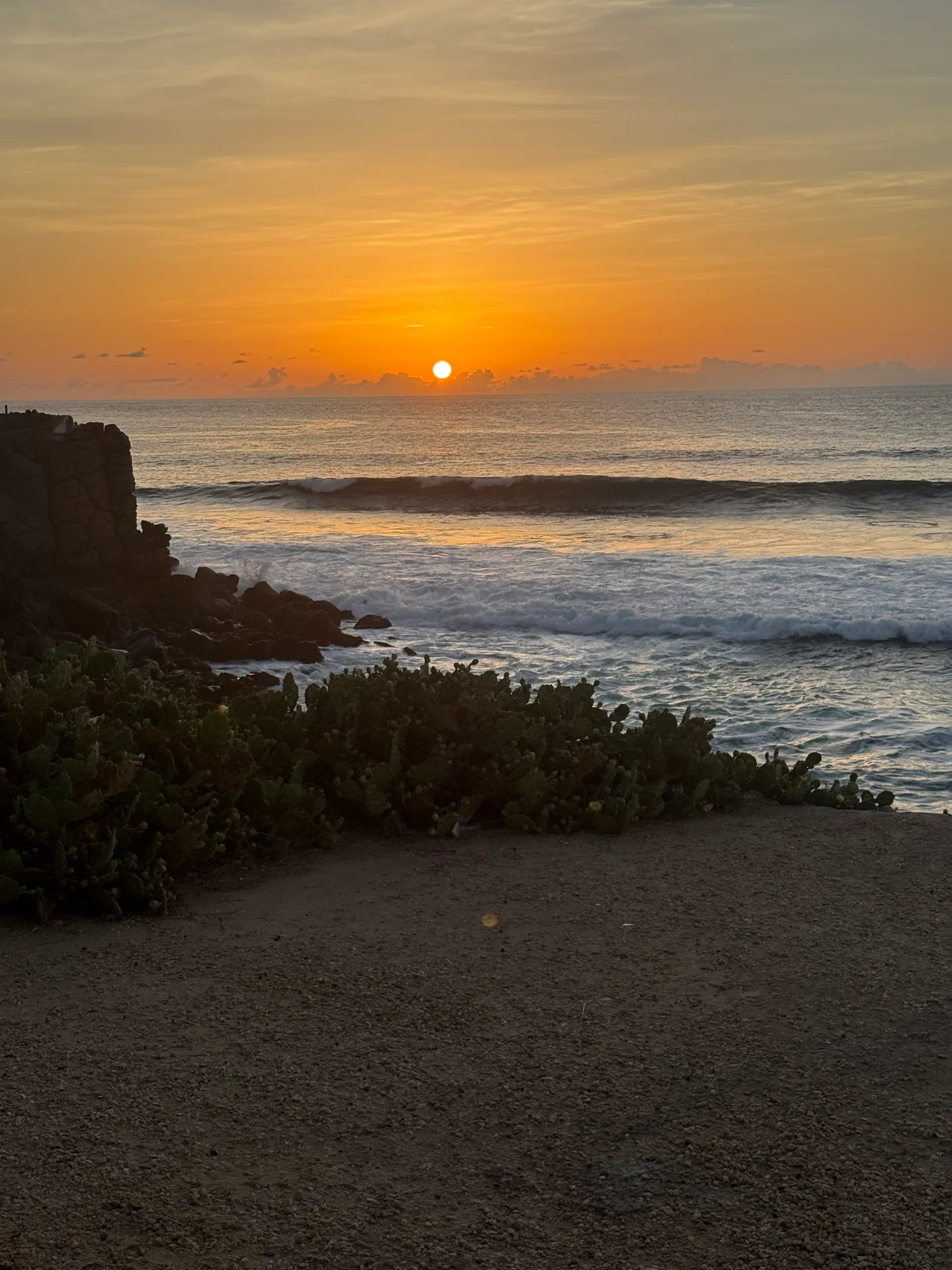
Ngor Right is the island's best-known wave, while Ngor Left offers a mellower, longer alternative.
The honest difference from a hotel stay
The clearest way to answer surf camp senegal what to expect is to compare it directly with the alternative. A hotel gives you a room and, depending on the property, a range of services. A surf camp gives you a framework for the entire surf day.
At Ngor Surfcamp Teranga, that framework includes accommodation, breakfast and dinner, surf guiding, theory sessions, and a pool. It can also include coaching, video analysis, rentals, and transfers. The result is not simply convenience. It is coherence. The trip makes sense as a whole.
That coherence is especially valuable in a place like Ngor, where the island setting, the bateau crossing, and the mix of reef and mainland options all reward local understanding. You can absolutely visit Dakar and organise your own surfing. But if your main reason for coming is to surf well, improve, and spend a week in a setting shaped by the ocean, the camp model is more direct.
It is also more social. You are more likely to meet people with the same priorities, share information naturally, and leave with a stronger sense of the place than if you had simply slept in a hotel and booked ad hoc sessions.
For many guests, that is the real luxury: not distance from other people, but closeness to the right kind of routine.
If you want to see more of the setting before you travel, browse the camp's island life on Ngor, explore the surf experience in Senegal, take a look at the camp spaces and rooms, or view the latest images from the island and lineup. When you are ready to turn the plan into a trip, head to book your stay at Ngor Surfcamp Teranga.