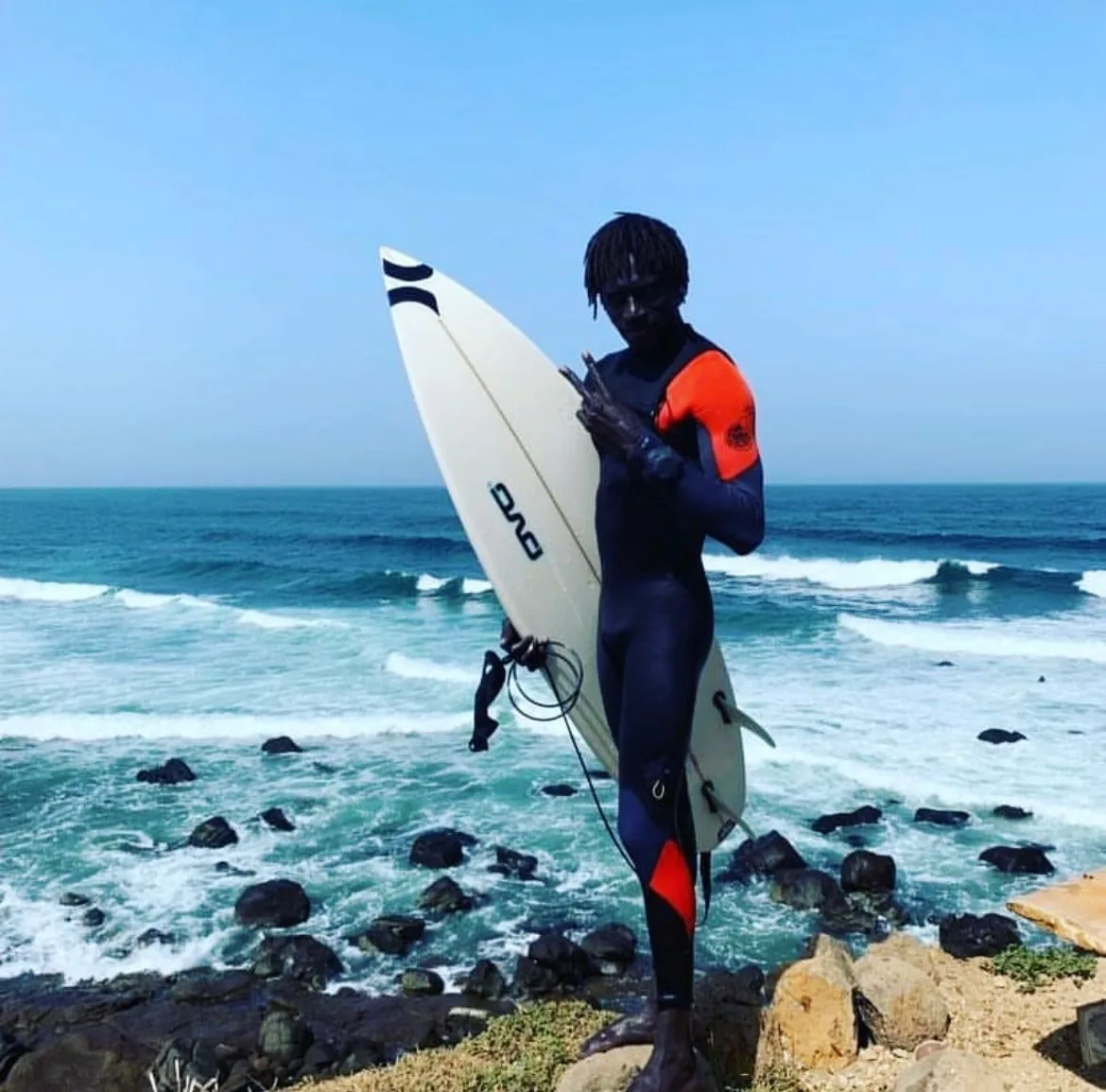
If you are planning a surf trip to Dakar, timing matters. The senegal surf season is not a single fixed experience but a shifting run of months, each with its own balance of swell, wind, crowd levels and daily rhythm, and on Ngor Island, those differences are easy to feel once you are in the water.
From November to April, the island sits in its most reliable window. This is when surfers come for the famous right-hand reef at Ngor, the mellower left, and the wider choice of sessions around Dakar’s coastline, reached from a small island that still feels distinct from the city only a few minutes away.
Why timing matters on Ngor Island
Ngor Island lies 400 metres off the village of Ngor on the tip of the Almadies peninsula, near Dakar. It is a small island with deep roots in Lébou fishing culture, and for surfers it occupies a special place in the history of West African wave riding. The island became internationally known after The Endless Summer was filmed here in 1964 and released in 1966, fixing Ngor in surf imagination long before Senegal became a more widely discussed destination.
That history still shapes expectations, but the practical question for most travellers is simpler: when should you go? The answer depends on what kind of surfer you are and what kind of trip you want.
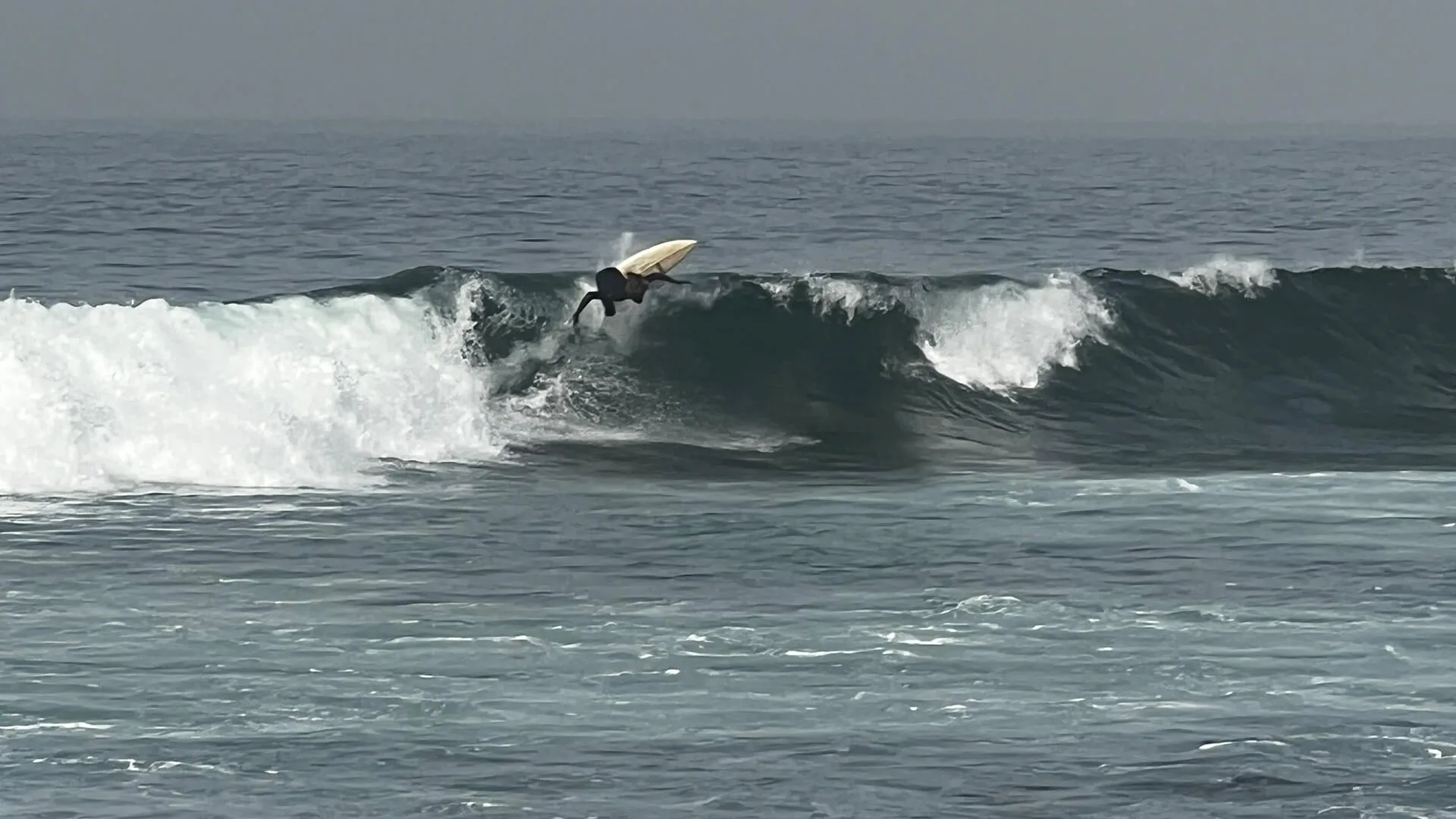
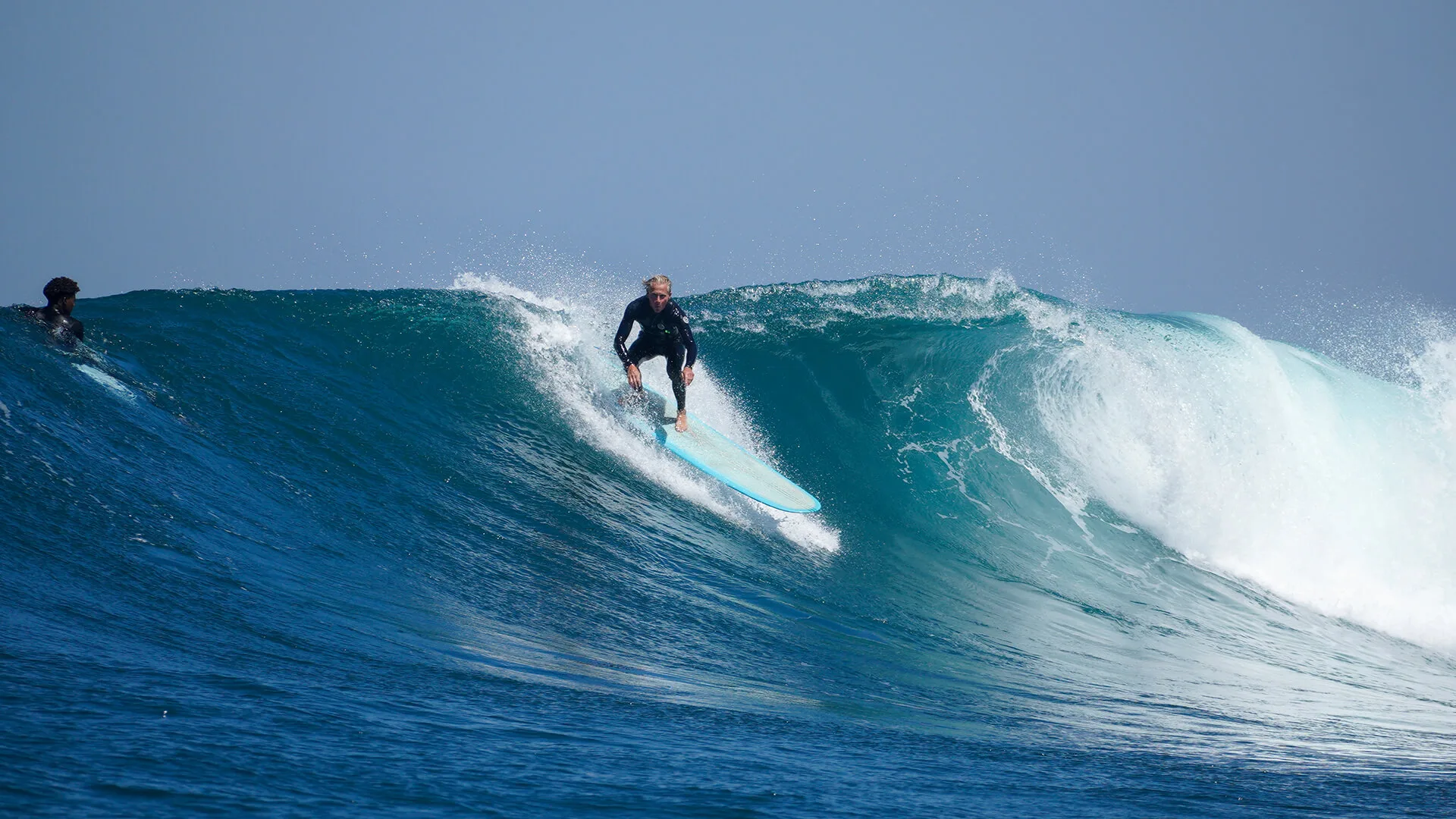
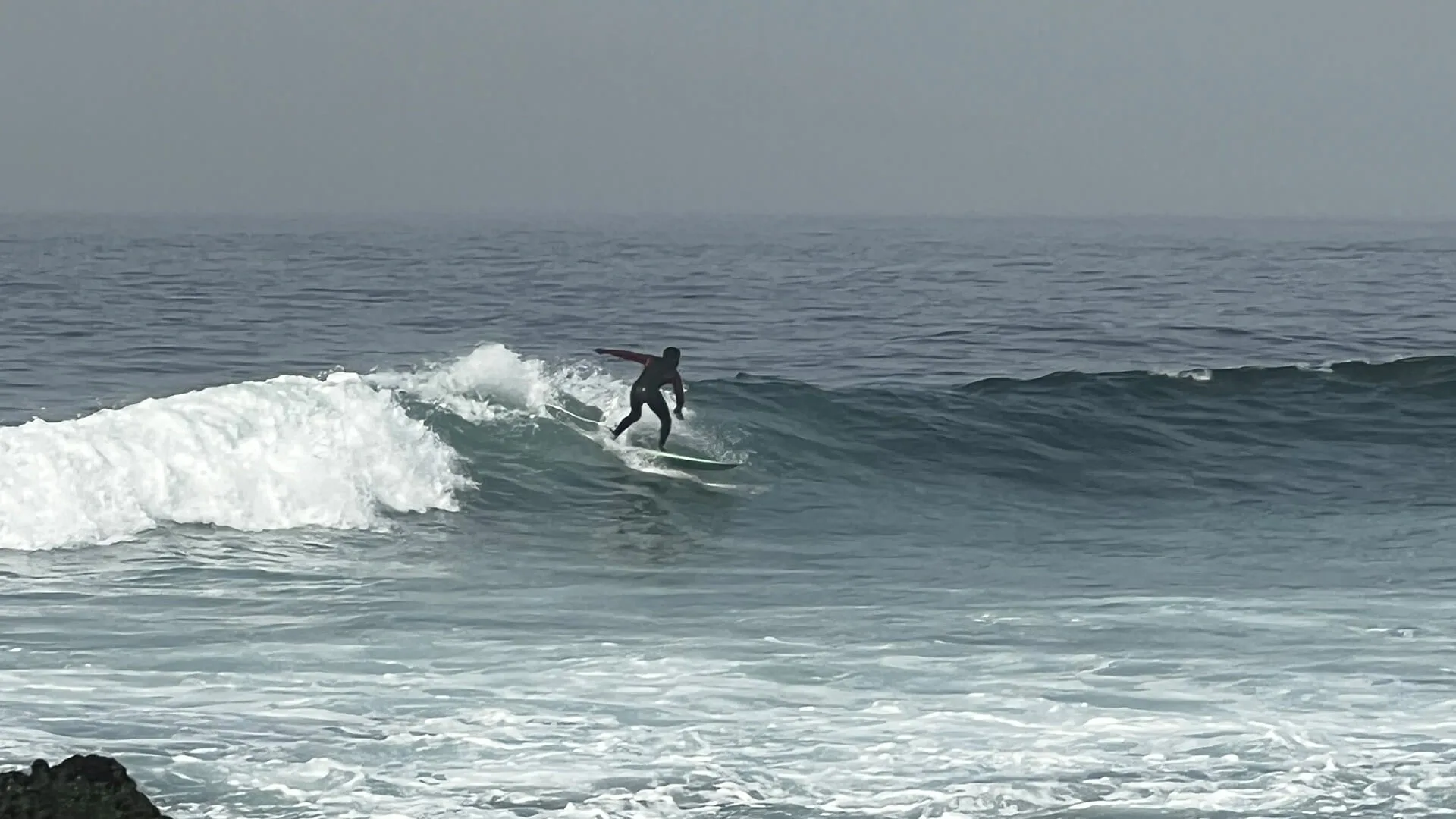
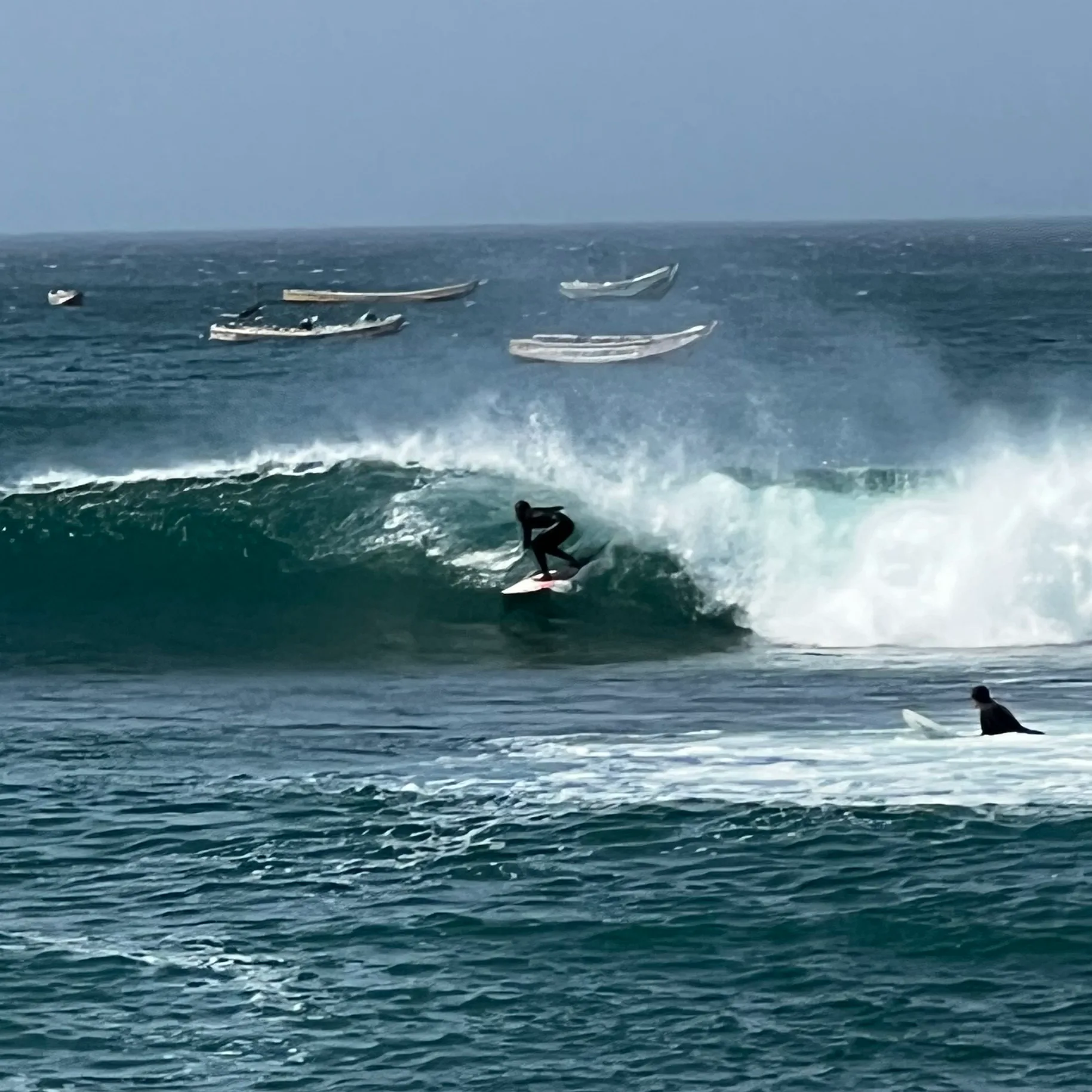
Ngor Right is the island’s best-known wave: a reef break described in reported accounts as fast, hollow and heavy, with reef beneath. It is the wave that draws experienced surfers. Ngor Left, by contrast, is the more forgiving option at the island, longer and mellower, and often the better fit for surfers who want more room to settle into a session. Around Dakar, there are also mainland spots including Yoff, Ouakam, Virage and Almadies, each useful depending on conditions and ability.
At Ngor Surfcamp Teranga, that range is part of the appeal. The camp is suited to all levels, though especially intermediates to advanced surfers, and combines island accommodation with surf guiding, theory sessions and optional coaching. Because the season runs across several distinct months, understanding the rhythm of each one helps you choose the right week rather than simply the right country.
Ngor Island sits 400 metres off the coast near Dakar, and the crossing from the mainland takes about five minutes by bateau.
The shape of the Senegal surf season
The broad picture is straightforward. The prime surf season at Ngor runs from November to April, while May to October is considered flat or off-season at the camp. Within that prime window, however, there are meaningful differences.
Reported travel coverage has long described winter, especially November to March, as the period for bigger surf around Dakar, while spring and summer are more manageable in general terms. For Ngor Island, that means the earlier part of the season often appeals most to confident surfers chasing more energy, while the later part can suit travellers who still want consistency but prefer a slightly softer edge to the trip.
Water temperatures across the year generally range from 18 to 26°C, so you are not dealing with one static setup. Some months feel cooler and more exposed, especially in early morning wind, while others are more comfortable for long sessions. The exact day-to-day feel depends on weather and time of day, but the seasonal range is enough to affect what you pack and how you plan your surf time.
Crowds also shift. Ngor is not a secret, and it has not been one for decades. But crowd level is not only about the number of surfers in the water. It is also about how many travellers are moving through Dakar, how many people are targeting the same swell windows, and how selective surfers can afford to be. In stronger months, good days attract committed surfers. In more moderate periods, the lineup can feel more mixed.
The best month is not universal; it depends on whether you want power, ease, or flexibility.
November: the season clicks into gear
November is one of the most interesting months in the senegal surf season because it often feels like the point when the prime window properly begins. The Atlantic starts to deliver more regular energy, and surfers arriving at Ngor are usually coming with intent rather than simply hoping for a lucky run of waves.
For experienced surfers, November can be a compelling time to target Ngor Right. When the reef is working, this is the kind of month that reminds you why the wave became so well known in the first place. The right is not a casual setup; it is a wave that asks for positioning, commitment and comfort over reef. For intermediates, Ngor Left and selected mainland alternatives can make more sense depending on the day.
Wind patterns at this time of year are part of the attraction. Mornings are often the key focus for travelling surfers everywhere, and on Ngor that logic still applies: early checks, quick decisions, and a willingness to move according to conditions. Because the season is just settling into its stride, November can reward surfers who stay flexible and use local guidance rather than locking themselves into one expectation.
Water temperatures are on the cooler side of the annual range compared with the warmest months, so some surfers will appreciate a wetsuit, especially for dawn sessions or longer time in the water. At the camp, wetsuit rental is available, which can be useful if you want to travel light.
Crowd-wise, November often attracts surfers who are paying attention to the season rather than general holiday traffic. That can mean a lineup with more purposeful surfers, especially when the forecast looks promising.

If you are visiting in November, keep your schedule loose enough to surf when conditions line up rather than planning every day around fixed non-surf activities.
December: reliable energy and a classic winter feel
December is often when the season feels fully established. The appeal of this month lies in its balance: enough consistency to justify the trip, enough variety to keep daily decisions interesting, and a clear sense that Dakar’s surf coast is in winter mode.
For Ngor Right, December can be serious. The wave’s reputation as a fast, hollow reef break is exactly why advanced surfers watch this period closely. It is not simply about size; it is about shape, pace and the consequences of hesitation. If you are not comfortable in that environment, the smarter move is to treat the right with respect and look to the left or to easier mainland options when needed.
Virage, noted in travel reporting as an easy beach break on the mainland, can be a useful contrast to the island’s more demanding setups. Yoff has also been described as a beginner break, while Almadies and Ouakam are among the more challenging mainland zones. That wider geography matters in December because a good surf trip is rarely about forcing one wave every day. It is about matching the surfer to the conditions.
The atmosphere around Dakar in December can feel lively without changing the essential rhythm of island life. You still cross by bateau, still watch the ocean from a small island off the city, and still build your day around tides, wind and swell rather than urban schedules.
At Ngor Surfcamp Teranga, this is the kind of month when surf guiding and theory sessions become especially useful. A wave like Ngor Right is easier to admire than to surf well. Understanding entry, timing and wave selection matters.
January: peak-season intent
January sits deep inside the prime window and is often the month many surfers imagine when they think of a winter trip to Senegal. The season is established, the expectations are clear, and the lineup tends to reflect that. People are there to surf.
This can be an excellent month for intermediates who want structure and for advanced surfers who want quality. The key is honesty about level. Ngor Right remains advanced only in practical terms, while Ngor Left offers a more approachable line for surfers who want a longer, less intense ride. Around Dakar, the ability to choose between island and mainland spots helps keep the trip productive even when one break is not the right call.
January often rewards routine. Dawn checks, a first session before the day fills out, breakfast back at camp, then a second look later depending on wind and tide: this is the kind of rhythm that suits the island. Because the camp includes breakfast and dinner, the day can stay centred on surfing rather than logistics.
Water temperatures remain within the annual range of 18 to 26°C, but many surfers still prepare for the cooler side of that spectrum during this part of the season. If you are sensitive to cooler water or wind, a wetsuit can make the difference between a short session and a long one.
Crowds in January can be steady. Not necessarily chaotic, but focused. Good days draw attention, and famous waves rarely stay empty when they are working. The advantage of staying on Ngor Island is proximity: you are close to the wave and can move quickly.

The best sessions usually come from reading the day carefully and choosing the right spot for your level, not forcing the most famous wave.”, The Ngor coaching team
February: consistency with room to refine your trip
February often feels like a month for surfers who want fewer surprises and more rhythm. By now, the senegal surf season is in full flow, and the practical side of the trip becomes easier to manage because the pattern of the season is well understood.
For advanced surfers, February can still offer the kind of conditions that make Ngor Right worth the journey. The wave remains what it is: a canonical break, advanced only, and best approached with respect. For intermediates, this can be a strong month to combine island sessions with coaching, video analysis and theory work, using the trip not only to catch waves but to improve decision-making.
That matters on reef. Surf progression at Ngor is not just about standing up or turning harder. It is about reading sections earlier, understanding where the wave becomes critical, and knowing when not to go. Video analysis, offered as an extra at the camp, can be particularly useful in a month like February when surfers often have enough consistency to compare one session with the next.
The island itself adds to the experience. Ngor is small, with about two kilometres of coastline and a population of around 100 on the island itself, according to the verified facts provided. It remains physically close to Dakar but psychologically separate from it. That separation is part of why a surf trip here feels more immersive than a city stay with occasional sessions.
Crowd levels in February are often manageable if you stay adaptable. The busiest moment is not every hour of every day; it is the best-looking window. Travellers who can surf early, stay patient and use local guidance usually get more from the month.
Ngor became famous in surf culture after The Endless Summer was filmed there in 1964 and released in 1966.
March: still prime, often a smart compromise
March is one of the most appealing months for many travelling surfers because it often combines the credibility of winter with a slightly more forgiving feel than the heart of the season. Reported travel coverage has described winter as the period for bigger waves and spring as more manageable; March often sits near that transition in a way that can work well for a broad range of surfers.
That does not mean Ngor Right becomes easy. It does not. A fast, hollow reef break remains exactly that. But for surfers who want a prime-season trip without necessarily targeting the most intense part of winter, March can be a smart compromise.
Ngor Left often comes into its own in this kind of month. Longer and mellower than the right, it can offer more room to work on flow, positioning and confidence. For intermediates, that can make March especially attractive. You still get the atmosphere of the season, the island setting, and the chance to surf around Dakar, but with a little more flexibility in how you approach each day.
Wind remains a daily variable rather than a monthly certainty. The practical lesson is simple: do not think in terms of one fixed session time for the whole trip. Think in terms of checking conditions, using guidance, and being ready to move when the window opens.
March can also be a good month for surfers who want to combine wave time with the wider experience of staying on Ngor Island. The camp’s pool, shared or private rooms, and included meals make it easier to recover between sessions and keep the trip comfortable without losing the surf focus.

- March often appeals to surfers seeking prime-season conditions with a slightly softer edge
- Ngor Right still suits advanced surfers, while Ngor Left can be a better fit for many intermediates
- Flexibility remains essential because daily wind and wave quality still shift
April: the tail end of the prime window
April is the last month of the camp’s prime season, and that gives it a particular character. You are still inside the recommended window, but you are also approaching the point where the season begins to taper toward the flatter off-season months of May to October.
For many travellers, that makes April attractive. There is still enough reason to come for surf, but expectations can be adjusted toward a more balanced trip: some strong sessions, some moderate days, and a little more emphasis on choosing the right spot rather than assuming every famous break will be at its best every day.
This can be a good month for intermediates who want to experience Ngor Island in season without aiming for the most intense version of it. Ngor Left may be the more natural focus, with mainland options available when conditions suit. Advanced surfers can still find quality, but April often rewards patience and timing rather than brute consistency.
Water temperatures are generally moving toward the more comfortable side of the annual range, which can make longer sessions feel easier for some surfers. Depending on your tolerance and the day’s weather, you may need less rubber than in the cooler part of the season, though many surfers still like to have options.
Crowds can also feel different in April. The pressure of the core winter window begins to ease, and that can make the overall trip feel more relaxed, especially for surfers who value atmosphere as much as raw power.
April is often less about chasing the heaviest day and more about making the most of a still-reliable season.
How to choose the right month for your level
The simplest way to choose your month is to start with honesty about your surfing.
If you are an advanced surfer and the main goal is to surf Ngor Right when the season has real energy, the earlier and middle parts of the prime window, especially November through February, are likely to be the most compelling. These months align with the period widely described as winter surf time around Dakar, when bigger waves are more part of the conversation.
If you are an intermediate surfer, March and April may offer a more comfortable entry into the season, especially if your plan includes Ngor Left, coaching, and selective sessions at easier mainland spots. That does not mean earlier months are off limits, only that later months may provide a better balance of challenge and manageability.
If you are a mixed-ability group, the best month is often the one that gives you options rather than the one with the most dramatic forecast. Ngor Island works well when stronger surfers can target the right while others use the left or mainland alternatives.
At Ngor Surfcamp Teranga, that flexibility is built into the experience. Surf guiding helps you read the day, while optional coaching and video analysis can turn a good trip into a more productive one.
Choose your month based on the wave you can surf well, not the wave you most want to photograph.
What to pack for the season
Packing for the senegal surf season is less about extremes than about range. Water temperatures across the year sit between 18 and 26°C, so your setup should account for variation rather than assume one fixed feel.
A wetsuit can be useful, especially in the cooler part of the season or for early sessions. If you do not want to travel with one, wetsuit rental is available at the camp. Board rental is also available, which helps if you want to avoid airline board logistics or adapt your equipment once you see the conditions.
Beyond surf gear, think practically. Island life means moving between room, beach and boat with ease. Light layers for mornings and evenings, reef awareness, and a willingness to keep your day simple all help. The camp includes breakfast and dinner, so you do not need to over-plan meals, and lunch is available as an extra.
Because the island is reached by a short bateau crossing from the mainland, it also makes sense to pack in a way that is easy to carry and easy to keep organised.
Why staying on the island changes the trip
A surf trip to Dakar can be done in different ways, but staying on Ngor Island changes the texture of the experience. You are not commuting in from elsewhere and trying to time the break from a distance. You are living close to the wave, watching the ocean more often, and making decisions with less friction.
That matters in a place where conditions can shift through the day. It also matters emotionally. Ngor is not just a launch point; it is part of the surf story itself, from its Lébou heritage to its place in surf film history. Even now, with Dakar’s wider surf scene stretching across Yoff, Ouakam, Virage and Almadies, the island remains the symbolic centre.
Ngor Surfcamp Teranga is based on that logic. It offers private, shared and dorm rooms, breakfast and dinner, surf guiding, theory sessions and a pool, with extras including airport transfer, coaching, video analysis, board rental, wetsuit rental and lunch. It is also licensed by the Fédération Sénégalaise de Surf, which matters for travellers who want a camp operating within the local surf framework.

- Decide whether your trip is built around Ngor Right, Ngor Left, or a mix of island and mainland spots
- Pack for water temperatures within the 18,26°C annual range, with a wetsuit option if needed
- Leave room in your schedule for daily condition changes and guided spot selection
A month-by-month verdict
So when should you go?
November suits surfers who want the season as it begins to switch on, with purposeful energy and a strong sense of possibility.
December offers a classic winter feel, with reliable intent and a clear focus on quality surf around Dakar.
January is for travellers who want the season in full form and are ready for a lineup shaped by serious surfers.
February often works well for those who want consistency and enough rhythm to build a trip around progression as well as wave count.
March can be the sweet spot for many, especially surfers looking for prime-season credibility with a slightly more manageable edge.
April is the choice for travellers who still want to be in season but prefer a more relaxed, balanced version of it before the flatter months begin.
There is no single perfect answer, only the right fit for your level and goals. The strength of Ngor Island is that it offers a famous advanced reef, a mellower alternative, and access to a broader Dakar surf map, all from a small island reached in minutes.
A good surf trip here comes from matching the month to your level and staying open to different spots when the conditions ask for it.”, The Ngor coaching team
If you are ready to plan your trip, explore the island, see how the camp works at our surf house, browse more guides on the blog, or go straight to booking your stay. The right month in Senegal is the one that lets you surf well, recover well, and experience Ngor Island at its best.