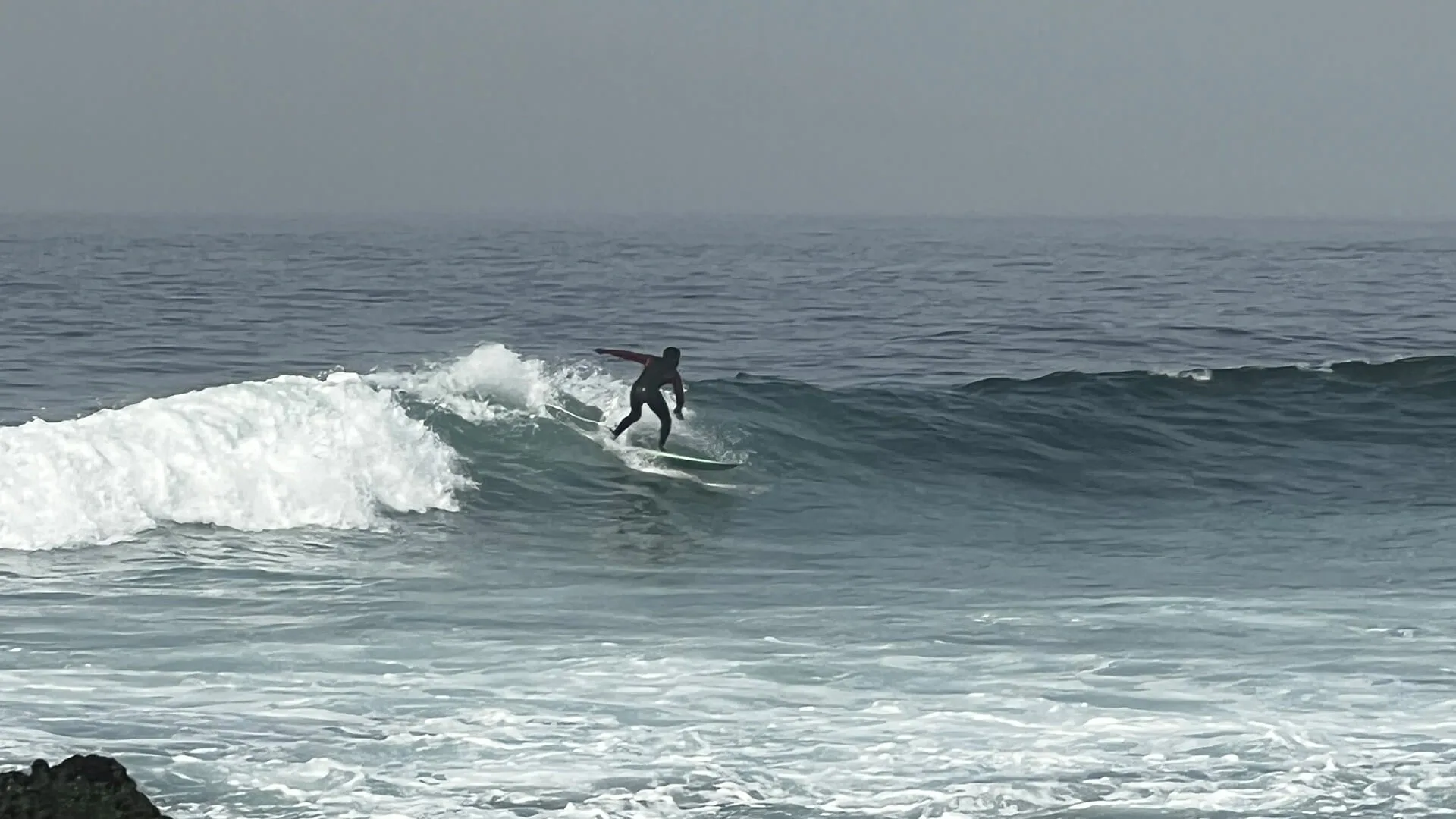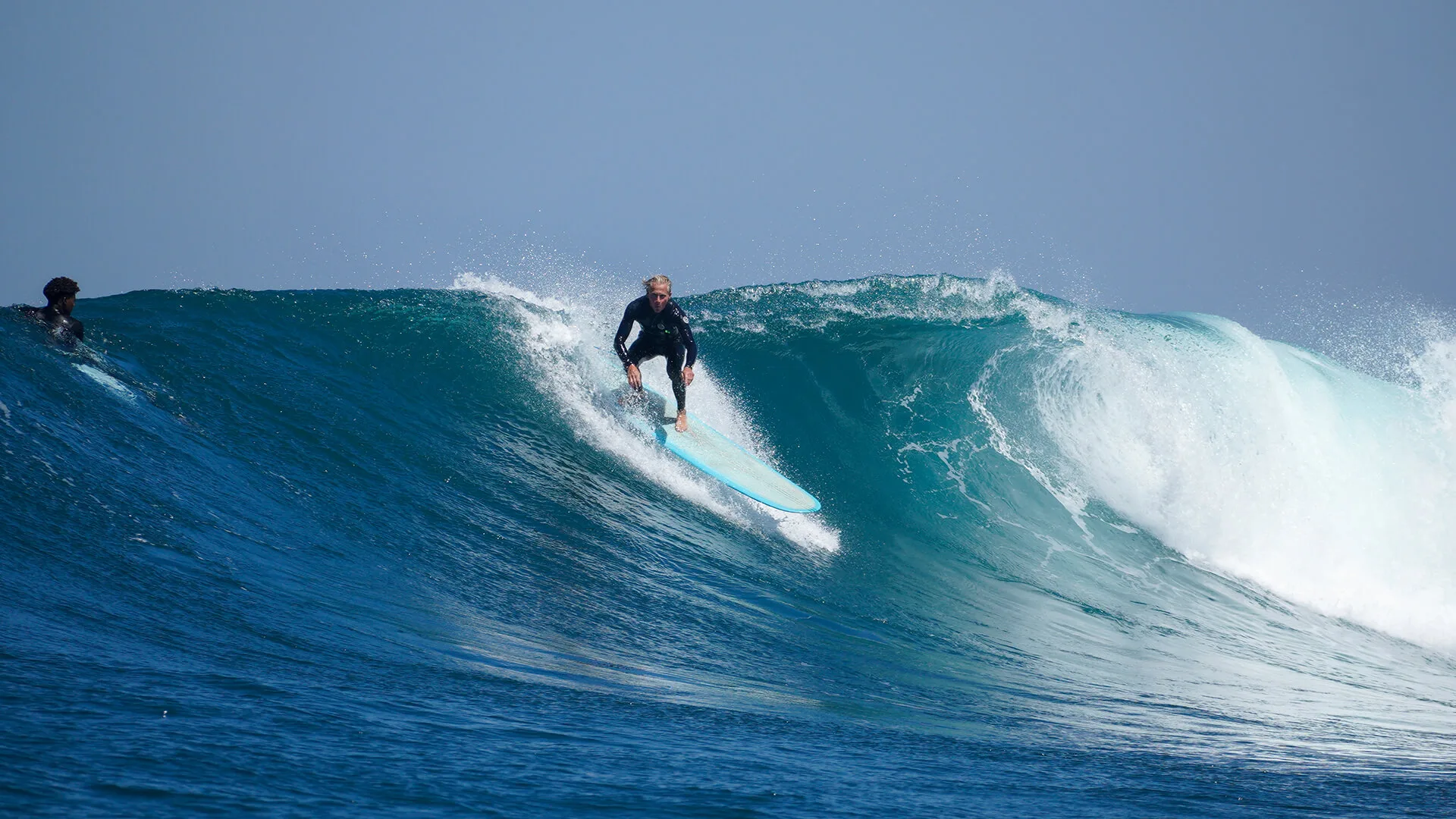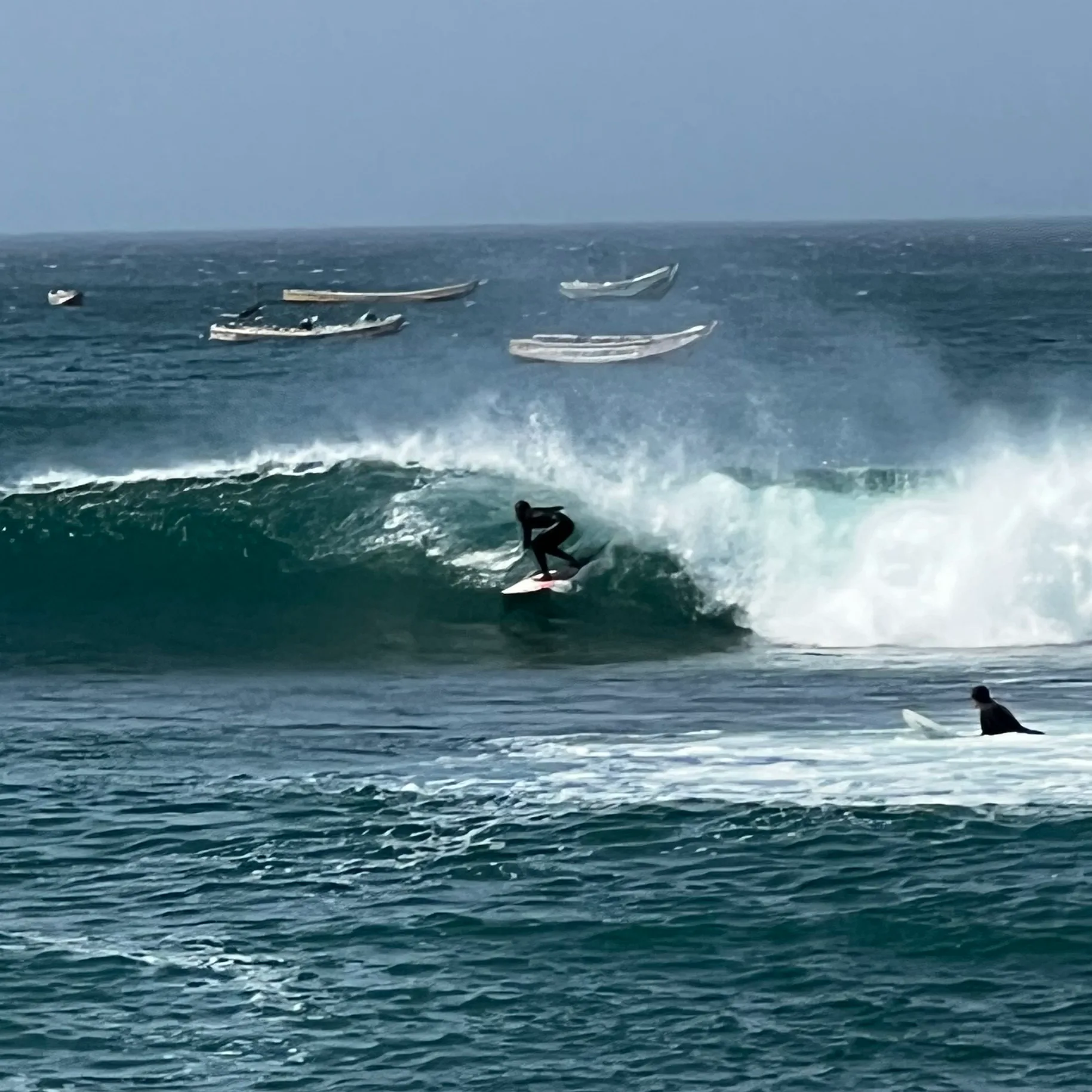
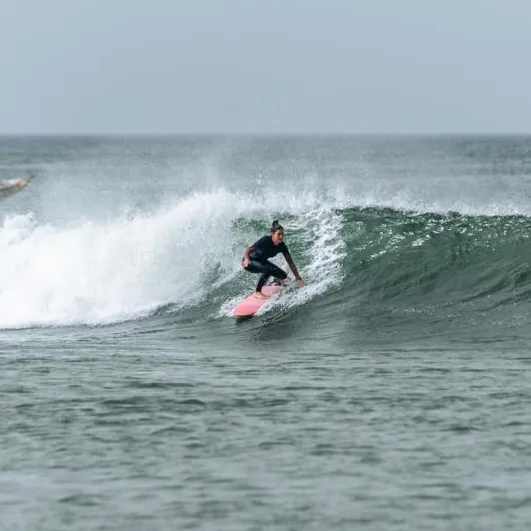
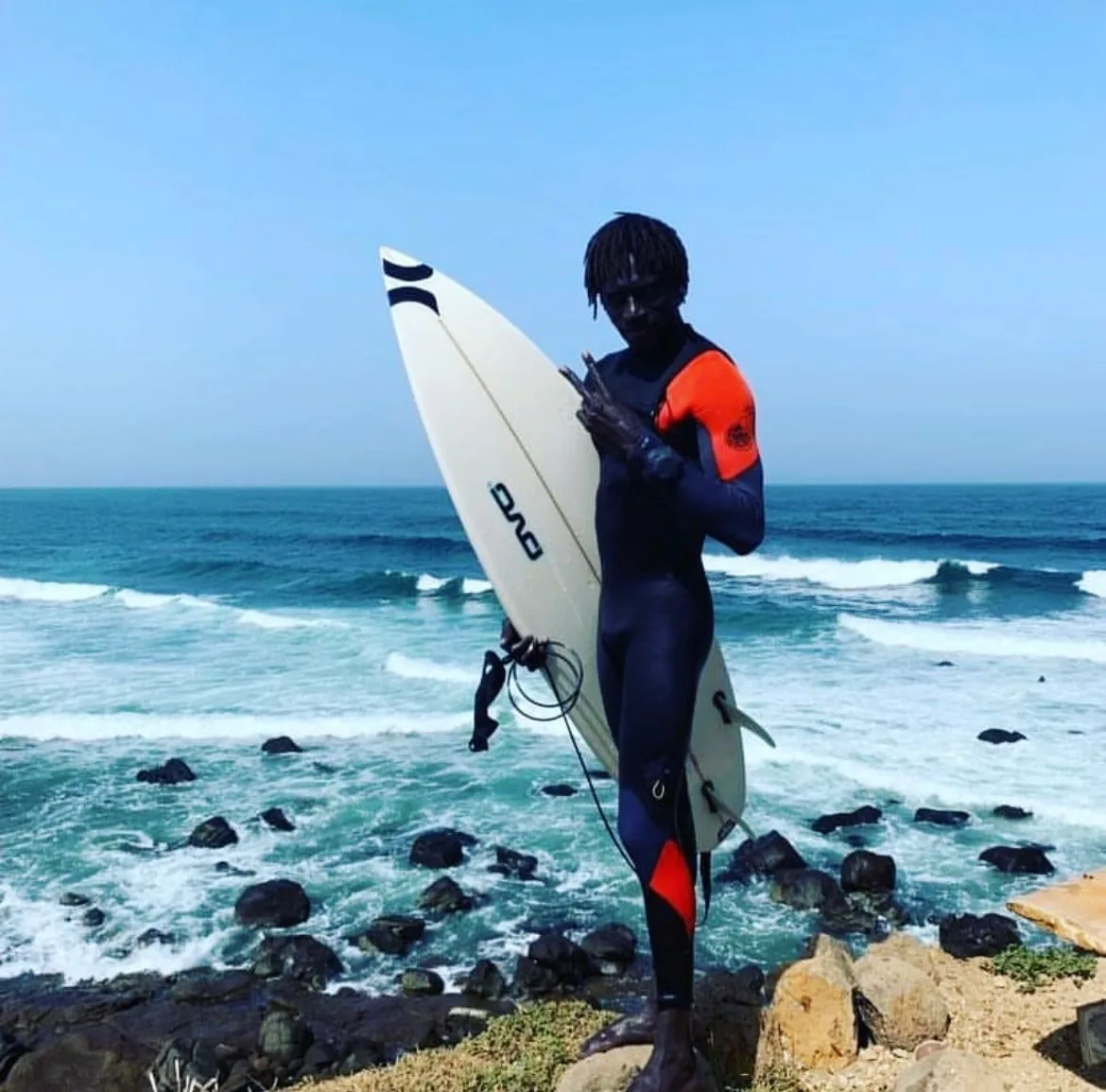
If you come to Ngor Island hearing only about the famous right, you miss half the story. Surfing Ngor Left is not about chasing the loudest wave in the lineup; it is about reading a more forgiving reef, finding rhythm, and learning how a Senegal point-and-reef setup can give you long, clean walls without the same level of intensity as its better-known neighbor.
For many guests at Ngor Surfcamp Teranga, the left is the session that quietly becomes their favorite. It is the wave where intermediates settle down, longboarders start drawing proper lines, and even experienced surfers enjoy a less hectic reset when Ngor Right is running fast and hollow.
What Ngor Left is really like
Ngor Left breaks on the reef near Ngor Island, 400 meters off the Dakar coast, and it has a very different personality from the wave most visitors talk about first. Where Ngor Right can feel quick, steep, and immediately demanding, the left often gives you more time. More time to stand, more time to set your rail, more time to look down the line and make a decision that is not purely defensive.
That extra beat matters. On a wave like this, the ride is often defined less by survival and more by flow. The takeoff is usually less critical than the right, the wall tends to open up more, and the better sections invite trimming, small direction changes, and longer arcs instead of immediate high-line speed management.
None of that means it is a soft wave or a beginner beach break. It still breaks over reef. You still need awareness, control, and respect for tide, crowd movement, and sectioning. But among the two headline waves at Ngor, the left is generally the one that allows more room for progression.
A lot of surfers arrive assuming “quieter” means “worse.” That is the wrong read here. The left can be extremely rewarding precisely because it does not force the same all-or-nothing performance. It offers cleaner learning for intermediates and more elegant surfing for those who enjoy shape over drama.
Ngor Left is the wave that teaches you to slow your eyes down.
Why it gets overshadowed by Ngor Right
Ngor Right has earned its reputation. It is a reef break with speed, hollow sections, and enough consequence to attract surfers looking for that sharper edge. It photographs well, talks loudly, and leaves a stronger first impression. If you are building surf-trip stories back home, the right often gets the headline.
But the left is where many surfers actually build better sessions.
The difference is not just direction. It is tempo. Ngor Right asks for commitment from the first second. You often need to be precise in your positioning, quick on your feet, and ready to handle a wave that can run fast across the reef. Ngor Left, by contrast, is typically more approachable in its pacing. It allows surfers to read the shoulder, make a smoother drop, and link more complete rides.
For intermediates especially, that changes everything. Instead of repeatedly getting caught a little too late or a little too deep, they can find a wave that gives feedback without punishment on every mistake. Longboarders appreciate that same quality for obvious reasons: a cleaner entry, a more workable face, and sections that reward glide.

Ngor Island is reached by a short five-minute bateau ride from Ngor beach on the Dakar mainland, which is why checking conditions on both the right and left can happen quickly during a guided stay.
When surfing Ngor Left works best
The prime surf season around Ngor Island runs from November through April, and that is the key window if you are planning a trip around consistency. During these months, Atlantic swell patterns are more reliable for Senegal, and the reefs around the island have a much better chance of showing their proper character. May to October is flatter and much less dependable for anyone traveling specifically to surf.
Within the season, Ngor Left needs the same thing every quality reef wave needs: enough swell to wrap in, enough period to organize the lines, and enough tide balance to let the wave stand up without becoming too fat or too exposed. Exact daily behavior changes, of course, and this is where local knowledge matters far more than generalized internet advice.
What we see repeatedly is that the left becomes attractive when there is enough energy to make the reef break clearly, but not so much that the wave loses its smoother appeal. Clean wind is important too. Early sessions often have the best texture, especially when the Atlantic surface is still relatively calm and the lineup has not yet filled in.
The left is also a good option on days when the right is simply too sharp for your level. This happens often with traveling surfers who are solid at home but arrive at reef setups and realize the famous wave they imagined may not be the best first paddle-out. The left provides a way to adapt to Ngor’s reef environment, current movement, and lineup rhythm before stepping into the right with confidence.
That is one reason surfing around Ngor is so interesting. You are not dealing with one single template of wave. You are dealing with options that let you calibrate your sessions.
Who Ngor Left suits best
If you had to name the ideal surfer for Ngor Left, it would be the intermediate who wants real reef experience without jumping immediately into a high-pressure, fast, hollow takeoff. This is the surfer who can paddle with intent, angle a takeoff, trim down the line, and make basic directional decisions on a shoulder. They are not absolute beginners, but they do not need elite reflexes to enjoy the wave.
Longboarders also tend to connect with it quickly. The wave often offers enough face and enough pace control for classic trimming lines, clean bottom turns, and drawn-out sections. It is not a beginner foam-board zone, but for competent longboarders who are comfortable in reef lineups and can control their equipment responsibly, the left can be one of the most enjoyable waves around Ngor.
More advanced surfers should not dismiss it either. The best experienced surfers on the left are usually the ones who stop trying to surf it like the right. They recognize that the wave rewards patience, rail work, and intelligent positioning over forced aggression. On the right, speed management may dominate your thinking. On the left, line choice becomes the more interesting conversation.
If you are completely new to surfing, Ngor Left is still not the first place to learn your pop-up. A reef break is a reef break. Absolute beginners are better served building foundations before entering this environment. But if you are a progressing surfer staying at surf-house style accommodation with coaching, guided checks, and theory support, the left can be an excellent milestone wave.
How it differs from Ngor Right in practical terms
The cleanest way to understand surfing ngor left is to stop comparing it in abstract terms and compare it in practical ones.
First, takeoff pressure. On Ngor Right, many surfers feel that every meter matters. Being too deep can turn the drop from makeable to punishing instantly. Being too hesitant can mean a late entry onto a fast wall that leaves no room for correction. Ngor Left often gives a little more forgiveness. Not endless forgiveness, but enough that surfers can focus on timing rather than pure reaction.
Second, line and speed. The right is known for speed and hollow character. It is a wave that can make you feel behind the section if you do not commit early. The left generally allows a more measured line. You can set your rail, trim, and build the ride progressively rather than being asked to race from the outset.
Third, board choice. Plenty depends on the day, but surfers often feel more freedom on the left. Performance shortboards work, of course, but so do fuller outlines and longboards in the right conditions. The wave does not demand the same narrow performance envelope every session.
Fourth, mental load. This is a big one. The right can occupy your head before you even paddle out. The left tends to calm people down. And when surfers calm down, they usually surf better.

The mistake we see most is surfers taking the same mindset to both waves. Ngor Left rewards reading the shoulder early and surfing with patience,” says The Ngor coaching team.
The key to positioning well at Ngor Left
Positioning is where good sessions are made or lost. On paper, Ngor Left can sound straightforward: easier than the right, longer wall, more room to work. In the water, though, plenty of visitors drift too wide, sit too deep, or paddle at the wrong moment because they are reading the wave from habit rather than from what the reef is actually doing.
The first rule is simple: identify where the first proper shoulder appears, not where the wave merely begins to break. Surfers unfamiliar with the setup often lock onto the first bit of whitewater or steepness they see and assume that is the place to camp. On many days, that leaves them either too inside or too committed to a section that does not give the best entry.
A better approach is to spend your first set observing. Watch where the cleanest surfers are taking off, but do not copy blindly. Notice whether they are taking off just before the reef starts to really draw the wall open, or whether they are using a slightly wider marker to avoid a section that closes if you are too greedy.
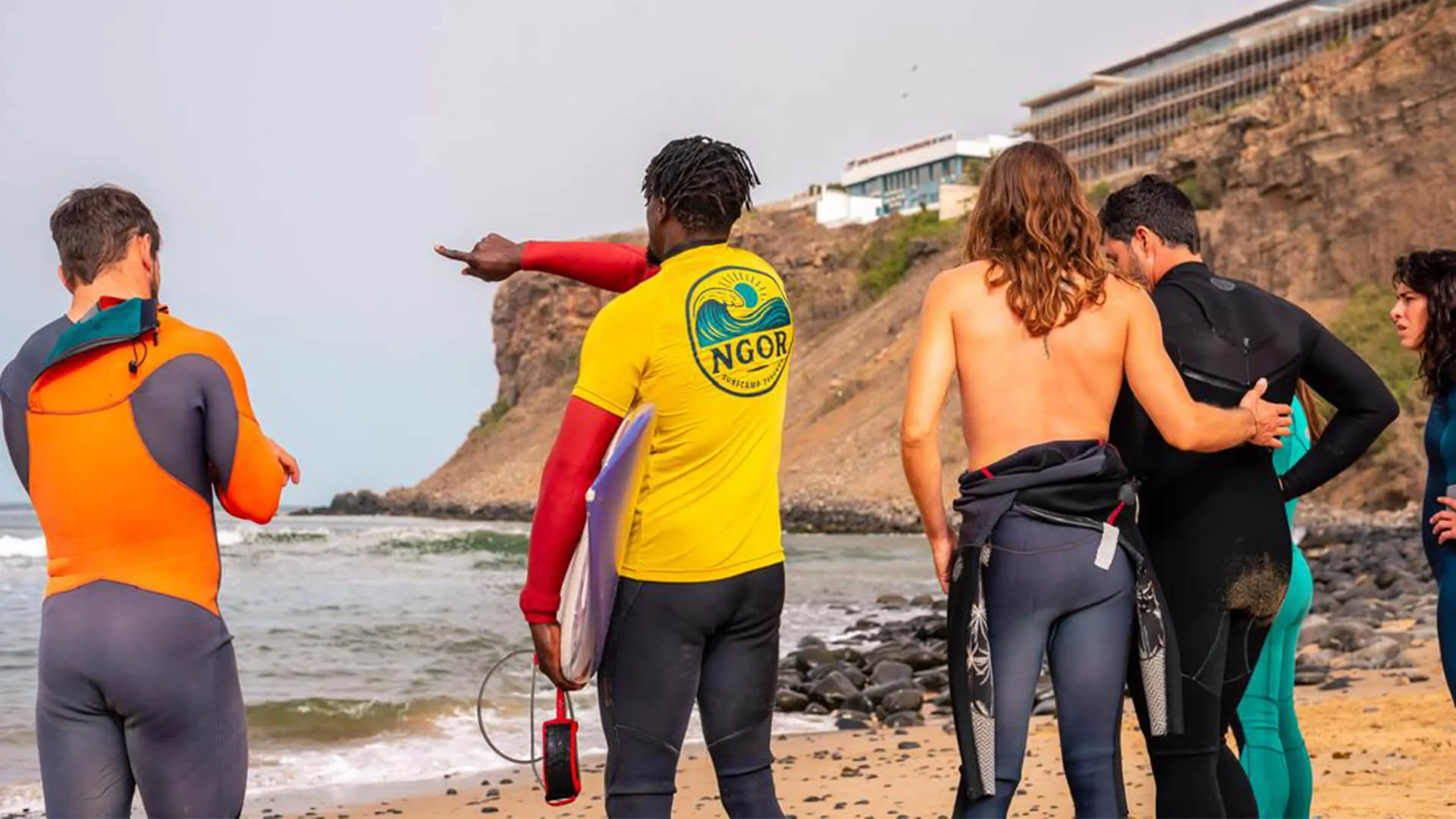
Landmarks help. On Ngor Island, a good guide will often point out shoreline references or reef alignments that make the peak easier to hold. Without that local reference, visiting surfers tend to drift with current or lineup movement and realize too late that they are no longer where the good waves are actually being caught.
The second rule is to paddle with angle, not panic. Since the left often gives more face to work with, you do not need to attack every takeoff straight toward shore. Start setting your line early. A slight angle on the paddle can be the difference between a smooth drop into the open wall and a clumsy bottom turn from too low on the face.
The third rule is patience between waves. Because the left can feel less threatening, surfers sometimes get lazy and sit in no-man’s-land. They want comfort instead of precision. Resist that. Small adjustments matter. One or two board lengths can turn a forgettable ride into a long, clean one.
At Ngor Left, being almost in the right place is usually not enough.
Reading the sections once you are up
The beauty of Ngor Left is that it often gives you time to think, but that can also create hesitation. Surfers used to waves that demand immediate speed may over-surf the first section. They pump too hard, push too early, or try to generate drama on a wave that is asking for clarity.
Start by standing and settling. If the shoulder is open, let the board run for a moment. Especially for intermediates, the best rides on the left often begin with composure. Feel where the wave is offering speed naturally. Then decide whether the wall wants a trim line, a cleaner bottom turn, or a higher line to connect the next section.
Longboarders should be especially disciplined about entry and trim. This is not a beach break where you can simply straighten out of trouble. Use the board’s glide, but be conscious of the reef and the surfers around you. Clean footwork matters more than flashy movement.
Shortboarders should not force the wave into being something more vertical than it is. Good surfing here usually looks smooth. Draw your turns. Let the wall tell you where the energy is. If you chase every weak shoulder with frantic pumps, you often outrun the shape rather than work with it.

On your first session, pick a slightly wider marker than you think you need, then adjust inward only after watching two or three clean set waves from the lineup.
Common mistakes surfers make at Ngor Left
The most common error is underestimating the reef because the wave feels mellower than the right. A more forgiving takeoff does not remove consequence. You still need controlled entries, awareness of the bottom, and good etiquette in the lineup.
The second mistake is sitting too deep because surfers are chasing the “best” takeoff instead of the best ride. They see a surfer make a critical entry and assume that is the correct spot every time. In reality, many of the longest and cleanest rides on the left begin from a more moderate position that lets you see the wall earlier.
The third mistake is treating the wave as a rest day and surfing below the level of attention it deserves. That often leads to poor paddle timing, weak commitment, and rides that bog from the first turn.
The fourth is board mismatch. People who can barely control a longboard in a crowd should not bring one into a reef lineup just because the wave looks friendly. On the other side, some surfers ride tiny high-performance boards and make the wave harder than it needs to be. There is no universal answer, but there is a right answer for your actual ability and the day’s shape.
Finally, many visitors fail to ask locals or guides where the lineup is shifting. At Ngor, small changes in swell direction, tide, and crowd movement can alter where the best takeoff sits. This is exactly why guided sessions and theory discussions matter.
Best board choices for surfing Ngor Left
For intermediate surfers, a board with a little extra volume is often the smartest call. That does not mean oversized. It means enough paddle power to get in early, enough stability to set your line, and enough rail control to trim confidently across a reef face.
A rounded pin or squash-tail shortboard with sensible liters can work very well. Hybrid shapes are often underrated here because they help surfers enter earlier and carry speed through softer parts without needing constant high-performance input.
Longboards and mid-lengths can be excellent on the left in the right conditions, particularly when the wave is clean and not too punchy. But choose these only if you are already comfortable managing length, turning in a lineup, and avoiding dangerous kick-outs or uncontrolled wipeouts around other surfers.
If you are traveling light, this is where board rental can make sense. At Ngor Surfcamp Teranga, board rental is available for €15 per day, which gives guests flexibility to match conditions rather than forcing one setup all trip. Wetsuit rental is also available for €5 per day if needed, though many sessions are comfortably surfed without much rubber depending on the season and your tolerance.

- Ngor Left is generally more forgiving than Ngor Right but still breaks over reef
- It suits intermediates, competent longboarders, and advanced surfers who value flow
- Good positioning means finding the clean shoulder, not simply the deepest takeoff
Why local guidance matters more here than people think
Because Ngor Island sits just off Dakar and access is quick by bateau, some surfers assume the setup is simple enough to self-diagnose after one look. Sometimes that works. Often it does not.
The nuance of the left is subtle. The difference between a session where you catch four average waves and a session where you unlock the wave can be a minor adjustment in entry point, a better understanding of the tide stage, or knowing when to move from one marker to another as sets begin to bend differently across the reef.
That is where staying somewhere licensed and surf-focused matters. Ngor Surfcamp Teranga is FSS licensed and built around more than just beds and boat rides. Surf guiding, theory sessions, coaching, and video analysis help translate local knowledge into things you can actually use in the water.
For many guests, the improvement comes not from surfing more waves, but from surfing the right waves. A quick post-session breakdown by the pool can reveal that your issue was not commitment at all. It was being one section too deep, standing too late, or looking at the lip instead of the shoulder.
If you want a feel for the place itself, island and gallery pages give useful context before you arrive, but there is no substitute for a real lineup explanation from people who know the reef every week of the season.
A smart first-session plan at Ngor Left
If it is your first time surfing the left, treat the opening session like reconnaissance, not conquest. Watch from the boat or from the lineup before you commit to the first decent set. Notice where successful takeoffs happen. Observe whether the shoulder is running clean or if certain waves pinch early.
Then build in layers. Start with the wave count goal low and the quality goal high. One good read is more valuable than three rushed attempts. Take the wider, cleaner one. Focus on standing early, setting a calm line, and finishing your ride under control.
By the second or third session, you can begin tightening your positioning. Move a little closer to the pocket if the wave is offering it. Experiment with a slightly higher line once you understand how quickly the shoulder opens. But always keep the reef and the lineup dynamic in mind.

- Watch at least one full set before taking your first wave
- Use a clear visual marker to hold your position in the lineup
- Start wider and cleaner before testing deeper takeoff spots
The atmosphere of the wave
One reason surfing ngor left stays with people is not just the shape of the wave but the mood around it. Ngor Island has that rare quality of feeling close to a capital city and somehow apart from it at the same time. You are a short bateau ride from the mainland, yet once you are in the lineup, with the Atlantic moving over volcanic reef and the island sitting behind you, the pace changes.
There is space to pay attention. Space to notice how the light changes on the water in the morning. Space to hear a call in the lineup and actually process it. This matters because good surfing often begins with the right atmosphere for concentration.
For guests staying at camp, that rhythm carries onto land. You surf, review, eat, rest, maybe do a theory session, and return better prepared for the next paddle-out. Breakfast and dinner are included, lunch is available as an extra, and the setup is designed so your day revolves around the water rather than around logistics.
That is part of why many surfers who come for the famous right end up talking most fondly about the left. It gives them room to enjoy the place as well as the wave.
Final take: is Ngor Left worth building a trip around?
If your idea of a good surf trip is only the heaviest, fastest wave in town, you may still spend most of your anticipation on Ngor Right. But if your idea of a good trip includes quality rides, progression, cleaner decision-making, and a wave you can return to over multiple sessions with more understanding each time, then yes: Ngor Left is absolutely worth knowing in detail.
It is not the backup option in the dismissive sense. It is the smarter option for many surfers on many days. It opens the door for intermediates who want a proper reef experience, gives longboarders one of the more enjoyable canvases around Ngor, and reminds advanced surfers that not every memorable session has to come with maximum consequence.
For trip planning, the simple version is this: come in season from November to April, arrive ready to listen, and do not judge the left by how quietly people talk about it compared with the right. The wave earns its place in a different tone.
The surfers who understand Ngor Left best are usually the ones who stop trying to make it prove itself.
If you want help timing your trip, choosing the right room, or setting up guided sessions and coaching on Ngor Island, see booking.