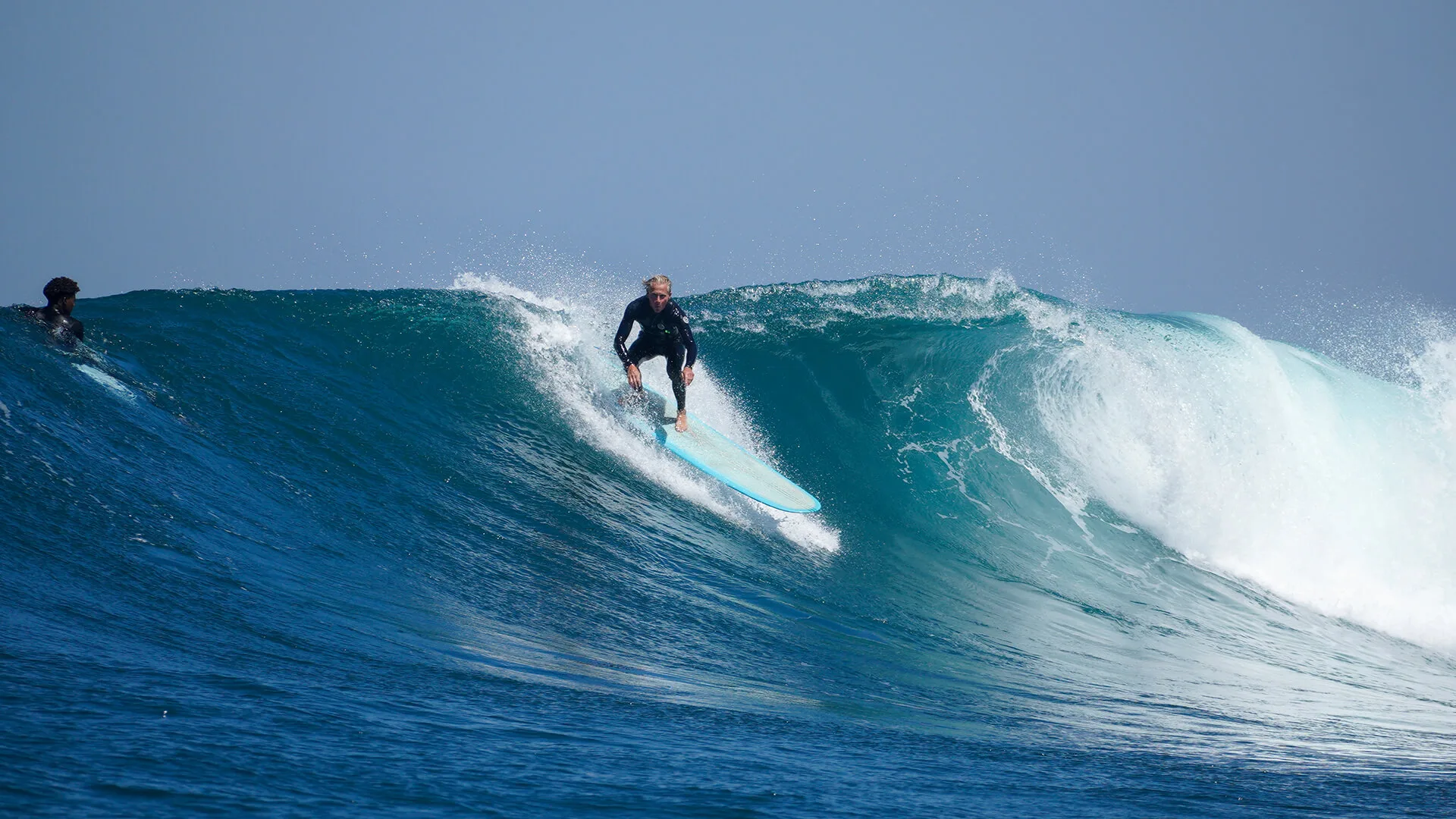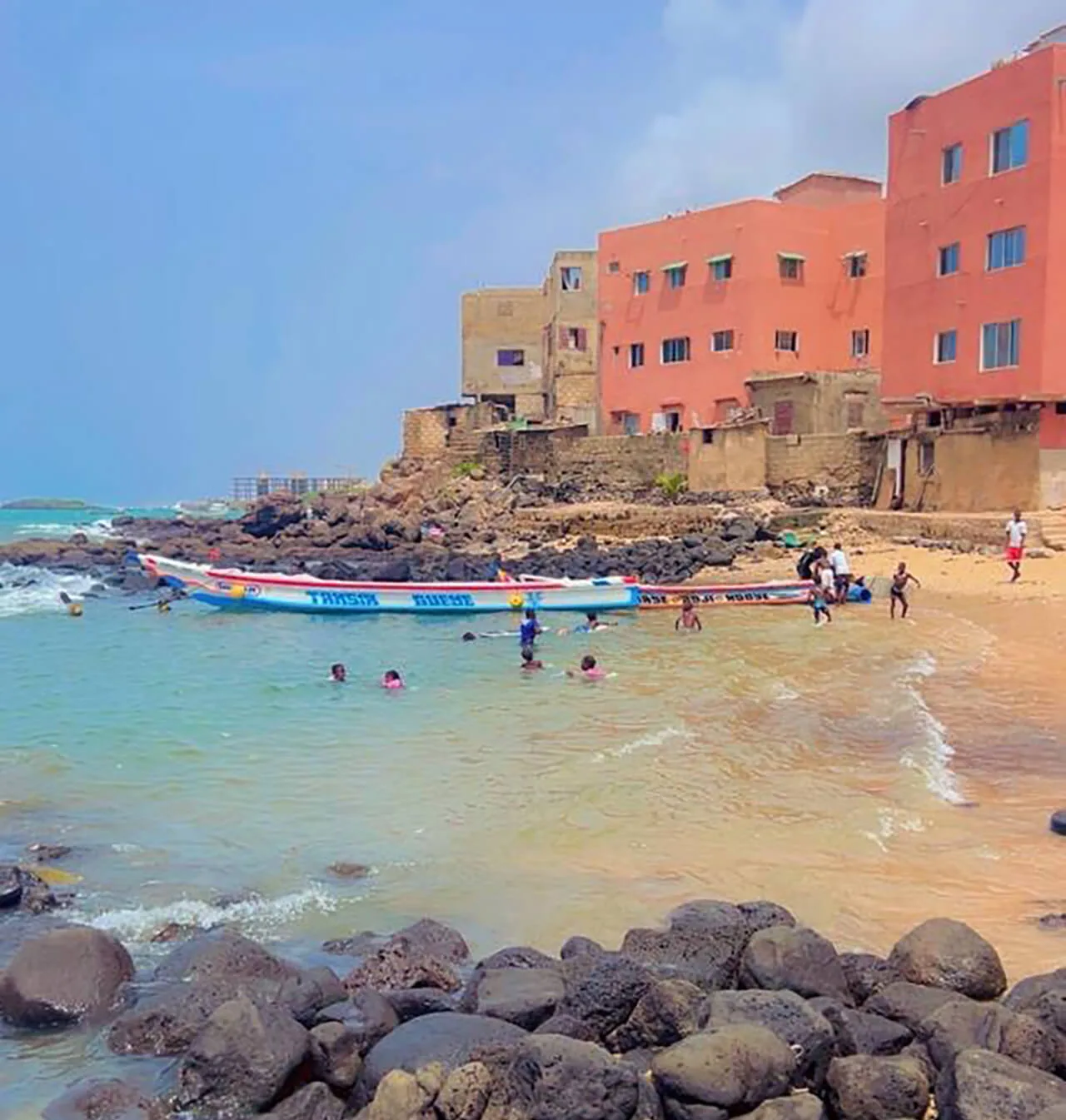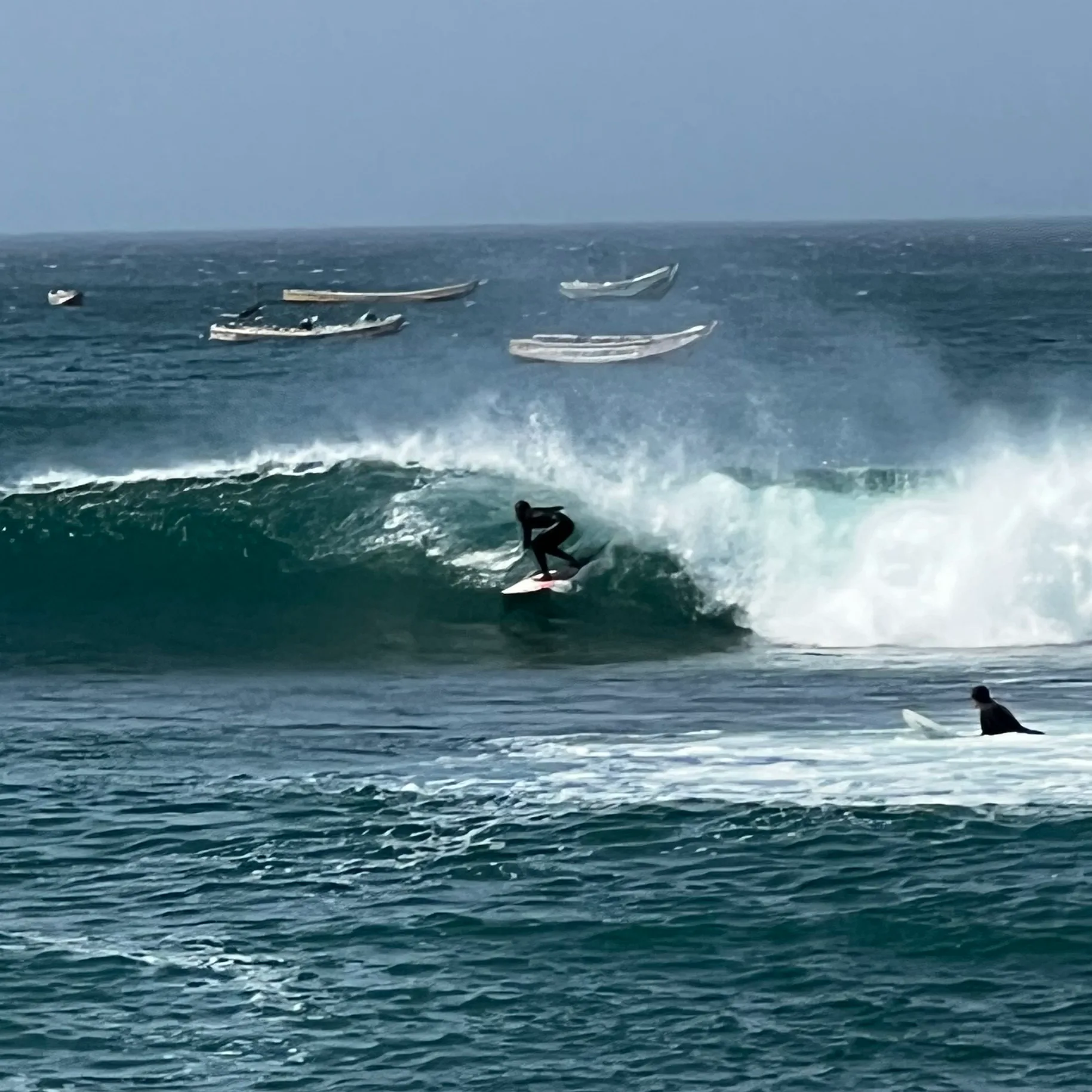
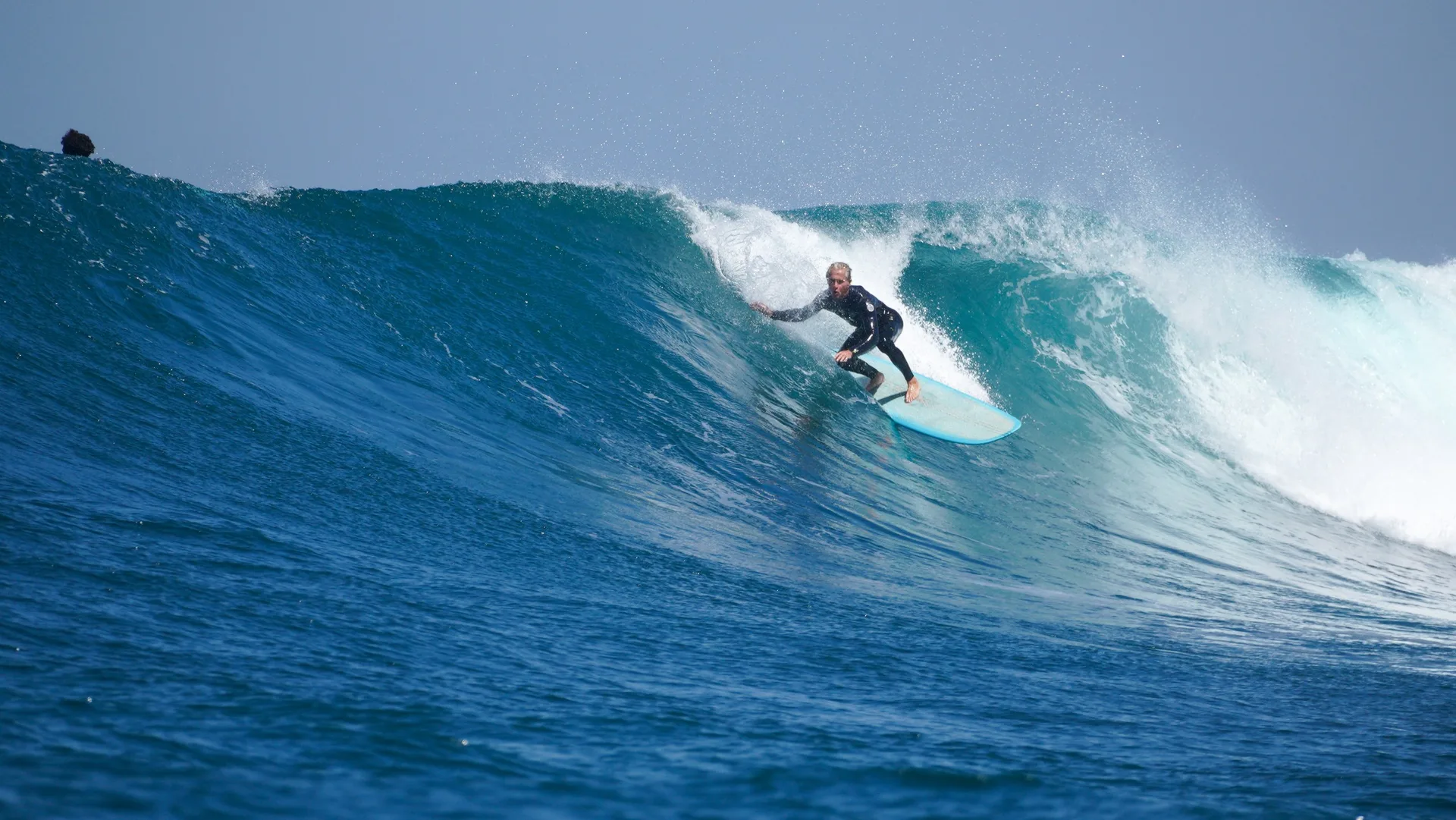
For a long time, surfing in Senegal was considered a story of waves.
A story of N’Gor, pirogues, reef breaks, and surfers who come seeking, just minutes from Dakar, an Atlantic Ocean that remains relatively untouched.
But something is changing.
Today, theis no longer just a sport. It is gradually evolving into a genuine local economy, with its surf schools, instructors, clubs, surf camps, restaurants, accommodations, guides, shapers, events, and an entire generation of young Senegalese who are beginning to build their futures around the ocean.
At the heart of this evolution,Surf Dakarplays a major role.
The capital city concentrates a large portion of the surf spots, practitioners, infrastructure, and entrepreneurs who contribute to the emergence of this new economy.
Surfing, a Young but High-Potential Economy
It would be premature to present surfing as a major industry in Senegal's economy.
The sector remains relatively small.
But that's precisely what makes its potential so intriguing.
A study on the economics of surf tourism reveals that surfers represent a particularly attractive clientele for destinations: they often travel in small groups, may return multiple times, and their spending benefits various local stakeholders.
Surfing doesn't just generate income through the sale of a session.
A surfer arriving in Dakar can spend on accommodation, dining, transfers, board rentals, lessons, guides, transportation, cultural activities, or local businesses.
Economic value spreads.
And that's where the potential ofSurf Senegalbecomes particularly interesting.
Surf Dakar: An Exceptional Territory
Dakar boasts an advantage that few cities can claim.
The ocean is everywhere.
The peninsula is exposed to the Atlantic Ocean and features around a dozen surf spots, each with unique characteristics depending on swell, wind, and tide conditions. N’Gor, Ouakam, and the other waves along the coast create an exceptional playground within a relatively compact geographical area.
This concentration is a real economic strength.
A traveler can stay in Dakar, quickly access multiple surf spots, and experience different types of waves without changing locations.
For surf tourism, this means a richer experience.
For local entrepreneurs, this also means multiple opportunities to create services around the same customer.
From the Wave to the Surf Camp
The first level of this economy is naturally accommodation.
Thesurf camps in Senegalare a particularly important gateway for surf tourism.
They sell much more than just a night.
A surf camp can offer:
- accommodation;
- surf lessons ;
- coaching;
- surf guiding
- board rental;
- wetsuit rental;
- transfers;
- food service;
- excursions;
- personalized coaching.
The business model then becomes much more attractive than just a sports activity.
A visitor who comes to surf for a week can provide work for several people and multiple businesses.
This is what we call the ripple effect of tourism.
At the scale of West Africa, the World Bank rightly highlights the significant effects of tourism on small businesses and local value chains. Between 2017 and 2024, over 600 million dollars in private investments were mobilized for tourism in Senegal, Ghana, The Gambia, and Cabo Verde.
Surfing can find its place in this dynamic.
An economy that begins at the water's edge
Behind every surf session lies an economic chain.
There is the instructor.
The Guide.
The person who maintains the boards.
The driver.
The chef.
The cleaning lady.
The property owner.
The Restaurant.
The equipment seller.
The photographer.
The Shaper.
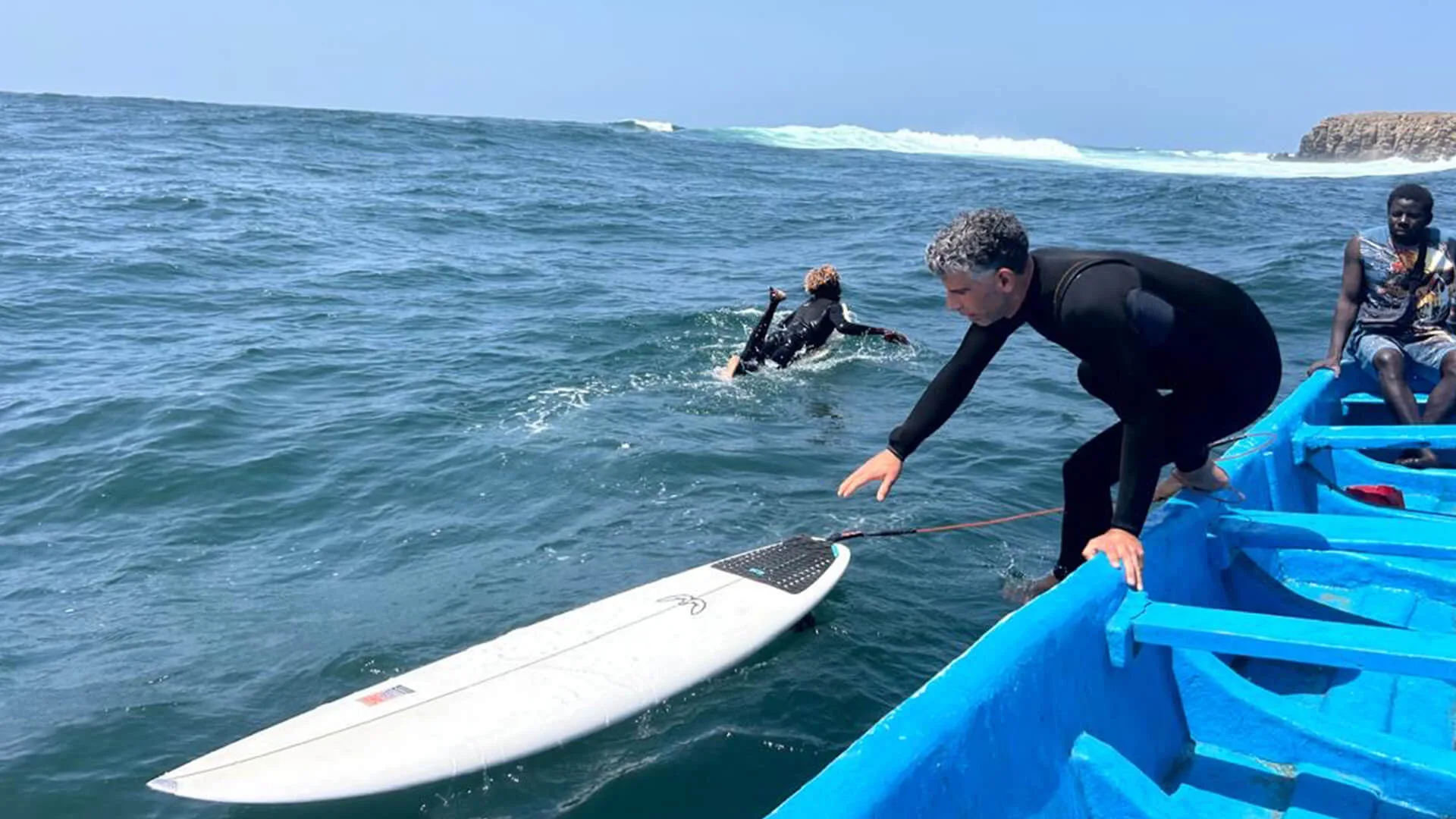
And sometimes the fisherman who transports surfers in his pirogue.
It's this proliferation of small players that makes the surf economy so compelling for coastal regions.
Surfing is a relatively low-infrastructure activity compared to some forms of mass beach tourism.
A beach, a wave, a few boards, and a local organization are all it takes to create an economic activity.
The development of a local surfboard industry
One of the most interesting signs of the transformation ofsurf Dakaris the emergence of genuine local expertise around equipment.
In Dakar, young entrepreneurs are starting to focus on the manufacturing and repair of surfboards.
The phenomenon is still in its early stages, but it is strategic.
Systematically importing boards from Europe, Australia, or the United States significantly increases their cost.
Producing locally, on the other hand, helps reduce certain costs, develop skills, and establish a genuine local industry.
The case of Freeca, a workshop launched in Dakar in 2024 to craft high-performance surfboards, exemplifies this evolution. According toThe WorldThe surfboards are offered at a lower price than imported models, and some are made available to young surfers or local clubs.
This type of initiative is essential.
A robust surf economy cannot rely solely on foreign tourists.
It must also enable local stakeholders to produce.
Surfing as a Job Creator
One of the strongest arguments in favor of the development ofsurf Senegal
Then coach.
Then guide.
Others develop a surf camp, a restaurant, or a tourism-related activity.
In Dakar, this evolution is already visible.
reports that an ecosystem has developed over the past decade around the Senegalese Surfing Federation, established in 2017, with nearly 300 licensed members cited in 2026.
But it marks an important transformation: surfing is gradually shifting from a marginal practice to a structured sport, social, and economic activity.
A new generation of entrepreneurs
The new economy of Senegalese surfing doesn't rely solely on major international brands.
Instructors.
Content creators.
Restaurant owners.
Owners of surf camps.
This new generation fully understands that surfing has become a global industry.
But it also seeks to maintain local control over it.
It is an essential evolution for the future ofSurf DakarSurf Camp Ngor
The Role of Social Media
Instagram, YouTube, and TikTok have profoundly changed the way a surf destination is discovered.
A European surfer can now watch a session at N'Gor in the morning and book their trip a few weeks later.
A video of a wave in Ouakam can become a global advertisement for Dakar without any traditional tourism campaign being necessary.
This visibility represents a significant opportunity.
Senegal already holds a strong image in the international surf scene thanks to N’Gor and the story ofThe Endless SummerSurf Camp Ngor, Senegal
Today, social media allows the new generation to tell their own story.
From N’Gor to All of West Africa
The potential certainly doesn't stop at Senegal's borders.
West Africa boasts an immense coastline and a great diversity of surf conditions.
From Senegal to Ghana, passing through Gambia, Ivory Coast, Liberia, and Sierra Leone, many coastal communities boast waves and landscapes capable of attracting surfers.
However, development remains highly uneven across countries.
Senegal enjoys a major historical advantage: the international visibility of N'Gor and the exceptional concentration of surf spots around Dakar.
Today, the country is considered a regional leader for surfing in West Africa.
Surf tourism as an alternative to traditional beach tourism
One of the major economic benefits of surfing is its ability to help diversify tourism.
A typical tourist might come looking for a beach and a hotel.
The surfer is looking for an experience.
He wants to know the spots.
Meet the locals.
Understanding the conditions.
Find the perfect wave.
Discover the restaurants favored by surfers.
And often come back.
This clientele can therefore be particularly interesting for destinations looking to develop more experiential tourism.
Surf thus becomes a full-fledged tourist attraction.
An economic model worth preserving
But developing the surf economy doesn't mean repeating the mistakes of mass tourism.
A surf destination can quickly lose what made it appealing if it becomes overdeveloped, too expensive, or too crowded.
The surf economy depends directly on the quality of the environment.
No clean beach, no attractive destination.
No waves preserved, no surf tourism.
No local communities involved, no authenticity.
Economic development must therefore go hand in hand with coastal protection.
Scientific research on surfing also shows that the activity has economic, social, and environmental dimensions that must be considered together within a framework of sustainable development.
The Environmental Challenge
For theSurf SenegalFor us, protecting the ocean is not a secondary issue.
It is directly economical.
Plastic pollution, coastal erosion, and urban pressure can impact the appeal of surf spots.
Senegal is already facing significant challenges with coastal erosion. The World Bank highlights that erosion threatens several tourist destinations in West Africa, while coastal restoration projects have been carried out, notably in Saly.
For a sustainable surf economy, protecting beaches and waves means protecting an economic resource.
The Role of Surf Camps in the Local Economy
Surf camps can become central players in this transformation.
A surf camp well integrated into its local area can create a virtuous cycle:
surfers → accommodation → dining → lessons → guides → transportation → shops → local jobs.
The longer the stay, the greater the potential for multiplying economic benefits.
And unlike passing tourism, surfers generally come with the desire to spend several days on site.
It's particularly interesting for Dakar and N'Gor.
The goal is not just to attract more visitors.
The goal is to attract visitors who stay longer and spend locally.
##
N’Gor Island has all the ingredients of a true surf ecosystem.
A world-renowned wave.
Tourist facilities.
Schools and clubs.
Local instructors.
Restaurants.
And a unique international story.
Can Dakar Become West Africa's Surfing Capital?
Dakar has the waves.
From a vibrant local scene.
From a new generation of surfers.
Entrepreneurs.
With international visibility.
And an exceptional geographical location.
So the potential is there to make Surf Dakara true tourist signature of the capital.
But this requires a strategy.
Train.
Invest.
Structure.
Promote.
Protect.
And above all, give more space to local players.
The Future of Surfing in West Africa
West Africa could become one of the next major territories in global surfing.
The region boasts thousands of kilometers of coastline, waves that are still relatively uncrowded, and local communities deeply connected to the ocean.
But development must be smart.
The goal shouldn't be to become the next Bali.
It should aim to build an African model of surfing.
A model where local communities are at the heart.
Where young people can build a career.
Where local entrepreneurs capture a significant share of the value.
Where the waves are protected.
And where tourism genuinely contributes to regional development.
Surfing as the new blue economy
At its core, the surf economy is part of a broader reflection: that of theBlue EconomySurf Camp Ngor
The ocean is not just a resource to be exploited.
It can also create jobs through tourism, sports, culture, services, and leisure activities.
Surfing has a unique advantage: it depends directly on the quality of the natural environment.
Therefore, the surfer has every interest in protecting what they come to seek.
In Dakar, this approach could become a true driver of local development.
Surf Senegal: An Economic Wave Not to Be Missed
Senegalese surfing is at a pivotal moment today.
The story already exists.
N’Gor has an international reputation.
Dakar boasts exceptional waves.
A new generation of surfers is emerging.
Clubs are growing.
The entrepreneurs are arriving.
Tourists are starting to turn their attention to West Africa.
And as always in surfing, everything will depend on how you choose to catch the wave.
###