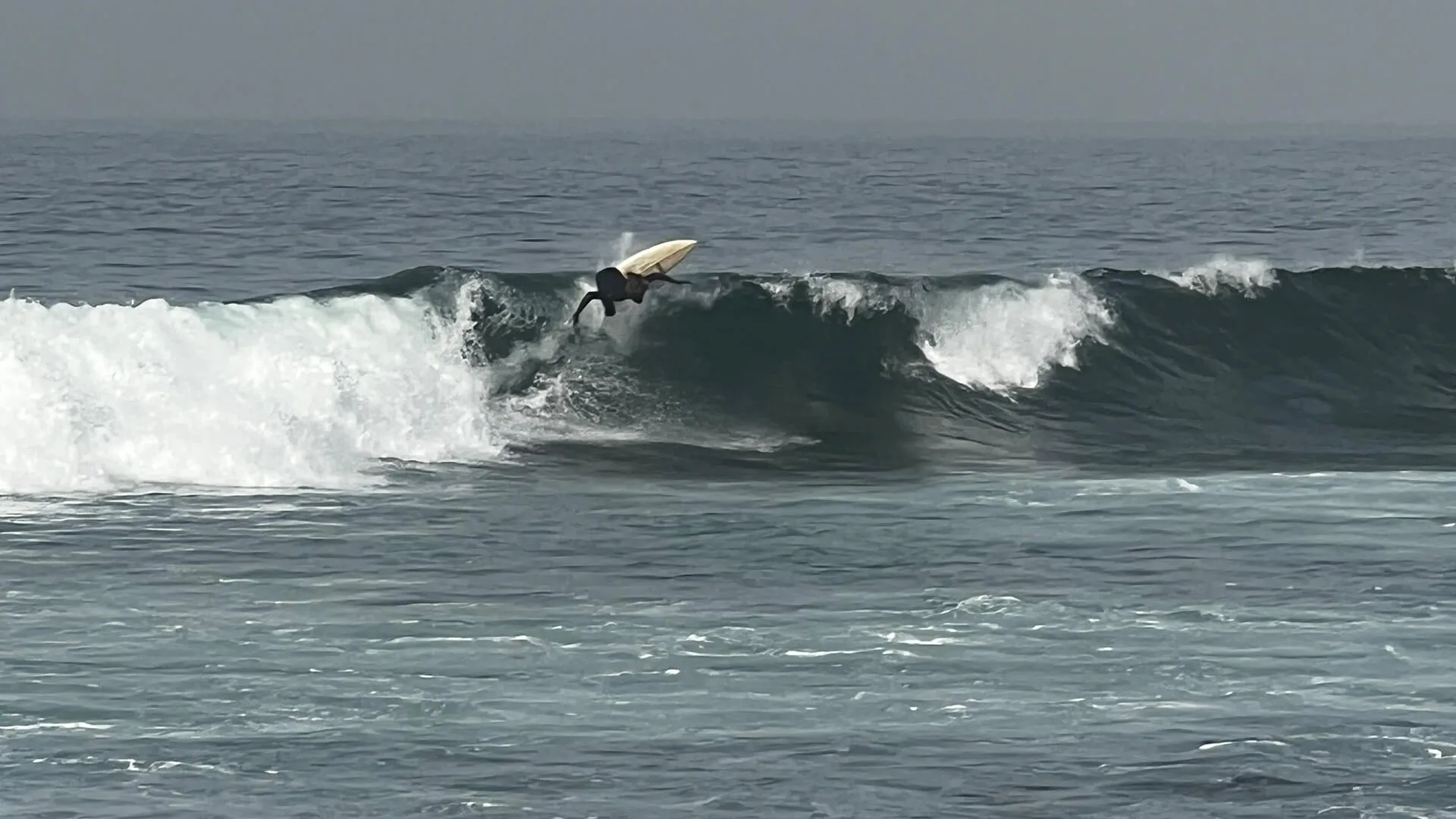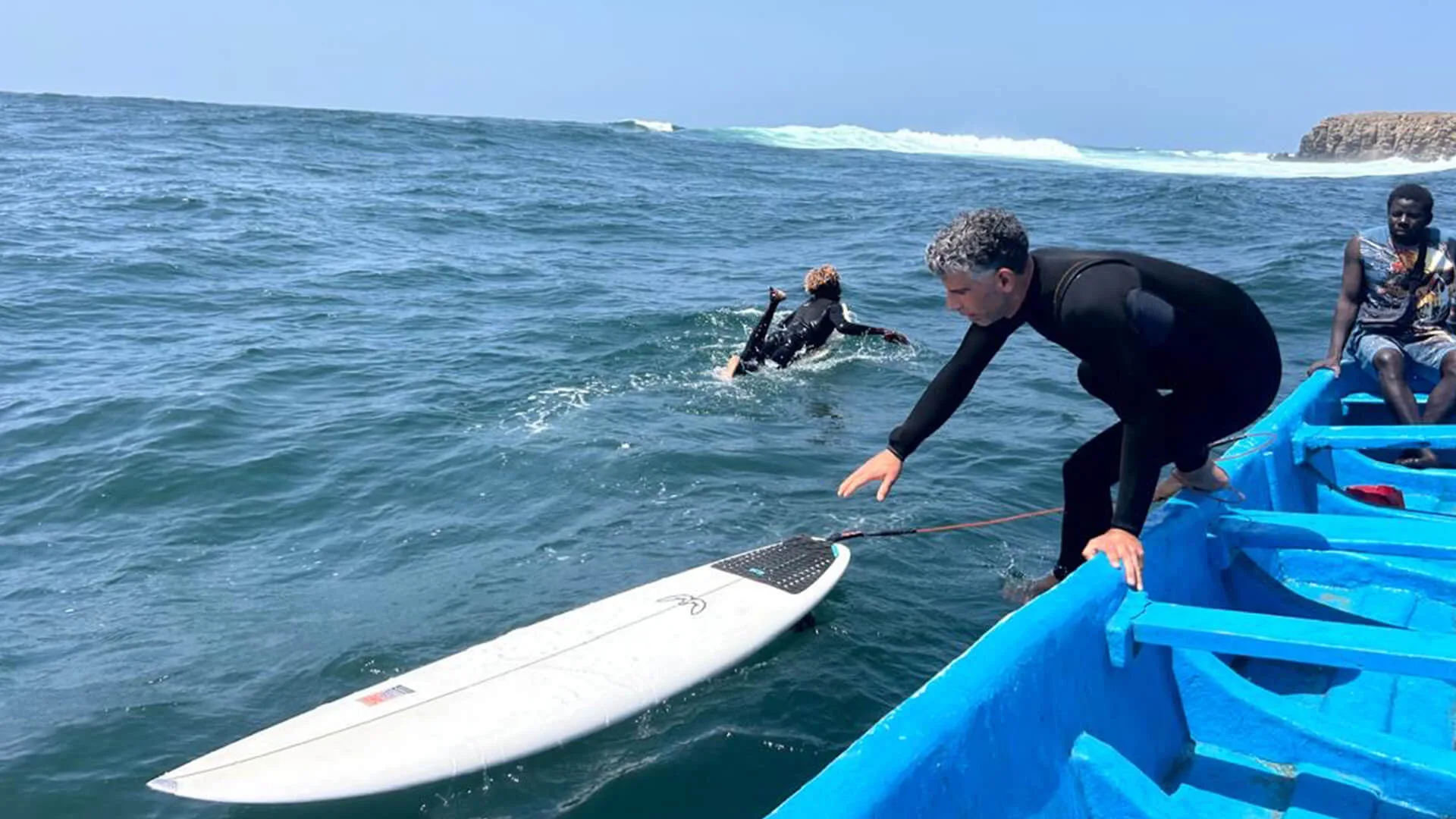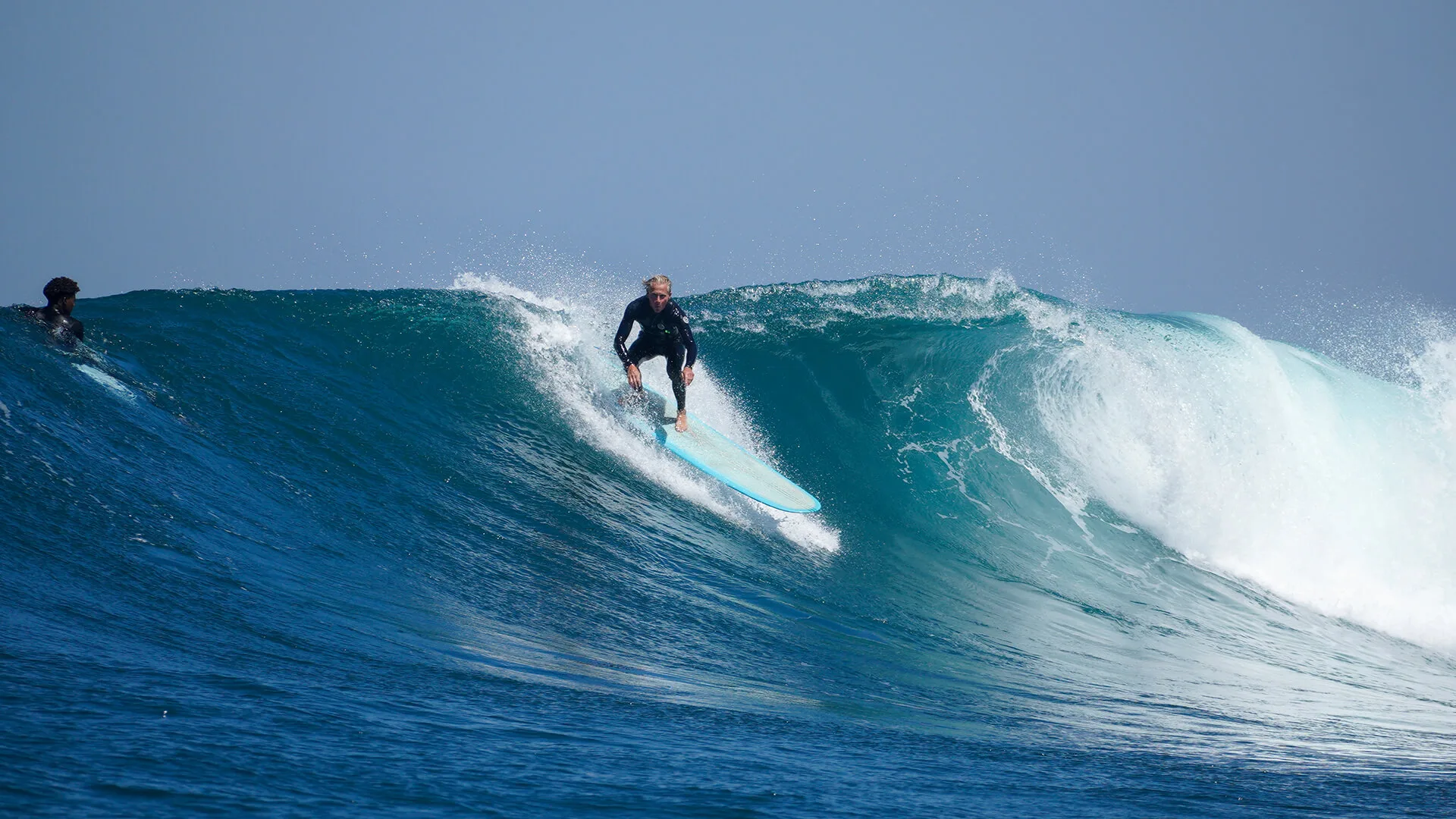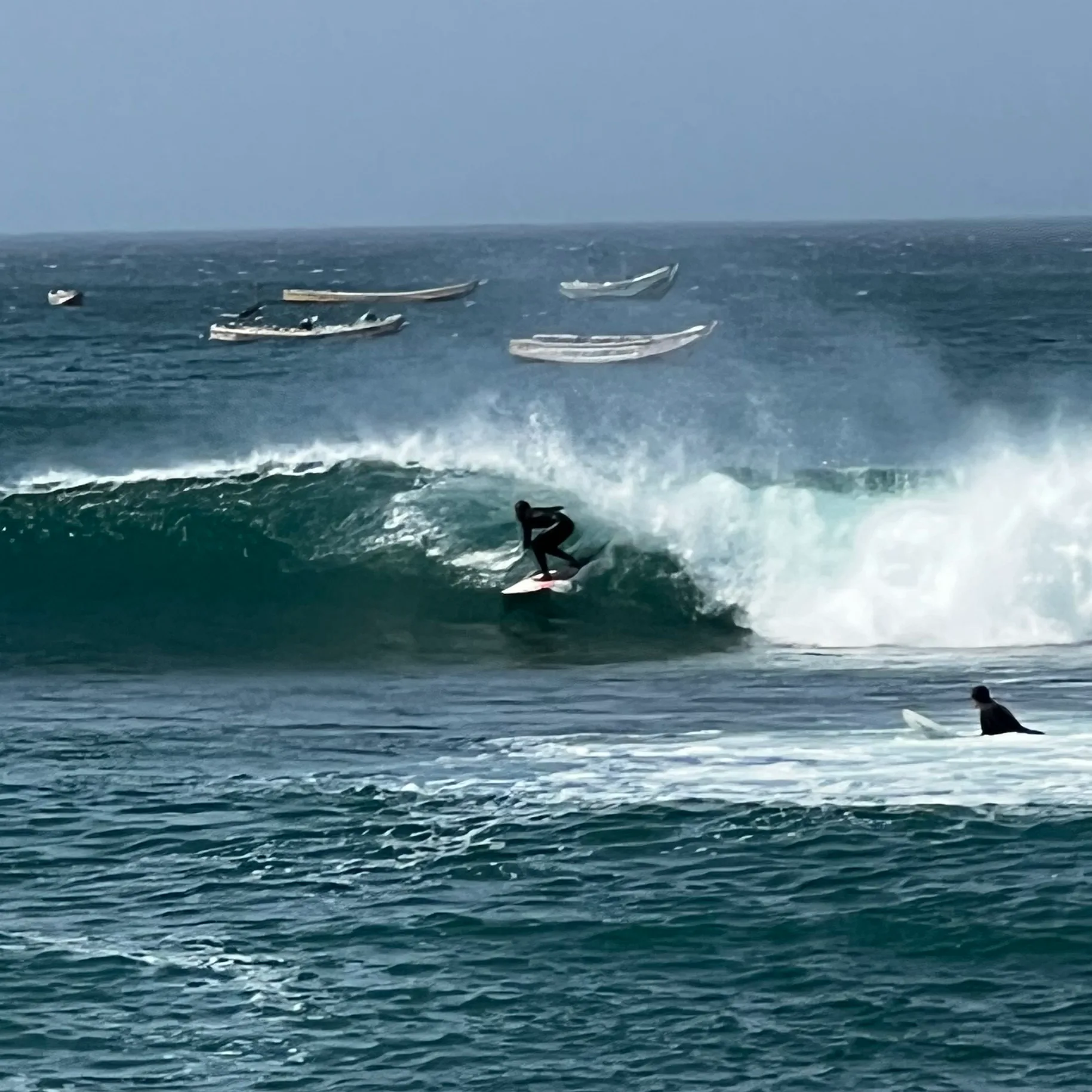
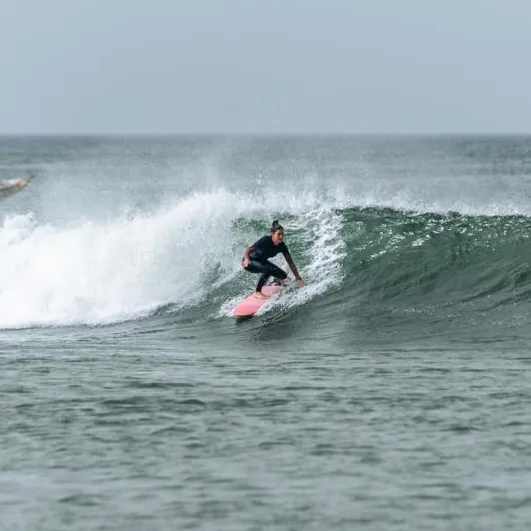
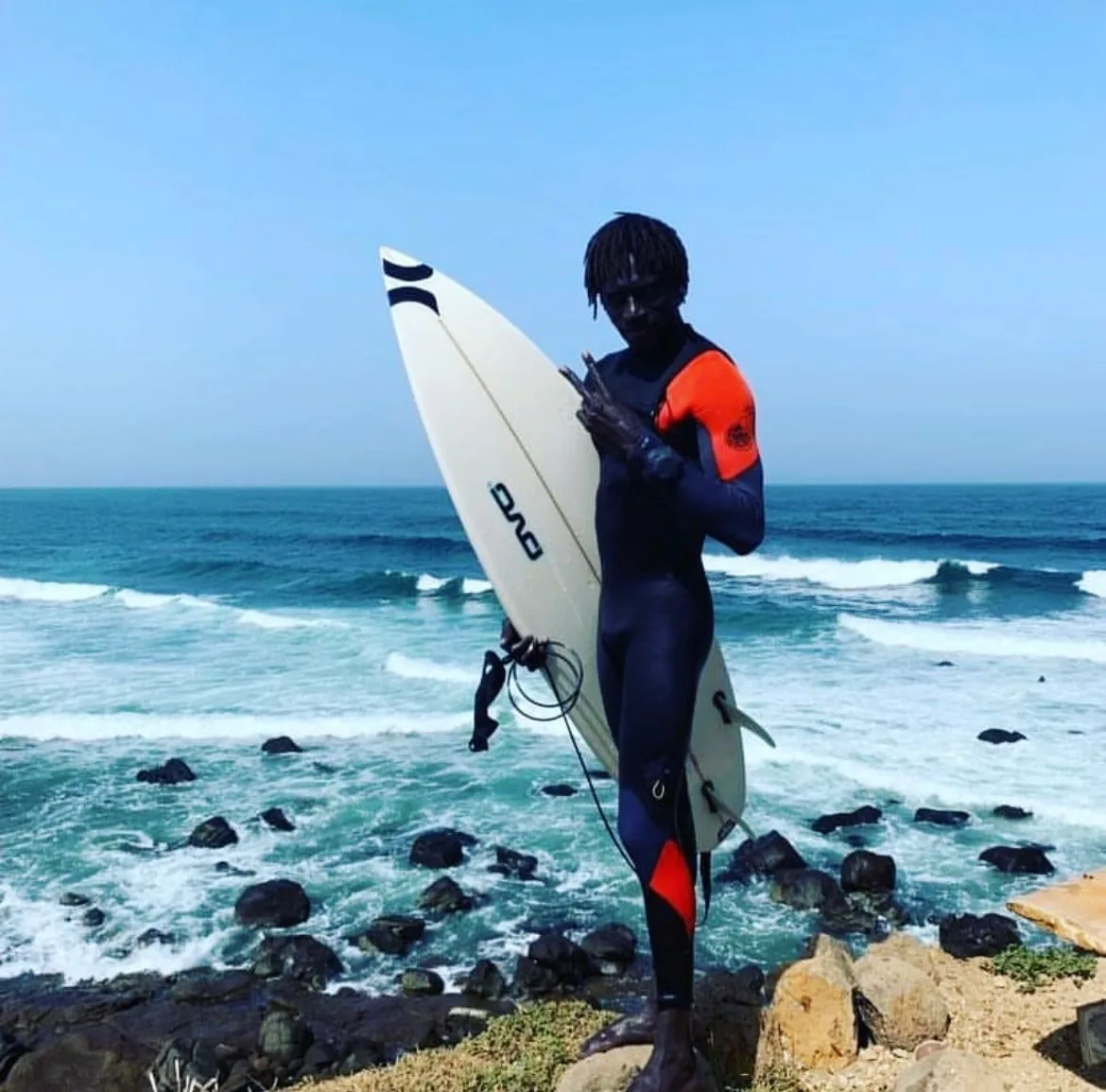
Ngor Island’s reputation rests on a simple truth: a very small island can produce very different waves. Just 400m off the coast near Dakar, Ngor has become shorthand for Senegalese surf history, but the real interest lies in the details, how the reef bends swell, how the take-off changes with tide, and why one side of the island can feel demanding while another offers a longer, more forgiving line.
For surfers planning a trip, understanding ngor island waves is less about chasing myth and more about reading a living piece of coastline. The island is famous because of surf history, but what matters in the water is practical knowledge: where the reef sits, how the wave stands up, what makes Ngor Right fast and hollow, and when Ngor Left becomes the smarter call.
Why Ngor Island matters in West African surf
Ngor Island is a small island off the Cap-Vert peninsula, 400m from the village of Ngor on the Pointe des Almadies, near Dakar. It is reached by a short bateau crossing from the mainland, and that short distance is part of the appeal: the island feels separate from the city, yet it remains closely tied to Dakar’s surf culture and to the Lébou fishing heritage of the area.
Its place in surf history is well established. The island became widely known after filming for The Endless Summer took place here in 1964, with the film released in 1966. That exposure fixed Ngor in the imagination of travelling surfers, but the island’s staying power comes from the quality and variety of the breaks themselves.
The best-known wave is Ngor Right, a reef break described in sourced reporting as fast, hollow and heavy, with reef beneath. That combination explains why it is considered the island’s canonical break and why it is best approached with respect. Ngor Left, by contrast, is generally mellower and longer, giving surfers a different kind of session: less about surviving a critical section, more about linking turns and reading a longer wall.
Beyond those two names, the island also sits within a wider Dakar surf map. Mainland options such as Yoff, Ouakam, Virage and Almadies all shape how surfers plan their days, especially when conditions on the island are too serious, too inconsistent or simply not the best use of the tide.

Ngor Island became famous in surf culture after filming for The Endless Summer took place there in 1964, with the film released in 1966.
The basic geography behind ngor island waves
To understand the waves, start with the island itself. Ngor is small, just 0.1 km², with around 2 km of coastline, and its geology is volcanic, identified in French reference material as hawaïte from the Mamelles formation. For surfers, that matters because volcanic reef creates shape, contour and abrupt changes in depth. Those changes are what turn open Atlantic swell into defined peaks, steep take-offs and sections that can either run cleanly or shut down depending on angle and tide.
The island’s compact size also means the coastline reacts quickly to swell direction and local wind. A slight shift in angle can make one side of the island more organised while another becomes less appealing. That is why experienced surf guides spend so much time watching the sea before paddling out. On a reef setup, the difference between a good session and a frustrating one is often visible before anyone enters the water.
Another practical point: because the island sits just offshore, it receives energy differently from a beach break. Sandbars move; reef does not. The wave may vary from day to day, but the underlying structure remains fixed. That makes pattern recognition possible. If you know where the reef rises, where the shoulder opens and where the inside gets shallow, you can make better decisions wave after wave.
The more fixed the bottom, the more important your reading of the lineup becomes.
Ngor Right: the island’s defining wave
Ngor Right is the wave most surfers come to see, and often the one they remember longest. It is a right-hand reef break known for being fast, hollow and, at times, heavy. Those three words are not interchangeable. Fast means the wave moves quickly down the line and asks for immediate commitment. Hollow means the face can pitch and create a more critical pocket. Heavy means the energy is concentrated, especially where the reef rises abruptly beneath the take-off.
This is why Ngor Right is not simply “good” in a generic sense. It is a technical wave. It rewards timing, positioning and confidence. If you hesitate at take-off, the section can outrun you. If you sit too deep, the drop can become more vertical than expected. If you sit too wide, you may make the drop but miss the best part of the wave entirely.
The reef is central to all of this. As swell approaches the island, the underwater contour focuses energy into a take-off zone that can feel compact. On a stronger pulse, the wave stands up quickly over the reef and asks for a clean, decisive entry. Once on your feet, the challenge is to match the wave’s speed. Surfers who generate speed early and stay high on the face tend to find the line more manageable. Those who drop low without a plan often get caught behind the section.
A useful way to think about Ngor Right is in phases. First comes the take-off, where positioning matters most. Then comes the racing section, where line choice matters most. Finally comes the inside, where local knowledge matters most, because reef breaks often become shallower and less forgiving as the wave runs on.
The break is also associated with two large rocks along the line of the wave, known as Mami and Papi. Even if you never surf close to them, knowing they are part of the break’s visual landscape helps orient you in the lineup. Landmarks matter on reef waves because they help you track drift, identify the peak and understand where the wave begins to change character.

On Ngor Right, watch several sets before paddling out and pick fixed landmarks on the island or reef to judge where the take-off really is, not where the crowd happens to be sitting.
How tide sensitivity changes Ngor Right
Tide sensitivity is one of the most important parts of reading ngor island waves. On a reef break, tide changes water depth over a fixed bottom, and even a modest change can alter how a wave breaks. More water over the reef can soften some sections and make entry less abrupt. Less water can make the wave stand up faster and feel more critical.
At Ngor Right, that means the same swell can produce very different sessions across a single day. A tide with more coverage may offer a slightly more approachable face and a clearer line down the reef. As the water drops, the wave can become sharper, quicker and less forgiving. The exact effect depends on swell angle and period, but the principle remains the same: depth changes shape.
For intermediate surfers, this is often the difference between a wave that feels challenging but surfable and one that feels beyond reach. For advanced surfers, tide can determine whether the wave offers a clean performance wall or a more survival-oriented drop-and-run.
This is also where local guidance becomes valuable. Tide charts tell you the level of the water; they do not tell you how that level interacts with a specific reef on a specific swell. A surf guide or coach who watches the island regularly can often identify the better window for your level, whether that means a more manageable moment on Ngor Left or a cleaner, more organised pulse on the Right.
Ngor Left: the longer, mellower counterpoint
If Ngor Right is the island’s headline act, Ngor Left is its balancing force. It is generally mellower and longer, which changes both the rhythm of the session and the type of surfing it encourages. Instead of a fast, hollow, high-consequence feel, the Left more often offers a drawn-out wall where reading the shoulder and linking sections becomes the main task.
That does not mean it is without technique. Longer waves can expose different weaknesses. A surfer who can survive a steep drop may still struggle to maintain speed across a softer shoulder. A surfer who likes one big turn may find that a longer wall demands patience, trim and better section management.
Ngor Left can therefore be a useful option for surfers who want to build confidence on reef without committing to the intensity of the Right. It also suits days when the island is receiving enough swell to break cleanly but not in a way that makes the Right the obvious choice for everyone.
Because the Left is mellower, it can be easier to focus on fundamentals: where to sit, when to angle the take-off, how to stay in the pocket without forcing turns, and how to finish a wave safely. For many visiting surfers, that makes it the more repeatable wave over the course of a trip.

The best wave is not always the most famous one. Reading the tide, the swell and your own level is what turns a session into real progress.”, The Ngor coaching team
Reading the reef before you paddle out
Reef reading is a skill, and Ngor Island is a good place to practise it because the differences between sections are visible if you slow down and observe. Before entering the water, spend time watching how each set approaches the island. Does the first wave break wider than the rest? Does the second wave stand up more abruptly? Does the shoulder hold or race away? These are not abstract questions; they tell you where to paddle, where to avoid and what board choice may make sense.
Start with the peak. On reef, the peak is often tied to a fixed contour rather than a shifting sandbar. Watch where the first feathering appears. Then watch where successful surfers are taking off relative to that point. If most riders are angling immediately, the wave likely requires speed from the first moment. If they are dropping straighter and setting a line later, the face may be offering more room.
Next, study the shoulder. A good shoulder is not just open water; it is a section that continues to offer shape. On Ngor Left, that may mean a longer wall that invites trimming and linking turns. On Ngor Right, it may mean a brief but makeable line if you stay high and commit early.
Finally, watch the inside. Many surfers focus only on the take-off, but the inside often determines how safe and enjoyable the session feels. On reef, the wave may become shallower or more uneven as it runs in. Knowing where to kick out matters as much as knowing where to drop in.
A practical habit is to divide the wave into three zones: take-off, working face, exit. If you can identify all three before paddling out, you are already surfing with more information than someone who sees only a breaking wave.
What “optimal conditions” really means here
Surfers often ask for the best conditions as if there were one universal answer. At Ngor Island, optimal conditions depend on the break and on the surfer. The camp’s prime surf season runs from November to April, while May to October is flatter and considered off-season. Within that prime window, however, the best day for Ngor Right may not be the best day for Ngor Left, and the best day for an advanced surfer may not be the best day for an improving intermediate.
For Ngor Right, optimal usually means enough swell to activate the reef cleanly, but not in a way that makes the take-off unmanageably intense for the surfer in question. The wave’s fast, hollow nature means quality is often tied to shape and organisation rather than simple size. A clean, lined-up swell can make the wave look inviting from shore while still demanding strong technique in the water.
For Ngor Left, optimal often means a setup that allows the wave to run with continuity. Too little energy and the wall may feel underpowered. Too much disorder and the longer line can lose its appeal. The Left tends to reward surfers who value flow over drama.
Wind also matters, though the key point is not to overcomplicate it. Clean faces are easier to read. Textured or ruffled faces make timing harder, especially on a reef where the margin for error is smaller. If the sea surface looks organised and the lines are easy to track, the session is already more likely to be productive.

- Ngor Right is the island’s fast, hollow reef wave and suits experienced surfers best
- Ngor Left is generally mellower and longer, often making it the more forgiving option
- Tide changes the amount of water over the reef, which can dramatically alter take-off and section speed
Beyond Right and Left: nearby options in the Dakar area
The phrase “and beyond” matters because no island break exists in isolation. One of the strengths of staying near Ngor is access not only to the island but also to the wider Dakar coastline. Cross-source reporting identifies Almadies, Yoff, Ouakam and Virage as key mainland surf zones, each useful in different conditions.
Virage is noted as an easy beach break on the mainland. That makes it relevant when the island is too technical, when a surfer wants a lower-consequence session, or when the goal is simply to work on basics without reef in the equation. Yoff is also identified in reporting as a beginner break, which again broadens the options for mixed-level groups or for days when progression matters more than prestige.
Almadies and Ouakam, by contrast, are described as more challenging. For stronger surfers, these spots can become part of a broader Dakar surf plan, especially if the island is crowded, inconsistent or not matching the tide window you want. The point is not to treat Ngor as the only answer, but as the centre of a flexible surf zone.
This flexibility is one reason guided surf trips work well here. A fixed reef break can be excellent, but a smart surfer still benefits from alternatives. If Ngor Right is too sharp, Ngor Left may be the call. If the island is not ideal, a mainland option may offer a better session for your level.
Good surf travel is rarely about forcing one famous wave. It is about choosing the right wave for the day in front of you.
Matching the wave to your level
Ngor Surfcamp Teranga is suited to all levels, but the island’s best-known waves especially appeal to intermediates and advanced surfers. That distinction matters. “All levels” does not mean every break is equally suitable for every surfer at every tide.
For beginners, the main lesson is caution. Ngor Right’s reputation exists for a reason. A fast, hollow reef break with a shallow bottom is not the place to learn basic take-offs. A more forgiving setup, whether on Ngor Left in the right conditions or at a mainland beach break such as Virage or Yoff, is usually the better route.
For intermediates, the island can be a major step forward if approached intelligently. The Left often provides a chance to learn reef positioning, cleaner line choice and better section reading. The Right may become an option only in more manageable conditions and ideally with guidance.
For advanced surfers, Ngor Right is the obvious draw. But even then, the best sessions usually come from discipline rather than ego: waiting for the right tide, choosing the right board, and accepting that some days the Left or a mainland alternative may offer more quality.
This is where coaching and video analysis can be especially useful. On a technical wave, small errors become visible. A late pop-up, a poor angle, or a low line on the first section can be the difference between making the wave and getting caught behind it. Reviewing those details after the session often accelerates progress more than simply paddling for more waves.
Board choice and session strategy
Without inventing exact dimensions or prescribing one setup for everyone, it is still possible to say this: ngor island waves reward appropriate equipment. On a fast reef wave, a board that helps you enter early and hold speed can make a major difference. On a longer, mellower wall, a board that carries glide and allows drawn-out turns may feel more natural.
The key is to match your board not only to the wave, but to your actual surfing. If you are still inconsistent on steep take-offs, choosing equipment that gives you a little more help is often wiser than trying to surf the most performance-oriented board in your quiver. If you are comfortable in critical sections, you may prefer something that responds quickly under your feet.
Session strategy matters just as much. Do not paddle out cold and expect to solve the lineup instantly. Watch first. Identify the channel or easiest paddle route. Note where surfers are drifting. Count how many waves arrive in a set and whether the larger ones break in a different place. Then enter the water with a plan.

- Watch at least a few full sets before paddling out
- Identify the take-off zone, shoulder and safest exit point
- Choose the break that matches both the tide and your level, not just your ambition
The practical rhythm of surfing from Ngor Island
One of the pleasures of staying at Ngor Surfcamp Teranga is that the logistics are straightforward. The camp is on Ngor Island and includes rooms, breakfast and dinner, surf guiding, theory sessions and a pool, with extras such as airport transfer, surf coaching, video analysis, board rental, wetsuit rental and lunch available. The island is reached by a five-minute bateau crossing from Ngor beach on the mainland, which keeps the surf routine close to the water and tied to the daily pulse of the sea.
That rhythm matters because technical waves reward repetition. A single session can teach you the outline of a break; several sessions across different tides begin to teach you its logic. Theory sessions help put language around what you are seeing, while guided surf time helps translate that theory into decisions in the lineup.
The camp is also licensed by the Fédération Sénégalaise de Surf, which matters for travellers who want a properly established base rather than an improvised setup. On a destination built around reef breaks and changing conditions, structure and local knowledge are not luxuries; they are part of surfing well.
A final way to think about ngor island waves
The easiest mistake at Ngor is to reduce the island to a single famous right-hander. The better approach is to see it as a compact surf system. Ngor Right is the technical, high-attention wave: fast, hollow, reef-driven and best treated with respect. Ngor Left is the longer, mellower counterpoint: often more forgiving, often more repeatable, and sometimes the better teacher. Around them sits the wider Dakar coastline, with mainland options that can make a trip more flexible and more productive.
If you arrive with that mindset, the island opens up. You stop asking only whether the famous wave is breaking and start asking better questions: What is the tide doing to the reef? Which section is actually working? Is the Left the smarter call today? Would a mainland beach break produce more useful water time? Those are the questions that turn a surf trip into a deeper understanding of place.
And place matters here. Ngor is not just a wave on a map. It is a small island with Lébou heritage, volcanic geology, a short bateau crossing and a long surf memory stretching back to the 1960s. The waves are part of that story, but they are also immediate and physical: reef, swell, tide, line, decision.
For surfers who want to experience ngor island waves with local guidance, theory support and a practical island base, explore Ngor Surfcamp Teranga, browse the latest surf stories, or head straight to booking your stay to plan a trip around the season from November to April.