If you are planning a surf trip to Ngor Island, packing well will shape the whole experience. Senegal is warm, welcoming and refreshingly uncomplicated once you arrive, but the difference between a smooth week and an annoying one often comes down to a few small items: the right wax, the right footwear for reef entries, and the right documents ready before you leave home.
This is the packing guide we wish more guests had before they landed in Dakar. It is based on real days surfing Ngor Right and Ngor Left, crossing by bateau from the mainland, and living island time at Ngor Surfcamp Teranga during the prime season from November to April.
First, pack for the wave you are actually surfing
Ngor is not a vague “tropical surf trip” destination where any beach setup will do. The island sits 400 metres off Dakar, and the surf here is defined by two very different reef breaks.
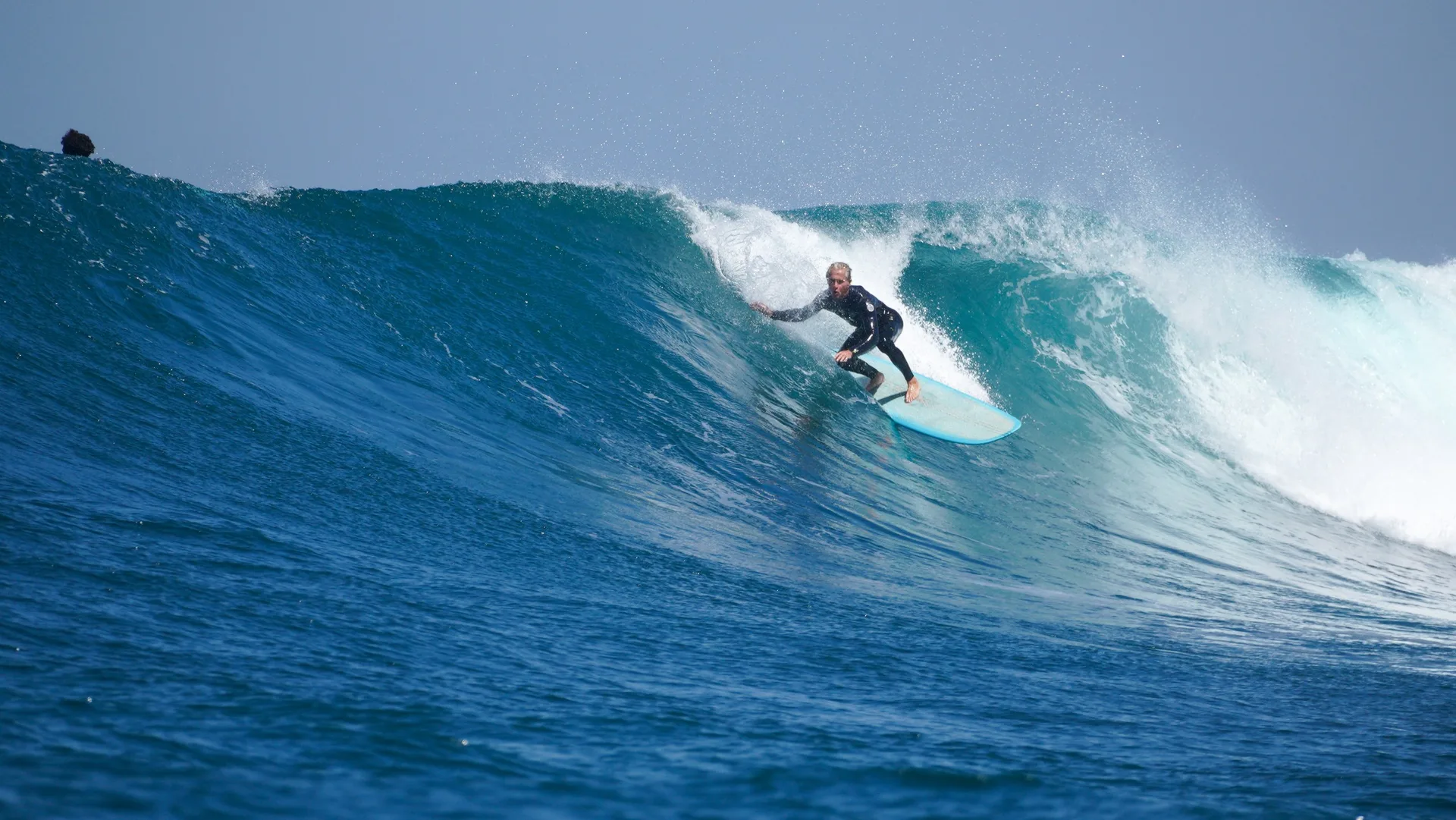
Ngor Right is the headline wave: a reef break that can be fast, hollow and technical when there is enough swell. It rewards surfers who are confident with positioning, quick takeoffs and clean lines. Ngor Left is more forgiving, longer and mellower, and often the better option for improving timing, trimming and linking turns.
That matters for packing because your equipment should match your level and your likely sessions. If you are an intermediate or advanced surfer chasing the Right, you will want reliable boards, reef awareness and a setup you trust. If you are newer, or planning to focus on the Left and guided sessions, your list can be lighter and more practical.
Pack for real conditions, not the fantasy version of your trip.
A common mistake is overpacking for extremes and underpacking for daily comfort. Senegal’s prime surf season is warm. Water time is generous. You are getting on and off boats, walking over reef, and moving between mainland Ngor beach and island life. Think functional, compact and durable.

- Ngor Right calls for confidence, speed and trusted equipment
- Ngor Left suits progression, longer rides and simpler setups
- Daily comfort matters as much as pure surf performance
Travel documents and arrival essentials
Start with the least glamorous category, because it is the one that can derail everything fastest.
Pack your passport, flight confirmations, accommodation details, travel insurance documents and any visa-related paperwork if applicable to your nationality. Keep digital copies on your phone and cloud storage, but also print one hard copy of the important pages. Airport Wi-Fi and roaming are not where you want to discover you are missing a booking number.
If you are bringing boards, keep airline baggage receipts and your surf equipment allowance details easy to access. Check your airline policy in advance, not at the check-in desk. Some carriers are fine with a standard boardbag; others apply oversize fees inconsistently.
You should also pack a payment backup. Cards are useful in Dakar, but it is smart to arrive with some cash and at least two bank cards stored separately. Small transfers, local purchases and simple day-to-day logistics become easier when you are not relying on one payment method.
For airport arrival, keep the first 24 hours easy. A light daypack with your documents, wallet, charger, medication, one change of clothes and basic toiletries is worth far more than an overstuffed checked suitcase. If your luggage is delayed, you can still settle in and surf once your gear catches up.
At Ngor Surfcamp Teranga, airport transfer can be arranged, which removes a lot of first-day friction. From the mainland, it is then just a five-minute bateau ride to the island, but that short crossing is another reason to pack in a way that is secure and easy to handle.
Boards: what to bring and what to rent
Most experienced surfers ask the same question first: should I bring my own boards to Senegal? The honest answer is yes if you are particular, especially if you are targeting Ngor Right. A wave with speed and shape like that feels better on familiar equipment.
For intermediates and advanced surfers, a sensible quiver is usually two boards. Your first board should be your dependable everyday shortboard or step-up, depending on your level and the forecast. Your second should be a backup that also fills a gap: slightly more volume for softer days, or a little more hold and control for stronger surf.
You do not need a five-board mission unless you simply enjoy travelling heavy. Most guests surf more when they travel with less stress, not more options. Airline damage, bateau loading and room space all become easier with a tight quiver.
If you are newer to surfing, or you do not want airline hassle, board rental is available at €15 per day. That is often the better move for guests who value convenience over precision. A guided trip with solid board choice beats a stressful long-haul board transport story every time.
Pack your boards inside a proper travel bag with nose and tail protection. Use pipe insulation or rail guards if you have them. Put soft items like towels or lycra tops around vulnerable zones, but do not rely on clothes as your only protection.
Do not forget these small but important board items:
- Two leashes, not one
- Spare fins and fin key
- Ding repair putty for small emergencies
- One extra traction pad screw or hardware if your setup needs it
- Board socks if you are carrying more than one board inside a bag

If you bring two boards, make them clearly different in function; two nearly identical boards just double your baggage stress without giving you better options.
Wetsuits, lycra and sun layers
Senegal is warm, and most surfers coming from Europe overestimate how much neoprene they will need. Through the main season, many sessions are comfortable in boardshorts or a swimsuit with a surf top. The issue is usually not cold. It is sun exposure, wind on early boat rides, and occasional long sessions.
For most surfers, the right call is a light quiver of waterwear:
- One long-sleeve rash vest or UV top
- One short-sleeve rash vest if you prefer less coverage
- One springsuit or shorty if you get cold easily or like extra protection
- Swimwear or boardshorts you can surf in daily
A full steamer is rarely essential in the prime season, though some travellers like having a thin one for comfort on windy mornings or if they simply chill easily. If you do not want to pack neoprene, wetsuit rental is available for €5 per day.
The bigger mistake here is underpacking sun protection. Long tropical sessions, reflected light off the water and time spent on boats or terraces all add up quickly. A good UV top often matters more than a second wetsuit.
Also think beyond surfing. Island evenings can be breezy, and after sunset a light hoodie, overshirt or long-sleeve cotton layer is useful. Not because Senegal turns cold, but because comfort is underrated after salty days.
Reef booties, wax and the small gear that matters most
This is where experienced surf travellers usually nod. The least glamorous part of your packing list often saves the trip.
Reef booties are worth serious consideration for Ngor. Entries and exits over volcanic reef can be awkward depending on tide, swell and your confidence level. Some surfers are happy barefoot. Others instantly wish they had packed booties after one hesitant walk across sharp sections.
If you know you are unsure on reef, bring them. A thin, flexible pair is enough. You want grip and confidence, not a bulky winter boot.
Wax matters too. Senegal is warm-water territory, so bring tropical wax. One bar is not enough for a full trip if you are surfing daily and travelling with multiple boards. Bring extra and leave the cold-water wax at home.
Other gear that earns its place:
- Ear plugs if you use them regularly
- Zinc or surf sunscreen that stays on in water
- A changing towel or poncho for easy transitions
- A dry bag for boat crossings and beach transfers
- A reusable water bottle
- A hat with chin strap for windy afternoons
- Polarised sunglasses for checking conditions and protecting tired eyes
The best-packed surfer is usually the one who remembered the boring things.
Ngor Island sits just 400 metres off the Dakar coast, so every surf day begins or ends with a short bateau crossing,compact, water-safe packing makes a real difference.
Health essentials: what you will be glad you packed
You do not need to travel like an expedition doctor, but you should build a personal surf travel health kit. Senegal trips are usually smooth, yet the basics matter more on an island than in a city apartment where a pharmacy is around the corner.
Your health pouch should include:
- Any prescription medication in original packaging
- A copy of prescriptions
- Reef cut antiseptic and waterproof plasters
- Simple pain relief
- Rehydration salts or electrolyte tablets
- Stomach medication you trust
- Anti-inflammatory gel or cream for sore shoulders and ribs
- Insect repellent
- High-SPF sunscreen and lip balm with SPF
Reef cuts are the classic surf-trip nuisance. They are rarely dramatic, but they can become annoying if ignored. Clean them properly, protect them and do not keep hopping back in with open skin if the reef has already won round one.
Hydration is the other unglamorous essential. Surfing in warm weather, travelling, eating differently and spending long hours outside can leave you far more depleted than you realise. Electrolytes take almost no space and are one of the smartest things to pack.
If you wear contact lenses, bring more than you think you need and pack backups. Salt, wind and travel fatigue are not kind to the “I’ll make one pair last all week” strategy.
Clothes for the island: less than you think
One of the best things about staying on Ngor is how little you actually need once you settle in. Life narrows to the useful essentials: surf, eat, recover, repeat.
Your non-surf clothing should be simple, breathable and versatile. Think lightweight shorts, T-shirts, one or two evening outfits that still feel relaxed, underwear for the week, sandals, and one pair of sturdy shoes or trainers for travel days.
You do not need to dress for a resort fantasy. Ngor Island is real, laid-back, social and salty. Pack pieces that dry fast and look better a little worn-in.
A smart list for most travellers looks like this:
- 4 to 6 T-shirts or lightweight tops
- 2 to 3 pairs of shorts
- 1 pair of trousers or light pants
- 1 light sweater, hoodie or overshirt
- 1 set of casual evening clothes
- Sandals or slides
- Trainers for flights and walking
- Sleepwear
- Underwear and socks
Laundry strategy matters more than quantity. If you can re-wear, rotate and rinse, you can travel far lighter than you think.
Most guests arrive with too many clothes and not enough surf-specific essentials. If your reef footwear, sun protection and documents are sorted, you are already ahead.”, The Ngor coaching team
Tech, chargers and useful extras
There is a version of surf travel that pretends you should disconnect completely. In reality, a few smart tech items improve the trip without taking over it.
Bring your phone, charger, plug adapter if needed, and a small power bank for transfer days. If you use surf forecasting apps, offline maps or airline apps, set them up before departure.
If you book video analysis or want to film your sessions, bring whatever kit you actually know how to use. A simple action camera is more useful than a heavy setup you never unpack. If you are a content-minded traveller, extra memory cards and a hard drive are worth it.
Waterproof storage is a good investment. A compact dry pouch for phone, passport and wallet can save a lot of stress during transfers. Even on calm days, salt spray and rushed loading are part of island surf logistics.
If you work remotely before or after your stay, keep your setup minimal: laptop, charger, headphones. Senegal rewards people who travel lighter.
What you can confidently leave at home
This is where a lot of travellers save money, baggage fees and unnecessary hassle. A good packing list is also a good editing list.
You can usually leave behind:
- Heavy cold-water wetsuits
- Large toiletry kits with full-size everything
- Too many shoes
- Three “maybe” boards you do not really need
- Thick beach towels if your accommodation already covers basics
- Fashion-first clothing you will never wear after a day of surf and sun
- Large first-aid kits packed for every possible scenario
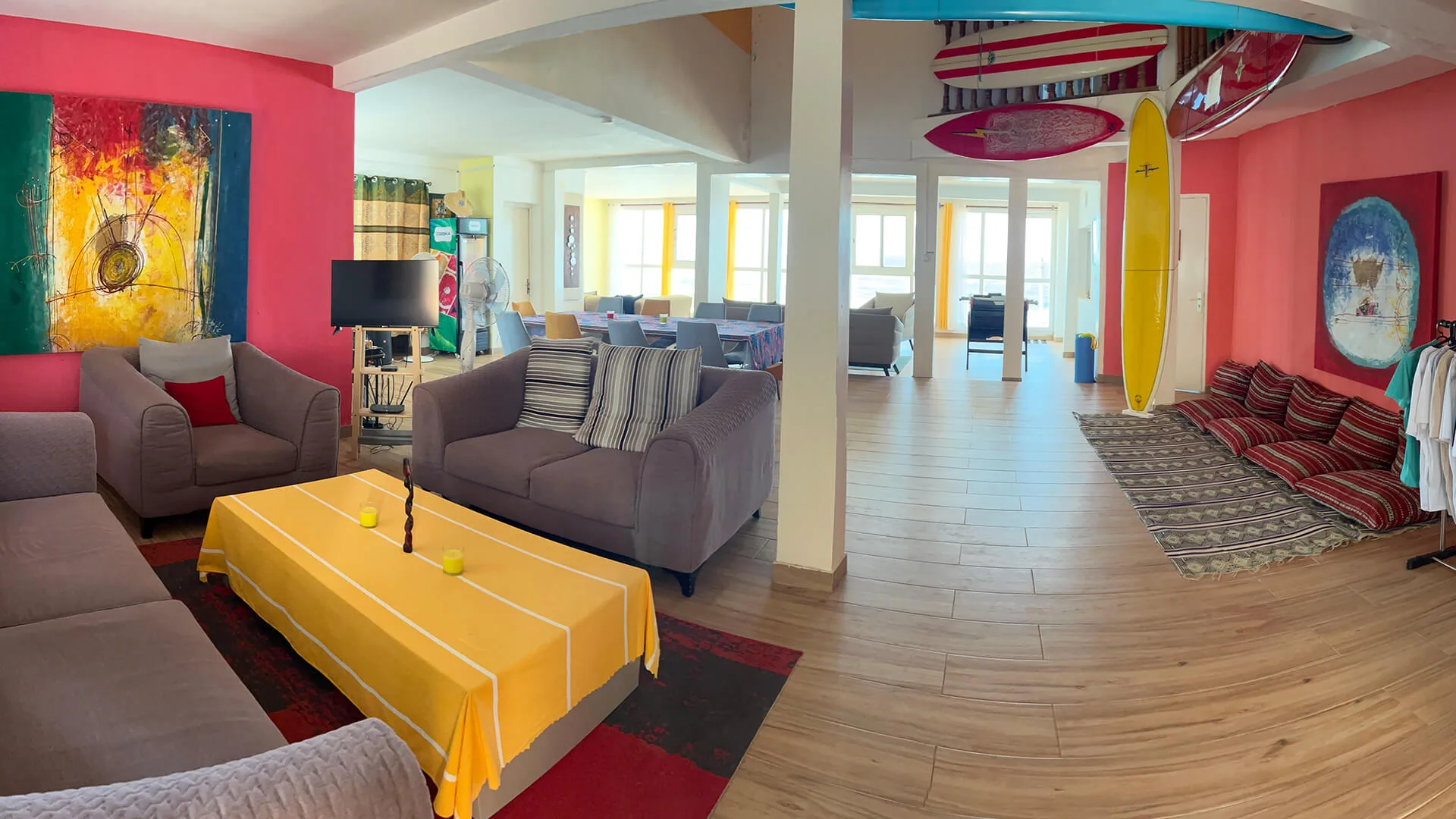
At Ngor Surfcamp Teranga, the essentials of the stay are already handled: rooms in private, shared or dorm options, breakfast and dinner, surf guiding, theory sessions and a pool for recovery. Extra support like airport transfer, surf coaching, video analysis, lunch, board rental and wetsuit rental can all reduce what you need to carry.
That is one reason many guests travel lighter than they would for a fully self-managed trip. You are not arriving at an empty apartment with no local knowledge. You are arriving into a licensed surf camp with a system.

- Remove one board unless it fills a clear gap in your quiver
- Swap bulky toiletries for travel sizes
- Prioritise reef gear, sun protection and documents over extra clothes
Packing by surfer level
Not everyone should pack the same way. The right list changes with experience.
If you are a beginner
Keep it straightforward. Focus on comfort, sun protection, swimwear, a rash vest, and practical clothes. Unless you are unusually attached to your own board, renting is often easier. Pack less hardware and more comfort items.
If you are an intermediate surfer
This is probably the sweet spot for Ngor. Bring one trusted board or two if you know your needs well, reef booties if reef entries make you hesitate, and a proper repair-and-spares mini kit. You will benefit from having your own rhythm without overcomplicating the trip.
If you are advanced
You likely know exactly what equipment makes you surf your best. Bring your best-performing boards for the forecast window, tropical wax, spare fins, and a clean, efficient setup. But still edit hard. Advanced surfers are often the worst overpackers because every possible condition feels worth planning for.
The more experienced you are, the more discipline packing requires.
Luggage strategy for flights and the bateau crossing
Think in two layers: checked gear and daily-move gear.
Your checked bag or boardbag should hold the bulky items: boards, non-essential clothing, backup gear. Your carry-on or daypack should hold everything you need if the rest is delayed: documents, medication, one surf outfit, toiletries, chargers, wallet and one set of clothes.
Once in Dakar, your luggage still needs to work for the short transfer to Ngor beach and the five-minute bateau crossing to the island. Soft bags are often easier than hard cases. Bags that zip fully, resist spray and can be lifted quickly are better than awkward luggage that looks sleek in an airport and annoying everywhere else.
If you can carry your own setup without drama, you have packed well.
The prime surf season in Senegal runs from November to April; from May to October, conditions are often flatter, so heavy quivers and extra neoprene make even less sense.
A practical seven-day packing list for Ngor
If you want the simplest version, this is the one-week list that works for most guests.
Surf gear:
- 1 to 2 boards
- 2 leashes
- Tropical wax
- Fins and fin key
- Reef booties
- Rash vest or UV top
- Swimwear or boardshorts
- Optional springsuit
Travel and health:
- Passport and insurance
- Flight and booking confirmations
- Cards and some cash
- Prescription meds
- Small first-aid and reef-cut kit
- Sunscreen and lip balm
- Electrolytes
- Insect repellent
Clothing:
- 5 tops
- 3 shorts
- 1 pair of light trousers
- 1 hoodie or overshirt
- Sandals and trainers
- Underwear and sleepwear
Tech and extras:
- Phone and charger
- Plug adapter if needed
- Power bank
- Dry bag
- Sunglasses
- Hat
- Reusable water bottle
That is enough. Anything beyond that should have a very clear reason.
Why staying at a licensed surf camp changes what you pack
A self-organised surf trip usually forces you to prepare for every unknown. Staying at an FSS-licensed camp changes the equation.
At Ngor Surfcamp Teranga, you are not piecing together accommodation, meals, local spot knowledge and transport in real time. Breakfast and dinner are included. Surf guiding and theory sessions are part of the rhythm. There is a pool for recovery. Coaching, video analysis and rentals are available if you want to build your week around progression instead of logistics.
That means your packing can be more focused and less defensive. You do not need to bring your whole life to the island. You need the right surf equipment, sensible travel admin, and the basics that make daily sessions comfortable.
Pack one small “arrival kit” at the top of your bag,swimwear, rash vest, sunscreen, charger and toiletries,so if your main luggage is messy or delayed, day one still runs smoothly.
Final word: pack light, pack smart, surf more
The best Ngor trips usually feel simple once you are there. Wake up, check the wind, cross the reef, eat well, talk through sessions, do it again. Packing should support that rhythm, not burden it.
For most surfers, the winning formula is clear: trusted boards or a sensible rental plan, tropical wax, reef booties if you need them, strong sun protection, a compact health kit, easy island clothes, and tidy documents. Leave the excess at home. Senegal rewards travellers who move lightly and stay present.
If you are ready to turn the list into an actual trip, check availability and plan your stay at Ngor Surfcamp Teranga.