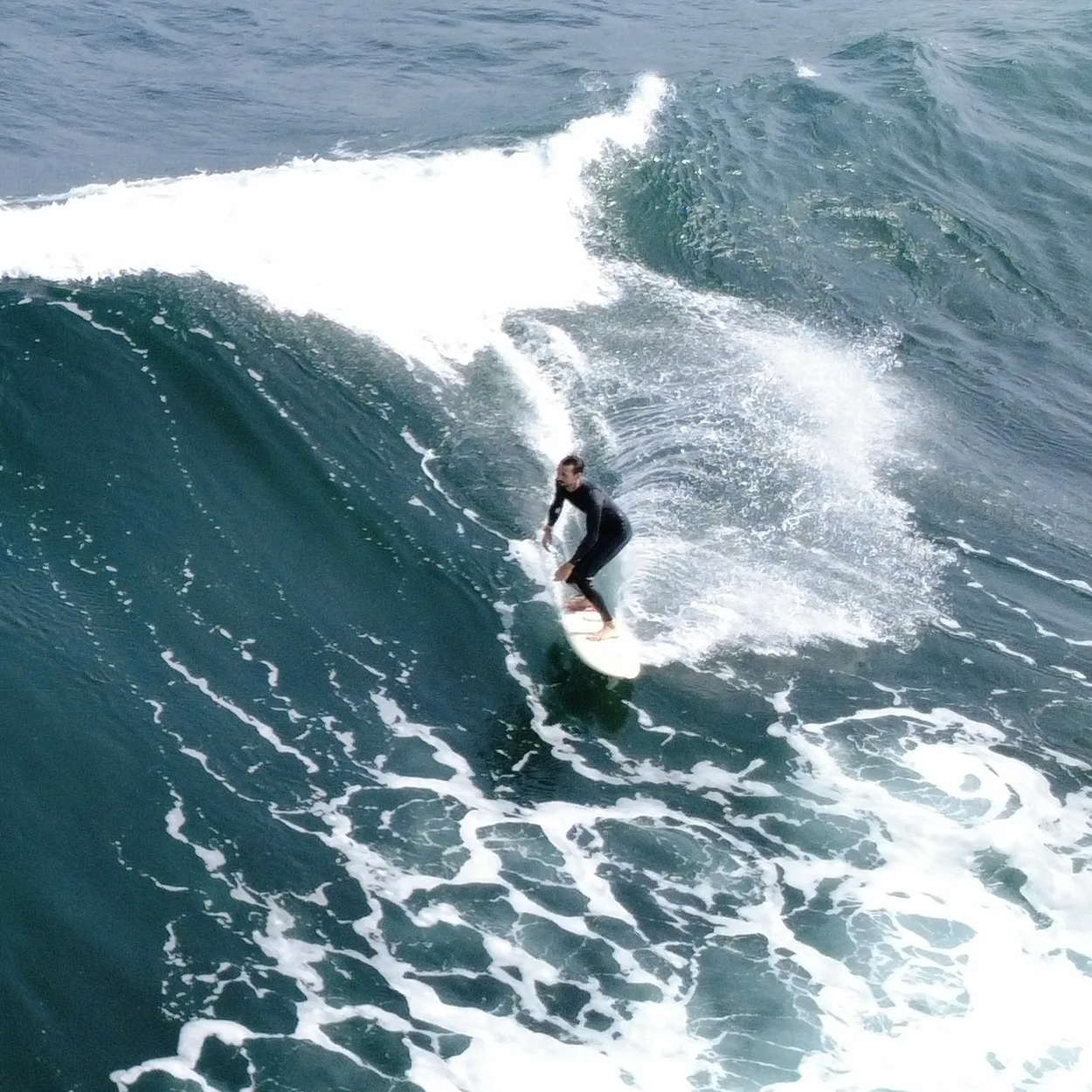
Surfing Ngor Island: Right & Left
A short boat ride off the tip of Dakar, Ngor Island packs more surf history, variety, and day to day consistency into a tiny stretch of Atlantic coastline than many better-known destinations. For travelling surfers, the island matters because it offers two distinct waves within the same compact setting: Ngor Right, a classic reef point with real quality when the North Atlantic wakes up, and Ngor Left, a friendlier option that opens the door for learners and progressing surfers. Few places let a beginner take a first proper green wave while an advanced surfer watches long walls reel down a nearby point.
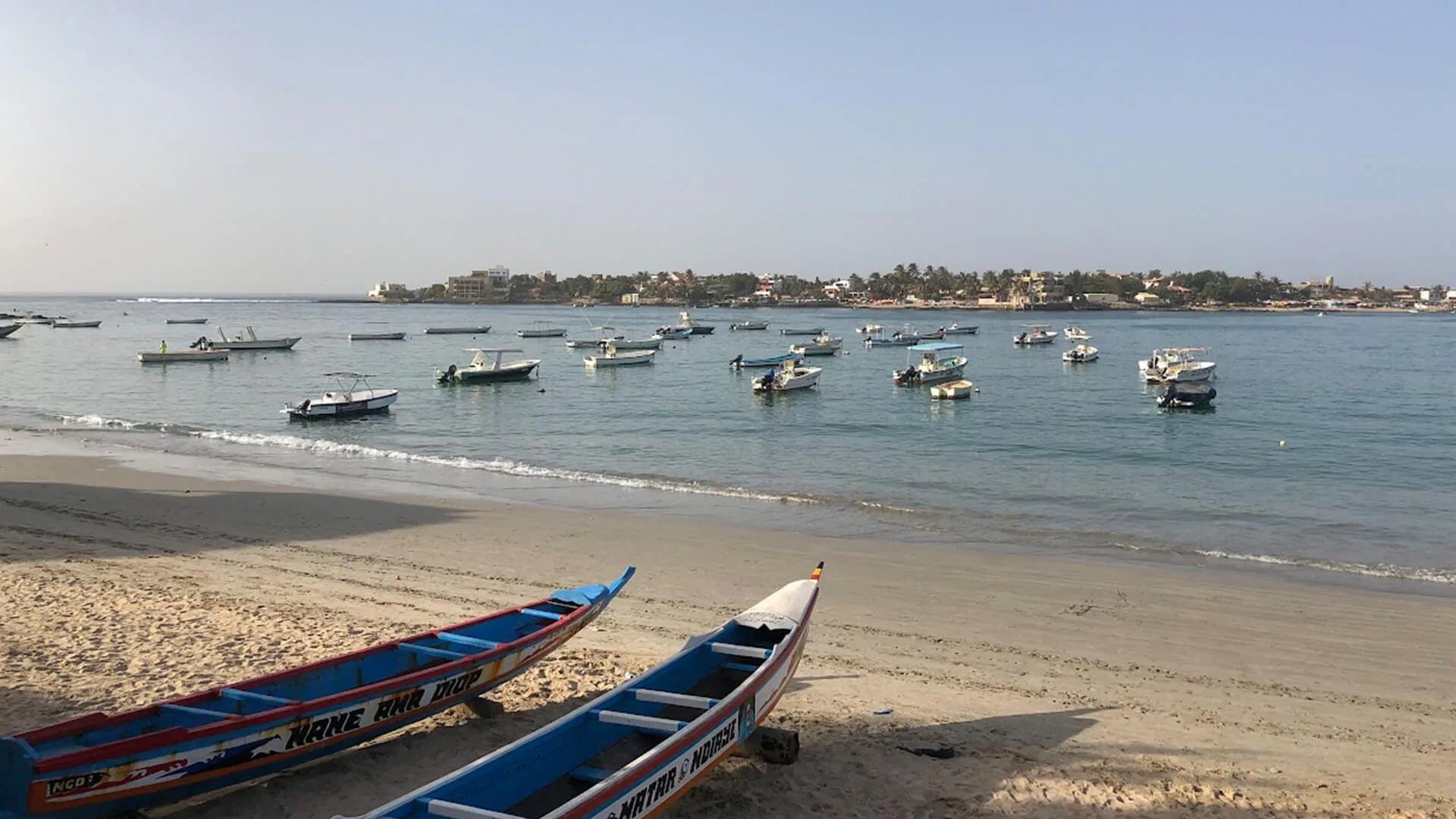
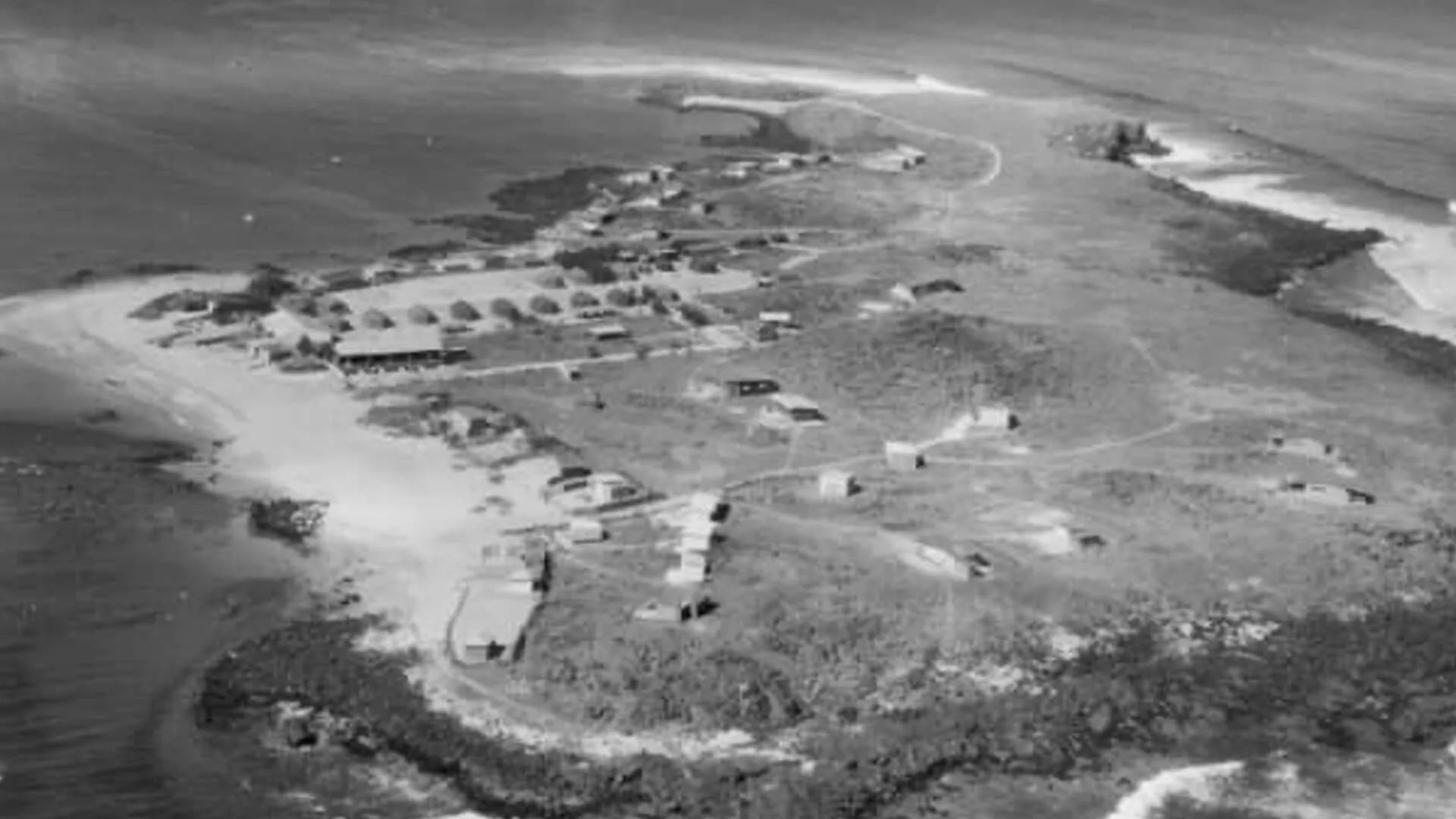
Ngor’s status is not just local hype. The island entered surf mythology through The Endless Summer, released in 1966, and it still delivers the same ingredients that made it famous: warm water, light offshore winds in the right season, a laid-back island rhythm, and a wave setup that works across levels. Add in the fact that there are no cars on the island, only sandy lanes, sea views, fishing boats, and the hum of Atlantic life, and Ngor becomes more than a surf stop. It becomes a place to settle into.
For surfers looking for the best base, Ngor Surfcamp Teranga stands out naturally. Set on Île de Ngor with a pool, ocean views, daily Senegalese meals, boat transfers, and guided surf sessions, it gives visiting surfers exactly what the island requires: local knowledge, timing, and coaching that turns good conditions into real progression.
Why Ngor’s two breaks matter in global surf travel
Most surf destinations become known for one defining wave. Ngor is different. Its reputation rests on the contrast between Right and Left, two breaks that share the same island but offer very different experiences. That matters in practical travel terms. It means mixed-ability groups can stay together. It means a surfer can step up from foam board sessions into reef take-offs without changing destination. It means a week on the island rarely feels one-dimensional.
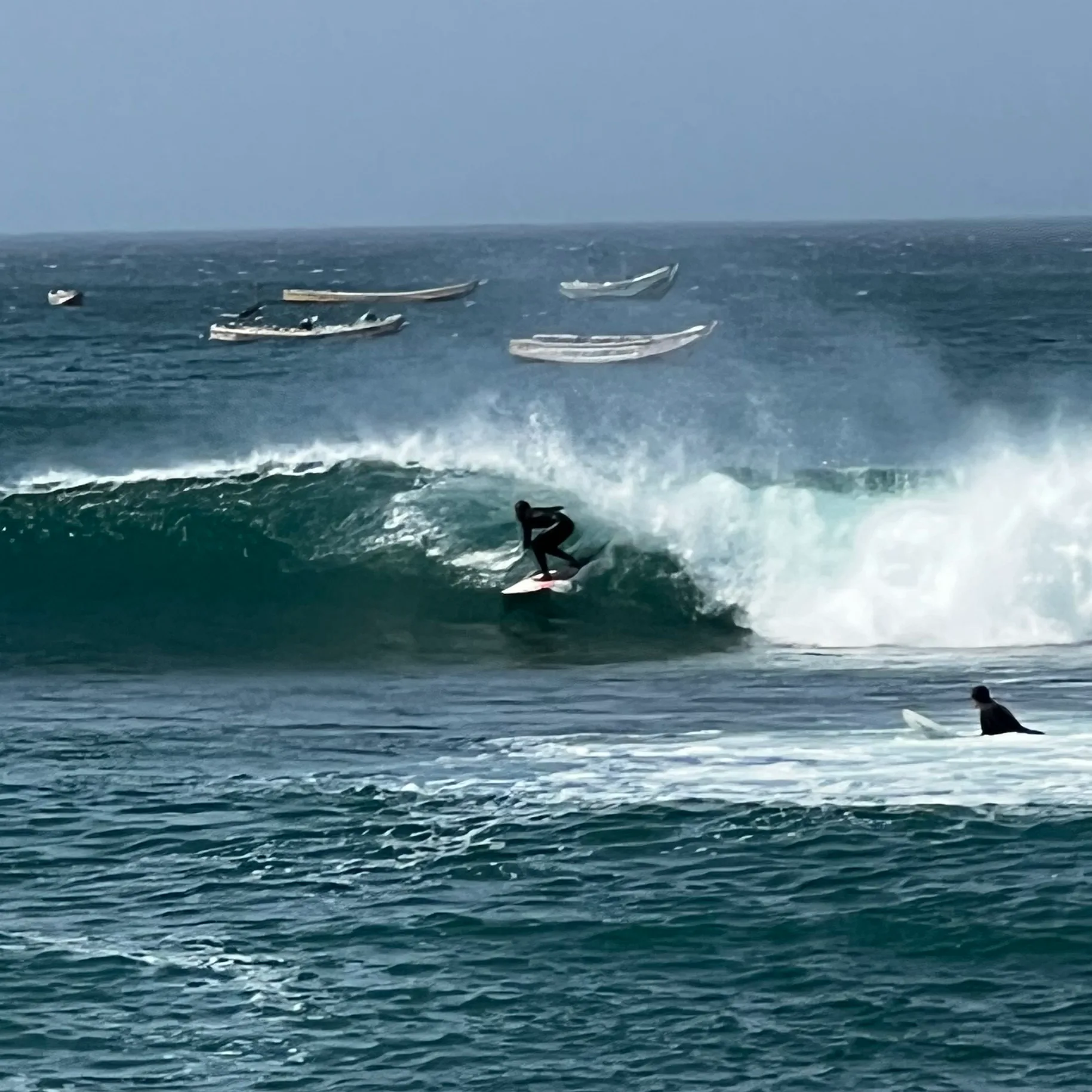
Ngor Right, locally known as Droite, is the wave that built the island’s legend. It is a proper reef point that can offer long, clean walls and, on stronger swells, hollow sections with enough punch to keep experienced surfers fully engaged. It is not a novelty spot. When the swell direction and wind align, it is one of West Africa’s most memorable right-handers.
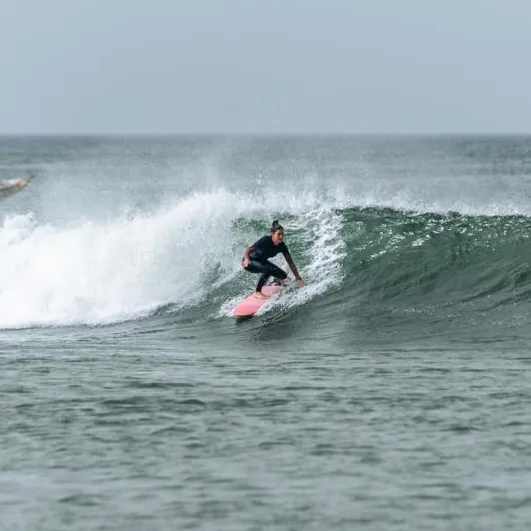
Ngor Left, or Gauche, is what gives the island unusual depth. It works on smaller swells, has a more forgiving entry, and offers a realistic pathway for beginners and intermediates, especially with coaching. In many destinations, novice surfers are pushed to mediocre beach breaks while advanced surfers chase quality elsewhere. On Ngor, both can surf in the same zone, learn from the same conditions, and share the same boat ride home.
FACT: Île de Ngor sits just offshore from the Almadies peninsula in Dakar, at the western edge of Africa, directly exposed to Atlantic swell energy from the North Atlantic.
That combination is why Ngor keeps appearing on serious surfers’ radar. It is historic, accessible, photogenic, and genuinely useful for progression.
Ngor Right, the classic reef point
Wave shape, swell direction, and size
Ngor Right is a reef point break that works best on NW to NNW swell. When that angle arrives cleanly, the wave wraps around the point and forms a long, running wall that invites committed bottom turns and drawn-out lines. On medium swells, it can be playful and highly workable. On larger pulses, it gains speed, consequence, and occasional barrel sections.
A common sweet spot is around 1 m to 2 m of open ocean swell, roughly 3 ft to 6 ft, though exact surf size at the break depends on period and angle. Long-period swell gives the wave more push and cleaner definition. Bigger days can see the wave stand up with much more authority, especially if the reef starts focusing the energy into a steeper take-off zone.
The best tide is often mid to high, though local reading of the reef matters more than broad rules. Too low, and the entry becomes sharper and less forgiving. With enough water over the reef, the wave holds shape and allows a longer, more connected ride. Visiting surfers should treat tide guidance as a starting point, then defer to local advice on the day.
Character, skill level, and crowd dynamics
The character of Ngor Right is what makes it special. It is not just a quick section over reef. It can offer a proper wall, the kind of wave that lets surfers link turns, trim through open face, and set up for faster inside sections. On bigger days, the lip gets more decisive and the wave can throw enough to create short but memorable barrels.
This is generally a break for intermediate to advanced surfers. A confident intermediate with experience on reef and the ability to angle take-offs, hold a line, and manage priority can enjoy smaller to medium days. Advanced surfers will appreciate it most when the swell builds and the wave starts showing its full point-break shape. Beginners should not use Ngor Right as a learning arena unless conditions are unusually soft and they are under direct instruction.
Crowd dynamics are important here. Ngor Right is well known, and when conditions line up, the lineup can become competitive. Visiting surfers should expect a mix of local chargers, Dakar-based regulars, and travelling surfers. Respect matters. So does positioning.
EXPERT: On a crowded day at Ngor Right, your wave count depends less on paddling strength than on lineup awareness. Sit too deep without commitment and you will miss waves. Sit too wide and you will watch the best sets run past.
Practical crowd rules:
- Do not drop in on a surfer already up and riding
- The surfer closest to the peak has priority
- Keep your paddle route clear of the line of the wave
- If unsure, call clearly, either "left", "right", or "go"
- Watch a few sets before paddling into the main take-off zone
Ngor Left, the more forgiving side of the island
Why it suits learners and improvers
If Ngor Right is the island’s headline act, Ngor Left is the reason many surfers leave having actually improved. This break is often described as a beach and reef mix, with a friendlier entry and a softer learning curve than the right. It does not require the same level of confidence over exposed reef, and it can work on smaller swell, which makes it useful more often than first-time visitors expect.
For beginners, this matters enormously. Learning to surf is not just about catching waves. It is about doing so in a place where take-off timing, wipeout consequences, and paddling stress remain manageable. Ngor Left gives coaches room to teach pop-up mechanics, trimming, stance correction, and first turns in real ocean conditions without overwhelming students.
Intermediates also benefit. If you are moving beyond whitewater and trying to build consistency on green waves, Ngor Left offers enough shape to practise proper angle take-offs and line choice. With the right size and tide, it can be an ideal classroom for surfers who are not ready for the sharper commitment of Ngor Right.
Swell needs and hazards on bigger days
One of the practical strengths of Ngor Left is that it works on smaller swells. When the right looks underpowered or too crowded for your level, the left can still offer surfable lines. It is often the better call for coaching sessions, especially for mixed groups.
That said, forgiving does not mean harmless. On bigger days, the inside can produce a dangerous shore break, and the wave loses much of its beginner-friendly nature. Surfers who are comfortable on shoulder-high rolling surf can suddenly find themselves dealing with heavier closeouts and awkward exits. Coaches and guides will usually move true beginners elsewhere if the left starts showing that kind of power.
TIP: If you are unsure whether Ngor Left is still beginner-friendly on a given day, watch where the local surf schools are teaching. If instructors have shifted lessons away from the break, conditions have probably crossed the comfort line for learners.
Useful signs Ngor Left is a good call:
- Smaller swell with clean faces
- Light wind, especially early
- Manageable inside section
- Clear channels for entry and exit
- Coaching support for first reef awareness
Swell, wind, and water conditions through the year
Swell windows and best season
Ngor’s consistency comes from its position facing the Atlantic and its exposure to North Atlantic low pressure systems. The prime surf season runs from October to April, when stronger and more frequent swell pulses travel down from the North Atlantic. This is when Ngor Right most often shows its classic form and when travelling surfers have the best chance of scoring lined-up point-break conditions.
Within that window, the most reliable months for quality are often November through March, combining stronger swell activity with favourable wind patterns. If your goal is to surf the right at its best, this period should be your first choice. It is also the season when many surfers book structured coaching trips, because the variety of conditions allows progression over several days.
The island does not switch off outside that peak. The May to September period still produces surf, and many sessions remain enjoyable, especially for learners, longboarders, and intermediates. There may be fewer major North Atlantic pulses, but the ocean still sends enough energy to keep the island active. For travellers who prefer fewer crowds, warmer water, and a more relaxed pace, the so-called offshore season can still be rewarding.
Wind and water temperature
Wind is one of Ngor’s great allies. From December to March, the harmattan often creates offshore conditions, grooming both breaks and helping hold up the face, especially on the right. These are the mornings and afternoons that produce the postcard version of Ngor: clean lines, spray off the lip, and long rides under bright dry-season light.
In the northern summer, trade winds can bring more cross-shore or onshore texture. Conditions are still surfable, but timing becomes more important. Early sessions often offer the cleanest windows before the breeze strengthens. This is another reason staying on the island helps. You can react to short good periods instead of commuting and guessing.
Water temperature stays surprisingly comfortable through the year, generally ranging from about 18°C to 28°C. The coolest months can feel fresh, especially with wind, but for most surfers no winter wetsuit is needed. A spring suit, shorty, or even a rash vest is enough for many. In summer, boardshorts and bikinis are standard.
CHECKLIST: October to April for the strongest swell December to March for the best offshore wind 18°C to 28°C water temperature range Early morning for cleaner summer sessions
Equipment, etiquette, and safety on the reef
What to ride on each break
The right board depends on both level and break choice. At Ngor Right, confident surfers usually want a performance shortboard, a slightly more forgiving step-up, or a rounded pin when the swell has size and period. The wave has enough wall and speed to reward boards that hold through turns and stay composed in steeper sections.
At Ngor Left, equipment can be more varied. Beginners often do best on foam boards in the 7'0" to 9'0" range, depending on weight and confidence. Intermediates may enjoy a funboard, minimal, or a stable shortboard with extra volume. Because the left can work on smaller days, fish shapes and hybrids can also be useful for generating speed.
A few gear choices are easy to overlook but matter on Ngor:
- A reliable leash is essential, especially over reef
- Fins should suit your board and ability, with a stable setup for control
- Booties can help if you are sensitive to reef or entering at lower tide
- Bring warm-water wax, but keep a bar spare for hotter months
- A small reef cut kit is worth packing
Etiquette and local safety
Ngor is welcoming, but it is not a place to ignore surf etiquette. Respect in the lineup is part of safety, not just manners. Surfers who paddle straight into the peak without observing, snake waves, or fail to communicate quickly lose goodwill. This is especially true at Ngor Right when the crowd is focused and the take-off zone is defined.
Safety is mostly about awareness. There are sea urchins around reef areas, so careless step-offs can end a session. There can also be rips and currents, especially when swell increases or wind shifts. Even strong swimmers should identify entry and exit points before paddling out. If you get caught inside, protect your head in shallow sections and avoid standing up blindly on the reef.
A good pre-surf routine on Ngor should look like this:
- Watch the break for at least 10 to 15 minutes
- Identify the main peak, channel, and exit
- Check tide stage and set frequency
- Ask a local guide about hazards that day
- Match the break to your real level, not your ambition
FACT: Reef breaks on Ngor are manageable for many surfers, but most injuries come from poor decisions, wrong board choice, or entering the water without reading the setup properly.
Coaching at Ngor Surfcamp and what a week looks like
Structured progression on the island
For many visitors, the smartest way to surf Ngor is through Ngor Surfcamp Teranga, a premium surf camp licensed by the Senegalese Federation of Surfing. The camp caters to all levels, which matters because Ngor’s two-wave setup rewards tailored coaching. A beginner can start on foam boards and gentle lefts, while a stronger surfer works on positioning, speed generation, and reef confidence on the right.
The coaching approach includes ISA-licensed instructors, practical in-water guidance, and video analysis. That last part is especially valuable on Ngor. Many surfers feel they are surfing better than they are, or worse than they are. Video strips away guesswork. You can see whether your stance is too narrow, whether you are hesitating at take-off, or whether your top turn timing is late. Progress speeds up when feedback is specific.
The camp setup also removes the friction that wastes surf trips. Boat transfers, daily surf guiding, breakfast and dinner, and an island base with pool and sea views mean more energy goes into surfing and recovery, not logistics.
A typical surf week
A week on Ngor usually follows a rhythm shaped by tide, swell, and wind. The exact plan changes daily, but the structure often looks like this:
- Morning surf check, usually around first light to assess wind and tide
- Guided session at Ngor Left, Ngor Right, or another Dakar break depending on conditions
- Breakfast back at camp, often after the first session
- Midday rest, video review, mobility work, or theory session
- Afternoon surf if conditions suit
- Dinner at camp, typically Senegalese home-style cooking and debriefs for the next day
For progression, this matters more than people think. Surfing twice a day with feedback, then sleeping on the island a few minutes from the water, creates continuity. By day three or four, most surfers are no longer just reacting to waves. They start reading them.
TIP: If your goal is improvement rather than simply ticking off a destination, ask for a coaching plan at the start of your stay, with one or two clear targets for the week.
Typical practical costs in the area can vary, but useful benchmarks are:
- Island boat transfer from the mainland, often around 1,000 to 2,000 XOF each way if arranged locally
- Standard taxi rides across Dakar, often 3,000 to 8,000 XOF depending on distance and traffic
- Surf wax in local shops, roughly 2,000 to 4,000 XOF
- Board rental rates vary, but guided camp packages usually offer better value than ad hoc daily hire
Other Dakar breaks and when to surf them instead
Ngor may be the star, but Dakar has a wider surf map, and knowing when to branch out can save a trip. The three most relevant alternatives are Vivier, Yoff, and Plage de Ouakam. Each comes into play when Ngor is either too crowded, too small, too wind-affected, or simply not the best match for your level that day.
Vivier is often a strong option when you want another quality reef setup with a bit of shape and push. More advanced surfers may head there when Ngor Right is too packed or when swell angle suits Vivier better. It is not usually the first recommendation for complete beginners, but for confident intermediates and above it can be an excellent change of rhythm.
Yoff offers more of a beach-break context and can be useful for learners or for surfers wanting a less technical session than a reef point. It is also a good fallback when reef breaks are too heavy or inconsistent. The wave quality may be less iconic than Ngor on its best day, but beach breaks are often where technique gets built because repetition is easier.
Plage de Ouakam enters the conversation when local wind, tide, or swell combination makes it the smarter call. As with many urban surf zones, conditions can change quickly, and local guides make a huge difference. This is where staying with Ngor Surfcamp Teranga pays off again. You are not locked into one break just because you booked one island.
When to consider another Dakar break:
- Ngor Right is crowded and you want more wave count
- Ngor Left has too much shore break for learners
- Swell angle is not favouring the island
- Wind is cleaner elsewhere along the coast
- You want to experience more of Dakar’s surf culture
Practical planning for a smooth Ngor surf trip
The logistics of surfing Ngor are straightforward once you understand the island rhythm. Île de Ngor lies just off the mainland, with a crossing that takes only a few minutes by boat. From central Dakar, depending on traffic, reaching the departure point can take 30 to 60 minutes. The island itself is small enough to explore on foot, and because there are no cars, everything feels calmer the moment you arrive.
For board needs, most visitors can sort everything locally, especially if staying at a surf camp. Board rental is available, and foam boards are the sensible choice for learners. More experienced surfers may prefer bringing a familiar board, especially if they want to surf Ngor Right on a solid swell, but travelling light is perfectly realistic if coaching and rental are already organised.
A proper reef safety briefing should be part of your first day. If it is not, ask for one. You want to know where to enter, where not to jump, what tide exposes more reef, and how currents behave around each break. Wax, spare leash string, fin key, and basic first aid are small items that become very important on an island.
EXPERT: The easiest mistake on Ngor is assuming the island’s relaxed atmosphere means the surf is casual. The setting is mellow. The ocean still demands respect.
Final practical tips:
- Bring cash in XOF for small purchases and local transport
- Pack sun protection, including zinc and a hat for boat rides
- Keep one set of clothes dry for evening sea breeze
- Use a day bag that handles salt spray
- Save the camp’s WhatsApp contact, +221 78 925 70 25, before arrival
SUMMARY: Ngor Island matters because it offers two genuinely useful surf experiences in one compact, historic setting. Ngor Right is the island’s celebrated reef point, best on NW to NNW swell, mid to high tide, and offshore wind, with long walls and occasional barrels for intermediate to advanced surfers. Ngor Left is more forgiving, works on smaller swell, and is ideal for beginners and intermediates, though shore break can become serious on bigger days. Add warm water, strong swell windows from October to April, and the island’s car-free Atlantic atmosphere, and Ngor becomes one of West Africa’s most complete surf bases.
If you want to surf it properly, improve faster, and stay close to the action, Ngor Surfcamp Teranga is the obvious choice. With licensed coaching, video analysis, daily meals, boat transfers, and local guidance, it turns a good surf holiday into a focused island experience.
Ikke ansvarligt. Big Ngor Right er for erfarne surfere med solid reef etikette. Begyndere bør arbejde med trænere på passende steder og størrelser.
Normalt er en shorty eller boardshorts-session tilstrækkelig i de varme måneder; booties kan hjælpe ved indgange til rev. Juster efter din kuldetolerance.
Ja, prioriterer licenserede lejre med ISA-uddannede trænere og klare sikkerhedsinstruktioner.