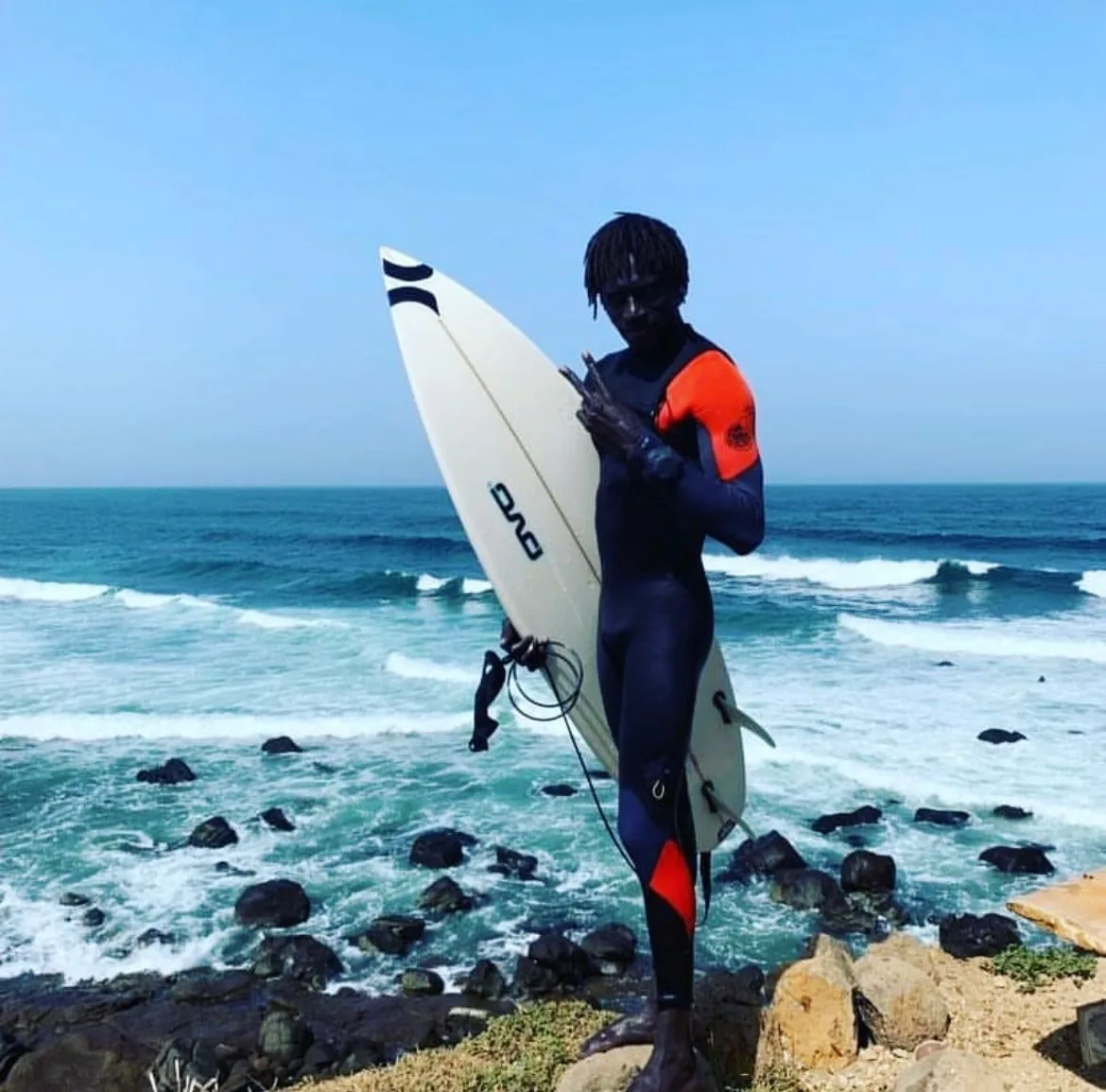
Dakar is one of the most varied surf zones in West Africa, and Ngor Island sits at the center of it. From one small island just off the coast, you can reach a compact but surprisingly diverse set of breaks: a fast reef wave with real consequence, a friendlier point-style option, and several mainland spots that let you match the day to your level.
For surfers staying at Ngor Surfcamp Teranga, that variety is the real advantage. You are based 400 metres off Dakar on Ngor Island, a short bateau ride from the mainland, with direct access to the island waves and straightforward reach to the city-facing beaches and reefs that shape the local surf scene.
Why Ngor Island is such a useful base
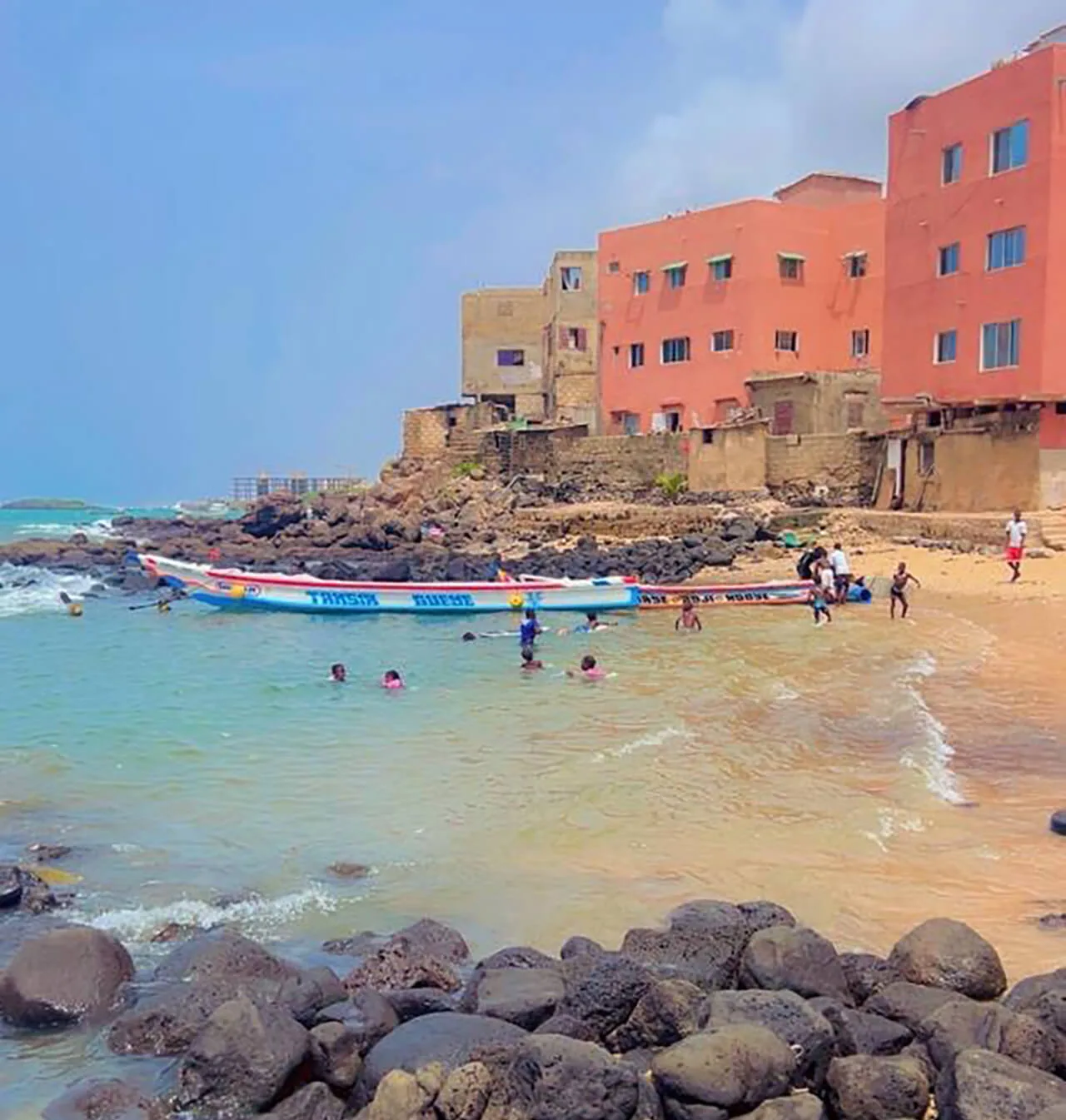
Ngor Island is a small island off the Cap-Vert peninsula, 400 metres from the village of Ngor near Dakar. It is best known in surf culture because The Endless Summer was filmed here in 1964 and released in 1966, a moment that helped make Ngor famous far beyond Senegal. But the island matters for more than surf history. In practical terms, it is a strategic base for reading conditions and moving between different kinds of waves.
The camp is reached by a five-minute bateau crossing from Ngor beach on the mainland. That short transfer changes the feel of a surf trip immediately: you are close to Dakar, but removed from its pace. From there, the local map becomes simple. Ngor Right and Ngor Left are the island's signature waves. On the mainland, Virage, Yoff, Ouakam and Almadies offer alternatives depending on swell, wind and ability.
The appeal of Dakar is not one perfect wave, but a cluster of very different ones within easy reach.
For visitors, that means you do not need to force yourself into the wrong conditions. If the reef is too serious, there are softer options. If the beach break is underwhelming, there may be more shape elsewhere. And if you are an intermediate surfer trying to progress, the area gives you a natural ladder rather than a single all-or-nothing challenge.
Ngor Island lies 400 metres off the coast near Dakar, and the bateau crossing from the mainland takes about five minutes.
How to think about Dakar surf spots by level
Before breaking down each wave, it helps to sort Dakar's spots into broad categories. Not every break here asks the same question of a surfer.
For beginners, the most approachable option in this guide is Virage, an easy beach break on the mainland. Yoff is also widely associated with beginner-friendly surfing. These are the places where softer entries, sand underfoot and less technical take-offs make more sense for first sessions or for surfers still building consistency.
For lower intermediates and progressing surfers, Ngor Left often makes the most sense. It is described by the camp as mellower and longer than Ngor Right, which usually translates into more time on the wave and less urgency at take-off. Depending on the day, Yoff and Virage can also remain the better call if you want repetition rather than intensity.
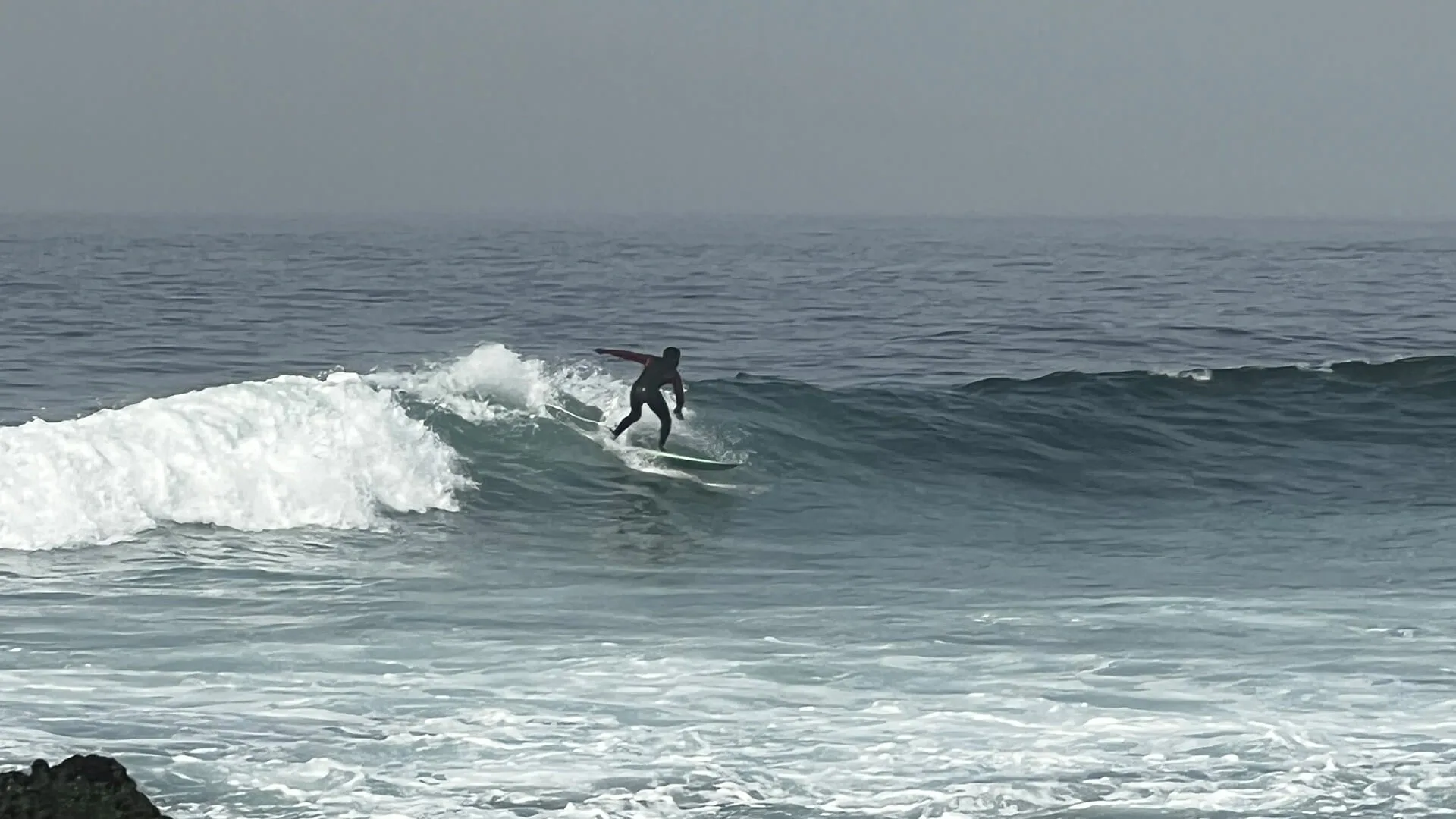
For solid intermediates to advanced surfers, the conversation opens up. Almadies, Ouakam and Ngor Right all demand more judgment. The Guardian describes Almadies and Ouakam as challenging. The Independent describes Ngor Right as fast, hollow and heavy, with reef beneath. Those are not details to ignore.
For advanced surfers only, Ngor Right is the clear headline. It is the canonical Dakar wave, but also the one that most clearly punishes hesitation, poor positioning or overconfidence.
This is why a guided approach matters. At Ngor Surfcamp Teranga, surf guiding and theory sessions are part of the setup, which is especially useful in a zone where wave quality can be high but the margin for error changes sharply from spot to spot.
Ngor Right: the wave that made the island famous
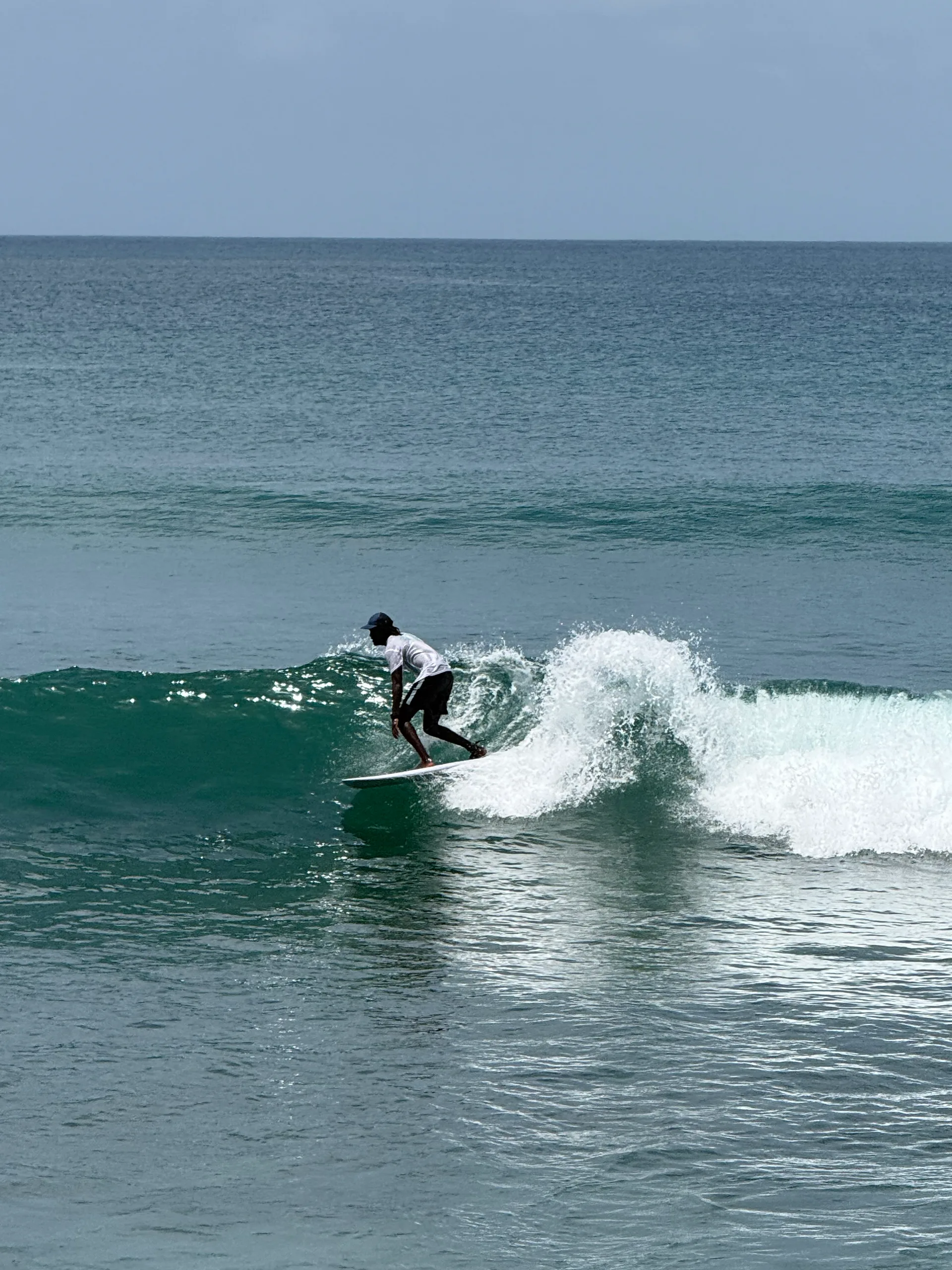
If people know one Dakar wave by name, it is usually Ngor Right. This is the break most closely tied to the island's surf reputation, and the one that appears again and again in travel writing about Senegal. It breaks over reef and is consistently described as fast, hollow and heavy.
That combination tells you almost everything you need to know. Fast means decisions come quickly. Hollow means the wave can pitch and run with real speed. Heavy means wipeouts are not casual. The Independent also notes the reef beneath and mentions Mami and Papi, two enormous spiky rocks along the line of the break. Even without overcomplicating the description, the message is clear: this is not a wave to treat lightly.
For advanced surfers, Ngor Right is the reason to come. It is the kind of wave that rewards commitment, timing and confidence on a reef setup. For intermediates, the key question is not whether the wave is famous, but whether the conditions on the day match your actual level. A famous wave can still be the wrong wave.
The practical advantage of staying on Ngor Island is proximity. You are not making a long mission to check it. You can assess it with local guidance, compare it with the alternatives, and decide whether it is a day to paddle out or a day to watch and learn.

If Ngor Right looks fast and hollow from the start, treat that first impression seriously and ask the local coaching team whether another spot will give you more useful water time.
Ngor Left: the more forgiving island option
Ngor Left receives less myth than Ngor Right, but for many visiting surfers it may be the more useful wave. The camp describes it as mellower and longer, which immediately suggests a different rhythm. Where the right is known for speed and consequence, the left offers more room to settle into a line and work on reading the wave.
That does not mean it is a beginner wave by default. It is still part of an island setup better suited overall to surfers with some experience, and Ngor Surfcamp Teranga is especially well matched to intermediates and advanced surfers. But among the island options, Ngor Left is often the one that broadens access.
For progressing surfers, this is where Dakar starts to make sense as a development destination rather than just a place of surf legend. A longer, mellower wave can be more valuable than a dramatic one because it gives you repetition. You can practice positioning, trim, turns and wave selection without the same level of urgency that defines Ngor Right.
It is also a useful fallback when the right is too serious. That flexibility matters on a surf trip. Not every session needs to be a test. Some of the best progress comes from choosing the wave that lets you surf more, not the one that looks most impressive from shore.
The smartest Dakar surfers are not chasing difficulty for its own sake; they are matching the spot to the day.
Virage: the easiest mainland entry point
Among the mainland spots accessible from Ngor Island, Virage stands out for one simple reason: it is identified as an easy beach break. For beginners, that makes it the most straightforward place in this guide to start. For more experienced surfers, it can also be a useful option when you want a lower-consequence session, a warm-up, or a reset after heavier days on the reef.
Beach breaks matter in a zone like Dakar because they widen the range of who can surf here. Not everyone arrives ready for a fast reef wave. Some visitors are taking their first lessons. Others are returning to surfing after time away. Others still are traveling with mixed-ability groups. Virage gives those surfers a realistic place in the local map.
From Ngor Island, getting there means crossing back by bateau and continuing on the mainland. That is one of the practical strengths of staying at the camp: you can combine island living with access to city-side surf options. If the island waves are too advanced, the trip is not wasted. You simply shift the plan.
For beginners, the main value of Virage is confidence. Sand underfoot changes the psychology of a session. So does a wave that is described as easy rather than challenging or heavy. For intermediates, it can be a place to sharpen basics before stepping up to more technical breaks.

Choosing the right spot for your level is the fastest way to improve. In Dakar, that often means using the easier mainland waves on some days and saving the island reefs for the right conditions.”, The Ngor coaching team
Yoff: a beginner-friendly option with room to grow
Yoff is another important part of the Dakar surf picture. The Guardian identifies Yoff as a beginner break, which places it alongside Virage as one of the more approachable mainland choices. That matters because it confirms that Dakar is not only for confident reef surfers. There are places here where learning and progression are realistic.
Yoff's role in a surf trip is slightly different from the island waves. It is less about surf mythology and more about practical mileage. If you are working on paddling, take-off timing, trimming down the line or simply building comfort in the ocean, a beginner-oriented break is often the better classroom.
For surfers based on Ngor Island, Yoff is part of the wider circuit that makes the area so versatile. You can spend one day on a mellower island wave, another on a mainland beginner break, and another simply checking conditions and choosing the best fit. That variety is especially useful for surf camps, coaching weeks and mixed-level groups.
Yoff also helps solve a common travel problem: the mismatch between aspiration and ability. Many surfers arrive wanting to surf the wave they have seen in photos. But the better trip usually comes from surfing the wave that lets you catch more waves, make more sections and leave the water wanting another session.
Ouakam: a step up in challenge
If Virage and Yoff sit on the more accessible side of the Dakar map, Ouakam belongs on the more demanding side. The Guardian groups Ouakam with Almadies as a challenging area, which is enough to place it beyond beginner territory.
That description is important because it keeps expectations realistic. A challenging wave is not automatically advanced-only, but it does suggest that surfers should arrive with a reliable base: comfort in stronger surf, confidence in positioning, and enough experience to adapt when the lineup is less forgiving.
For intermediates, Ouakam may be a spot to approach selectively, ideally with local guidance. For advanced surfers, it becomes part of the broader Dakar toolkit: another option to check when winds, swell direction or crowd patterns make it the best call.
The exact appeal of challenging waves often lies in their variability. They are not always the right choice, but on the right day they can be the most rewarding. That is why local knowledge matters so much in Dakar. The distance between spots may be manageable, but the difference in suitability can be large.

- Virage and Yoff are the most approachable options in this guide
- Ngor Left offers a mellower island alternative for progressing surfers
- Ngor Right, Ouakam and Almadies demand more experience and judgment
Almadies: for surfers who want more consequence
Almadies is another of Dakar's better-known surf zones, and like Ouakam it is described by the Guardian as challenging. That single word is enough to frame it properly. This is not where most first-time surfers should be heading. It is a place for surfers who already have a foundation and can make decisions in more demanding conditions.
Because Almadies sits within the same broader coastal zone as Ngor, it is often part of the conversation when surfers discuss Dakar as a destination rather than a single break. The value of including it in your trip is optionality. If one spot is not working, another may be. If one wave is too heavy, another may be more manageable. If one lineup is not right for your level, there may be a better fit nearby.
For advanced surfers, Almadies adds depth to the trip. It means Dakar is not just about ticking off Ngor Right. It is about reading a coastline with several distinct personalities. For intermediates, Almadies is more of a conditional option: possible on the right day, but not a default choice.
The practical lesson is simple. In Dakar, challenge is concentrated in a relatively small area. That is exciting, but it also means discipline matters. You do not need to surf every famous spot to have a successful trip.
Logistics from Ngor Island: how the surf day actually works
One reason Ngor Surfcamp Teranga works well as a base is that logistics stay simple. The camp is on Ngor Island, reached by a five-minute bateau from Ngor beach on the mainland. That crossing is short enough that mainland spot checks remain realistic, while island access stays immediate.
At the camp, accommodation ranges from private and shared rooms to dorms. Breakfast and dinner are included, along with surf guiding, theory sessions and use of the pool. Extras include airport transfer, surf coaching, video analysis, lunch, board rental and wetsuit rental. For visiting surfers, that means the practical pieces are already in place. You are not trying to solve transport, meals and surf planning separately.
The season matters too. The prime surf window runs from November to April, while May to October is considered flat or off-season. The Guardian notes winter from November to March as the period of big waves, with spring and summer more manageable. Put together, that suggests a broad truth: the prime season is when Dakar comes alive, but the character of the surf can still vary within it.
Water temperatures on the camp's site copy range from 18 to 26°C across the year, so equipment needs can shift depending on timing and personal preference. If you are unsure, rental options at the camp make it easier to adapt without overpacking.
For many guests, the best rhythm is to let the day be decided by conditions and level rather than by a fixed checklist of spots. That is where a licensed camp with local guidance becomes especially useful.

- Decide your spot by level first, not by reputation
- Use the bateau crossing to keep island and mainland options open
- Bring flexibility and ask for guidance before committing to heavier reefs
When to choose each Dakar surf spot
A practical guide is only useful if it helps you make decisions. So here is the simplest way to think about the six main spots accessible from Ngor Island.
Choose Ngor Right if you are an advanced surfer and the conditions suit your ability. This is the wave for surfers who are comfortable on a fast, hollow reef break and do not need the session to be forgiving.
Choose Ngor Left if you want the island experience but need something mellower and longer than the right. It is often the better option for progressing surfers who still want quality.
Choose Virage if you are a beginner, if you want an easy beach break, or if you need a lower-pressure session. It is also a sensible choice for mixed groups.
Choose Yoff if you are learning or consolidating fundamentals and want a beginner-oriented break with room to build confidence.
Choose Ouakam if you already have experience and are looking for a more challenging mainland option. It is not the place to force progression beyond your comfort zone.
Choose Almadies if you are similarly comfortable in more demanding surf and want another serious option within the Dakar zone.
This kind of decision-making may sound obvious, but it is often what separates a good trip from a frustrating one. Surf travel can tempt people into surfing for the story rather than the session. Dakar rewards the opposite approach.
The best wave of the day is the one that matches your level, not the one with the biggest reputation.
Why local guidance matters in Dakar
Dakar's surf geography is compact, but that does not make it simple. A short distance between spots can hide a big difference in difficulty. A wave that looks manageable from shore can feel very different once you are in the lineup. And a famous break can be less useful than a quieter, easier one if your goal is actual progression.
That is why local guidance is more than convenience. It helps with spot choice, timing, and the basic but essential question of whether a wave is right for you on that day. At Ngor Surfcamp Teranga, surf guiding and theory sessions are part of the camp structure, with coaching and video analysis available as extras. For intermediates especially, that can turn Dakar from an intimidating destination into a highly productive one.
The camp is licensed by the Fédération Sénégalaise de Surf, which matters because it places the operation within the formal local surf framework. In a destination where visitors may know the names of the spots but not their nuances, that kind of grounding is valuable.
There is also a cultural dimension to surfing here. Ngor is not just a surf backdrop. It is a small island with Lébou fishing village heritage, and Dakar's surf scene is part of a living coastal culture rather than an isolated resort environment. Staying on the island gives you a closer sense of that context while keeping the practical surf network within reach.
Building the right trip from Ngor Surfcamp Teranga
The strongest argument for basing yourself on Ngor Island is not only access to a famous wave. It is access to choice. You can wake up on the island, check the reef, cross by bateau if needed, and shape the day around what will actually work. That is a better model than locking yourself into one break and hoping conditions cooperate.
For beginners, that usually means leaning on Virage and Yoff while using the island as a calm, distinctive base. For intermediates, it often means mixing Ngor Left with selected mainland sessions and using coaching to bridge the gap toward more technical surf. For advanced surfers, it means keeping Ngor Right, Almadies and Ouakam in the conversation without losing the discipline to wait for the right day.
Ngor Surfcamp Teranga is suited to all levels, but especially intermediates to advanced surfers, which makes sense given the island's headline waves. Even so, the wider Dakar map ensures that less experienced surfers are not excluded. The key is honest spot selection.
If you are planning a surf trip and want a base that combines island atmosphere, direct access to Ngor's waves and practical reach to the mainland lineup, explore Ngor Surfcamp Teranga. You can also browse the gallery, read more on the blog, or check the faq before booking your stay.