If you are weighing up Morocco, Indonesia, the Canaries, and West Africa, the real question is not just where the waves are good. It is where you will actually surf enough, learn enough, and enjoy the whole trip enough to come home better. That is exactly why choose surf camp Senegal is a smarter question than many surfers first realise.
Senegal is not the loudest name on the surf-camp shortlist, and that is part of its advantage. You get a genuine Atlantic surf destination with warm water for much of the season, quality reef breaks, a vibrant local surf culture, and a pace that feels human rather than overbuilt. Base yourself at Ngor Surfcamp Teranga, 400 metres off Dakar on Ngor Island, and you are not just booking a bed near waves. You are stepping into a surf rhythm shaped by tide, bateaux, reef, and island life.
Senegal gives you a more balanced surf trip
Some destinations win on sheer scale. Indonesia has endless islands and world-famous waves. Morocco has a long Atlantic coastline and a well-established surf-camp scene. The Canaries offer year-round consistency and easy European access. But a surf trip is not scored on brochure variety alone.
What matters for most surfers, especially those at beginner-intermediate to advanced-intermediate level, is the balance between wave quality, crowd pressure, logistics, cost, coaching conditions, and recovery. Senegal is one of the few places where those elements line up naturally.
From November to April, the prime season here, you can score consistent Atlantic swell, pleasant weather, and surf that is serious enough to push you while still being manageable with proper guidance. You are not spending your week racing from spot to spot in a van for hours. You are not battling the industrial lineups of some overexposed regions. And you are not trapped in a surf bubble that feels detached from the country around it.
At Ngor, the experience is compact in the best possible way. The camp sits on an island reached by a five-minute bateau from Ngor beach on the mainland. That short crossing changes your whole mindset. You leave Dakar behind, arrive on the island, and the trip slows down. From there, daily life revolves around the sea, shared meals, surf checks, theory sessions, and time in the pool between surfs.
The best surf camp is not always the place with the most waves on a map. It is the one where your days make sense.

- Senegal offers a rare balance of quality waves, manageable crowds, and cultural depth
- Ngor Island keeps logistics simple so you spend more time surfing and recovering
- For many surfers, progression happens faster here than in busier, more fragmented destinations
The waves are better than many people expect
One reason surfers hesitate over Senegal is simple unfamiliarity. They know the names in Bali, Taghazout, and Fuerteventura, but they know less about Dakar. That does not mean the waves are second-tier. It means the destination remains underappreciated.
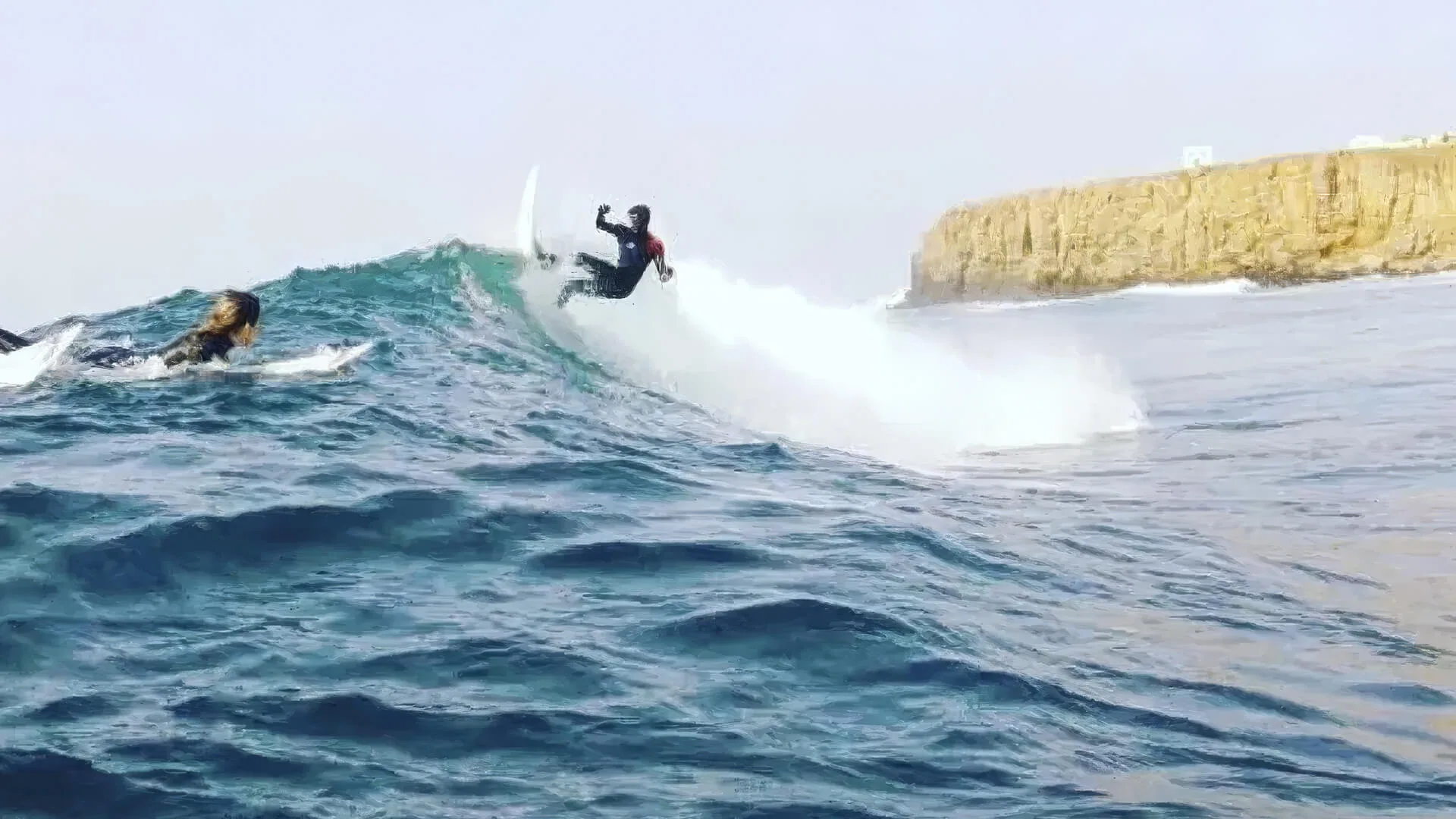
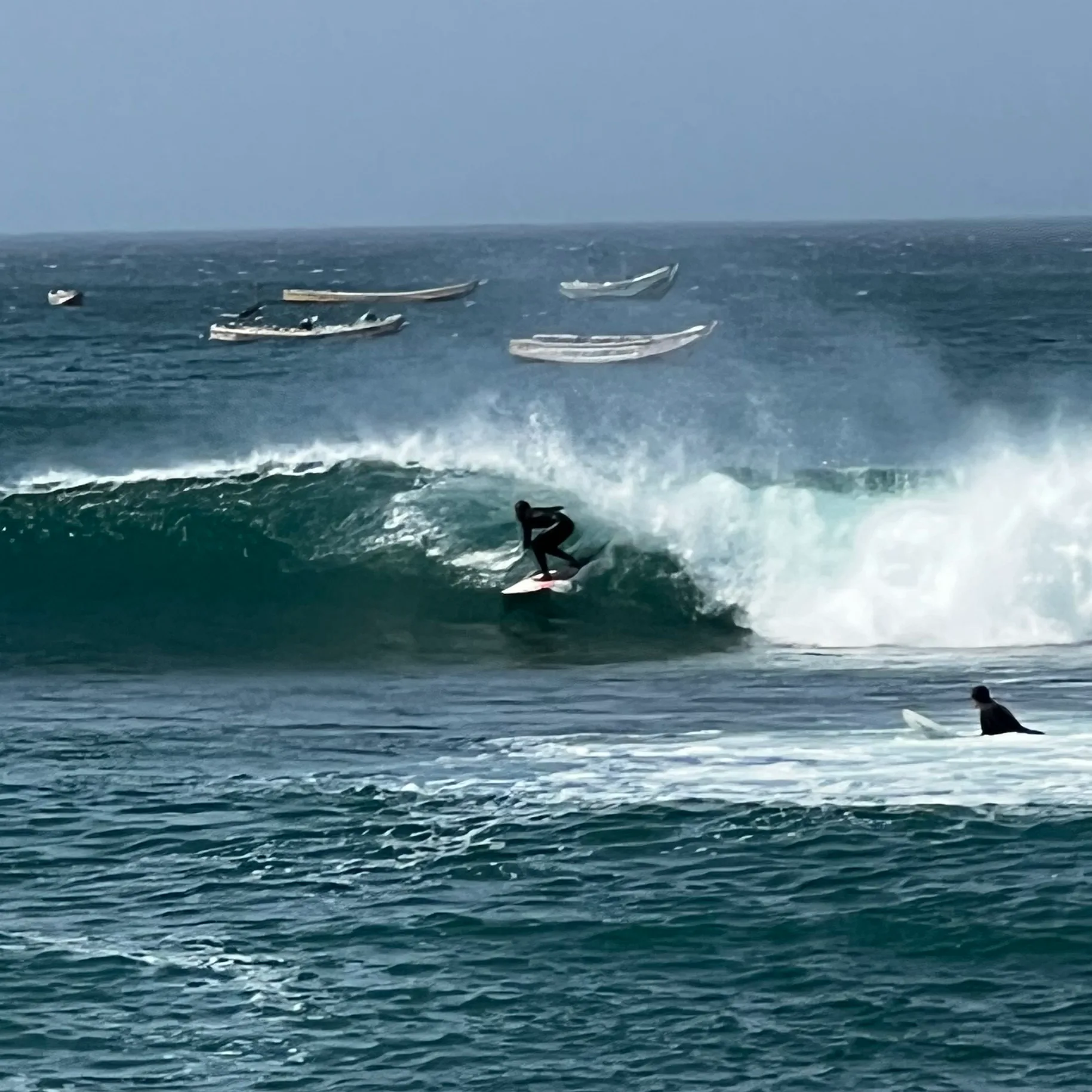
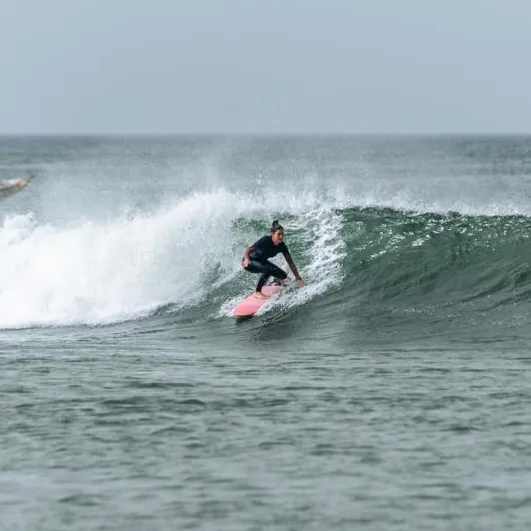
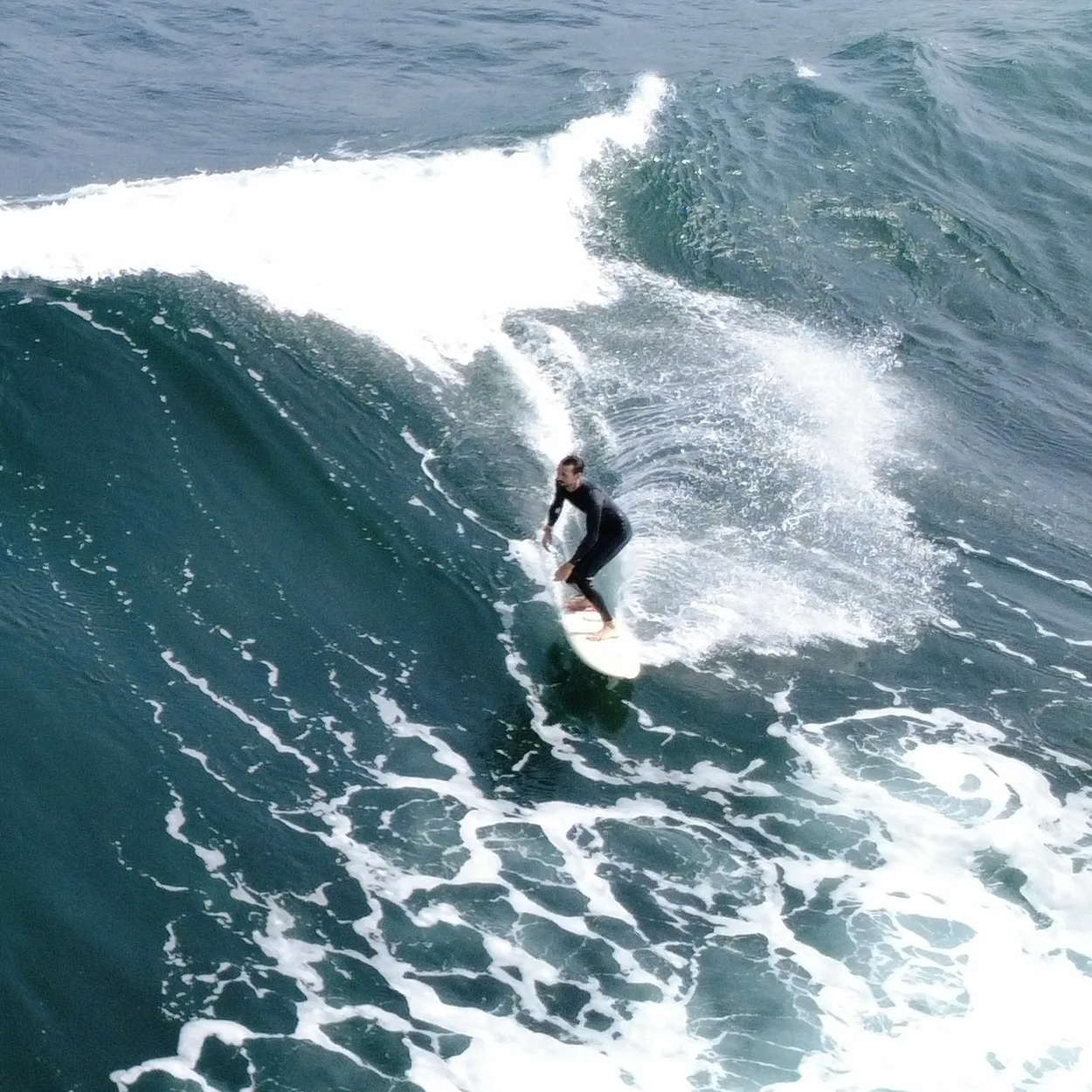
Ngor is home to two defining breaks. Ngor Right is the headline wave: a reef break that can be fast, hollow, and genuinely excellent when the swell and wind line up. It is the kind of wave that rewards commitment, positioning, and timing. Ngor Left gives the area more range. It is mellower, longer, and often more forgiving, making it a better place for longer rides, smoother turns, and building confidence on a reef setup.
That combination matters. A camp built around a single high-performance wave can be inspiring, but it can also be limiting if conditions shift or your level sits just below the sweet spot. At Ngor, you have two distinct personalities in one area. The result is more usable surf days across a broader ability range.
Compared with Indonesia, Senegal may not offer the same endless menu of breaks. But that is not necessarily a loss for progression. Too much choice often becomes inconsistency in practice. You spend time moving, second-guessing, or chasing what looked better on Instagram. At Ngor, the focus stays tighter. You learn the reefs, the entry points, the tides, the takeoff zones, and how the wave changes through the day. That familiarity builds real surf intelligence.
Compared with Morocco, the quality here often feels cleaner in another way: less frantic. Plenty of Moroccan points and beach breaks are excellent, but they can also be crowded, heavily surf-schooled, and shaped by convoy-style surf tourism. At Ngor, there is a stronger sense of being in a live surf zone rather than a surf production line.
Compared with the Canaries, Senegal often feels more welcoming to the surfer who wants consequence without constant intimidation. The Canaries can be superb, but they can also be heavy, hyper-localised in places, and mentally draining if you are not fully comfortable in punchy volcanic conditions. Ngor still demands respect, especially on the Right, but the overall camp structure gives you support around that challenge.
Crowds matter more than people admit
Most surfers talk about finding good waves. Fewer talk honestly about how much crowds shape the quality of a surf trip. Yet crowd pressure affects almost everything: wave count, confidence, stress, decision-making, and even whether coaching advice can actually be applied.
This is one of Senegal’s strongest arguments. Not empty perfection every day, and no serious camp should promise that. But compared with many famous surf-camp circuits, Ngor often gives you a more breathable lineup.
That changes the feel of your sessions immediately. Intermediates get more chances to commit to waves instead of being blocked by ten sharper surfers. Advanced surfers can sit deeper and work on line choice rather than spending half the session in paddle battles. Even beginners benefit indirectly, because the atmosphere around the camp is calmer when everyone is actually surfing rather than competing for scraps.

Senegal’s prime surf season runs from November to April, when Atlantic swells and favourable weather make Ngor one of West Africa’s most reliable surf bases.
Crowd reduction also improves coaching. A surf coach can explain positioning, priority, timing, and wave selection on land all day long. But if your actual lineup is chaotic and oversubscribed, learning gets delayed. Here, theory sessions connect more cleanly with water time. That is a major reason guests often progress quickly at Ngor Surfcamp Teranga.
Morocco, especially around famous surf hubs, can feel saturated in peak periods. The Canaries, due to compact coastlines and concentrated surf zones, can become crowded fast when swell arrives. Indonesia’s marquee breaks are no secret anymore. Senegal still offers something rarer: a destination where quality and relative space can coexist.
Surf progression needs repetition, not just ambition.
Weather, water temperature, and energy levels
A surf camp is not only about what the wave does. It is also about how you feel after three or four days of surfing twice daily. That is where Senegal quietly pulls ahead.
Prime season on the Dakar coast brings warm, bright conditions without the oppressive humidity many travellers associate with tropical destinations. You can wake up to clean light, surf in comfortable air temperatures, eat outside, recover well, and head back in without feeling battered by the climate itself.
Indonesia can be dreamy, but the heat and travel fatigue can wear on people, particularly if they are moving between islands or surfing crowded tropical reefs day after day. Morocco can be crisp and energising, but winter mornings can be colder than many visitors expect, and long drives between spots are common. The Canaries are wonderfully accessible, yet wind can become a defining factor of the week, and the volcanic exposure can make sessions feel more physically intense.
Senegal’s edge is that the environment supports consistency. You spend less energy managing the destination and more energy surfing. That has a direct effect on how much you absorb from a camp week.
At Ngor Surfcamp Teranga, that support continues on land. The setup includes rooms in private, shared, or dorm options, breakfast and dinner, surf guiding, theory sessions, and a pool. Those details are not decoration. They create a routine where you can eat properly, review your sessions, rest between surfs, and stay mentally switched on.

If your goal is progression, choose a camp where recovery is built into the daily rhythm, not treated as an afterthought between transfers and crowded dinners.
Senegal feels like travel, not just surf consumption
This is where Senegal separates itself most clearly from more commercial surf-camp circuits. You are not arriving in a place that has been overly smoothed for foreign expectations. You are entering a coastal culture with its own pace, language mix, food traditions, fishing heritage, music, and social codes.
Ngor Island is central to that feeling. Reached by a short bateau crossing, it immediately offers a different texture from mainland city life. You hear the sea, watch boats come and go, move on foot, and settle into a place where surfing exists inside a community rather than above it.
For many guests, that becomes the memory that lasts longest. Not just one good wave, but the shape of the days: breakfast before the tide turns, checking the reef from shore, paddling out with the island behind you, eating dinner after sunset, talking through takeoffs and turns with the coaching team, then sleeping to the sound of the Atlantic.
Morocco can absolutely offer cultural depth, but many first-time visitors only touch the highly touristed surf corridor. Parts of Indonesia are now so surf-developed that they feel curated primarily for visiting surfers. The Canaries can be culturally rich too, yet many camp experiences there remain apartment-based and urban in a way that feels more transactional.
Senegal still feels personal. Warm hospitality is not a marketing invention here; teranga is a real cultural idea, rooted in generosity and welcome. At a licensed operation like Ngor Surfcamp Teranga, that spirit meets professional surf structure.

A great week is not just measured by your best wave. It is measured by how many sessions you can repeat with clarity, confidence, and enough energy to keep learning.”, The Ngor coaching team
It is a stronger value choice than many surfers assume
When people compare destinations, they often compare flight prices first and stop there. That is understandable, but it is incomplete. The smarter comparison is total surf value: how much usable surfing, coaching, comfort, and cultural experience you get for the money.
Senegal performs well on that measure.
At Ngor Surfcamp Teranga, the package already includes accommodation, breakfast and dinner, surf guiding, theory sessions, and pool access. Extras like airport transfer, surf coaching, video analysis, board rental at €15 per day, wetsuit rental at €5 per day, and lunch let guests customise the week without forcing everyone into the same structure.
That kind of modular pricing matters. In some destinations, surf camps look cheap at first glance but add hidden transport costs, guiding fees, premium board rental rates, or expensive meals outside the package. In others, you end up paying for location branding rather than practical quality.
Senegal often feels more honest. You are paying for a real surf base with direct wave access and meaningful camp support, not for over-designed surf branding. Because logistics are tighter at Ngor, you also lose less time and money to transfers, fuel-heavy surf hunts, or the constant eating-out pattern common in more dispersed surf towns.
The other side of value is wave access per day. If you are in a famous destination but spend each session fighting for two waves, your trip is not really better value than a less famous destination where you surf more and learn more. Senegal’s relatively lighter crowd factor improves the value equation every single day.
The Ngor factor: why this corner of Senegal works so well
There is Senegal as a destination, and then there is Ngor as a surf-camp base. They are related, but not identical. What makes Ngor special is concentration.
You are on an island 400 metres off Dakar’s coast, close enough for easy access, distinct enough to feel removed. The mainland connection is simple: a five-minute bateau from Ngor beach. That tiny journey gives the camp an immediate sense of arrival. It also means your surf week starts to revolve around the spot itself rather than wider urban sprawl.
The waves are close, the camp infrastructure is practical, and the atmosphere encourages focus. Because Ngor Right and Ngor Left are right there, your understanding of the place builds fast. You stop surfing randomly and start surfing intentionally.
That is especially important for intermediates moving toward advanced surfing. This is the level where random wave-catching is not enough anymore. You need to improve reading sections, choosing takeoff zones, making cleaner first turns, and understanding how tide and swell angle change the whole wave. Ngor is ideal for that kind of learning because the setup is repeatable.
And unlike some destinations where the camp feels disconnected from the local surf reality, Ngor Surfcamp Teranga is rooted in the scene. It is FSS licensed, meaning it operates within the framework of the Fédération Sénégalaise de Surf. That matters. It signals legitimacy, local connection, and a serious approach to surf operations.

- Choose November to April for the most reliable conditions
- Add video analysis if you want faster technical feedback
- Rent a board only if your usual shape does not match reef-wave conditions
Coaching works better in a place with rhythm
A lot of camps promise progression. Fewer create the conditions that make progression likely.
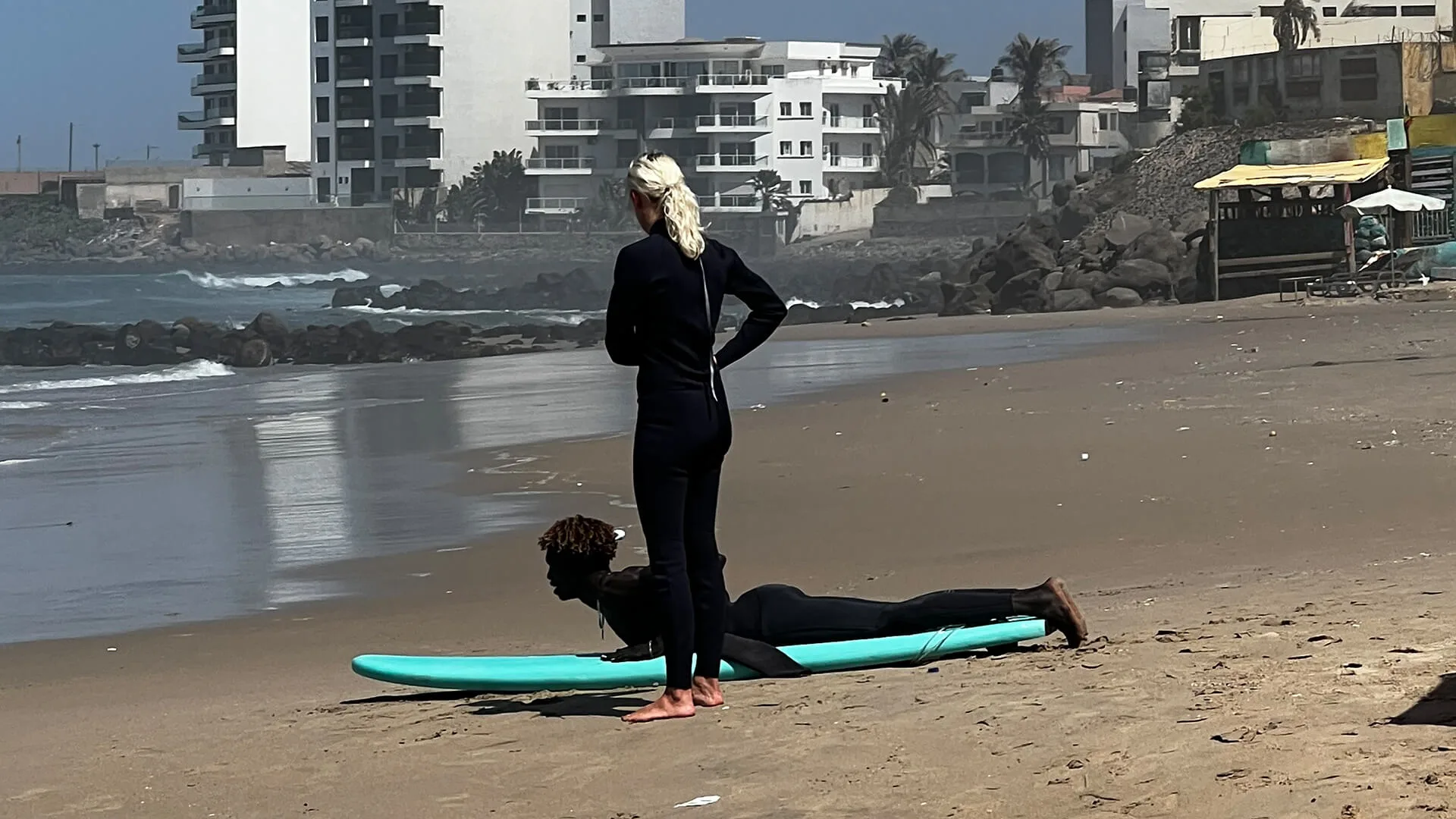
At Ngor, those conditions are built into the week. The camp is set up not just for surfing but for learning: surf guiding to put you in the right water at the right time, theory sessions to decode what happened, and optional video analysis for objective feedback. Add the physical reset of the pool and regular meals, and you have the ingredients for sustained focus.
This is one area where Senegal can outshine more famous destinations. In Indonesia, the temptation is often to chase waves rather than build understanding. In Morocco, the road-trip format can make days exciting but fragmented. In the Canaries, conditions can be powerful enough that some intermediates spend more time surviving than refining.
Ngor offers challenge, but challenge with continuity. If you surf Ngor Right and blow a takeoff because you hesitated, you can break that down with the coaches. If Ngor Left gives you a better canvas for longer rides and rail work, you can use it deliberately. This kind of specific progression is what turns a holiday into a genuine training block.
The camp is suited to all levels, but especially intermediates to advanced surfers. That is an honest strength, not a limitation. Beginners can absolutely be welcomed and supported, yet the real magic of Ngor often reveals itself once you can paddle with purpose and want to sharpen your decision-making.
The right surf camp does not flatter your level. It gives you the structure to outgrow it.
Why not just choose the famous option?
Because famous is not always better for you.
If your dream is tropical abundance and you do not mind bigger travel complexity, Indonesia may still be your answer. If you want a broad, established Atlantic surf network close to Europe, Morocco may suit you. If you value European ease and year-round possibility, the Canaries have obvious appeal.
But if you want a surf camp that combines quality waves, genuine culture, manageable logistics, warm hospitality, solid value, and room to breathe in the lineup, Senegal becomes extremely persuasive.
The question why choose surf camp Senegal is really a question about priorities. Do you want a destination that everyone already knows, or one that may actually serve your surfing better? Do you want endless options, or the right options? Do you want to consume a surf holiday, or live one properly for a week?
For many surfers, Ngor answers those questions with unusual clarity.
Ngor Island sits just 400 metres off Dakar’s coast, but that short crossing creates a true island rhythm that makes a surf week feel focused, calm, and immersive.
Who Senegal is best for
Senegal is not for every surfer, and that honesty is useful. If you need a giant menu of spots and nightlife built around international surf tourism, other destinations may suit you better. If you are only comfortable in soft beach-break conditions every single day, Ngor’s reef character may ask more of you.
But Senegal is excellent for surfers who want substance.
It suits travellers who care about surfing and the wider place around it. It suits intermediates who want to become more decisive and more technically sound. It suits advanced surfers who appreciate quality without needing a circus around it. It also suits people who value camp life that feels grounded rather than overly commercial.
At Ngor Surfcamp Teranga, those surfers find a setup that is simple in the right ways: reliable meals, comfortable rooms, guiding, theory, optional coaching upgrades, and direct access to one of the most distinctive surf zones in West Africa. You can browse more of the atmosphere through the gallery, learn practical details on the island page, or explore more advice on the blog.
- Choose Senegal if you want progression, not just destination prestige
- Ngor combines a fast hollow right with a mellower longer left for balanced learning
- The mix of culture, value, and lighter crowds makes the whole week work better
In the end, the strongest case for Senegal is not that it beats every destination on every metric. It is that it delivers one of the most complete surf-camp experiences for surfers who want to improve and genuinely enjoy the trip. The waves are real, the setting is memorable, the culture is warm, and the pace helps you surf better, not just harder.
If that sounds like your kind of week, take the next step and book your stay at Ngor Surfcamp Teranga to surf Ngor Island the way it should be surfed: with time, guidance, and room to breathe.