You can spend weeks surfing every day and still repeat the same mistakes. Then one filmed session changes everything: suddenly the gap between what you felt and what actually happened on the wave becomes impossible to ignore.
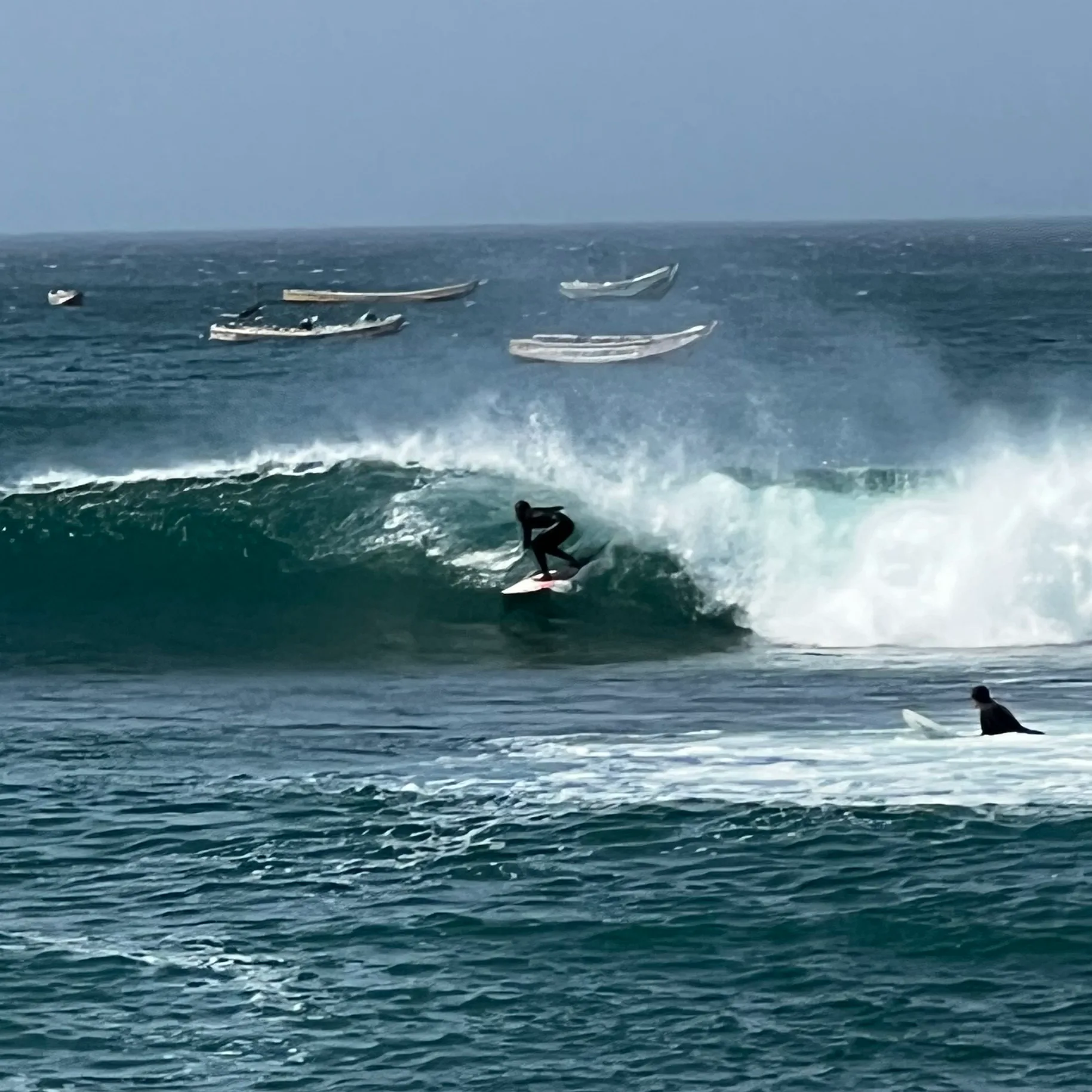
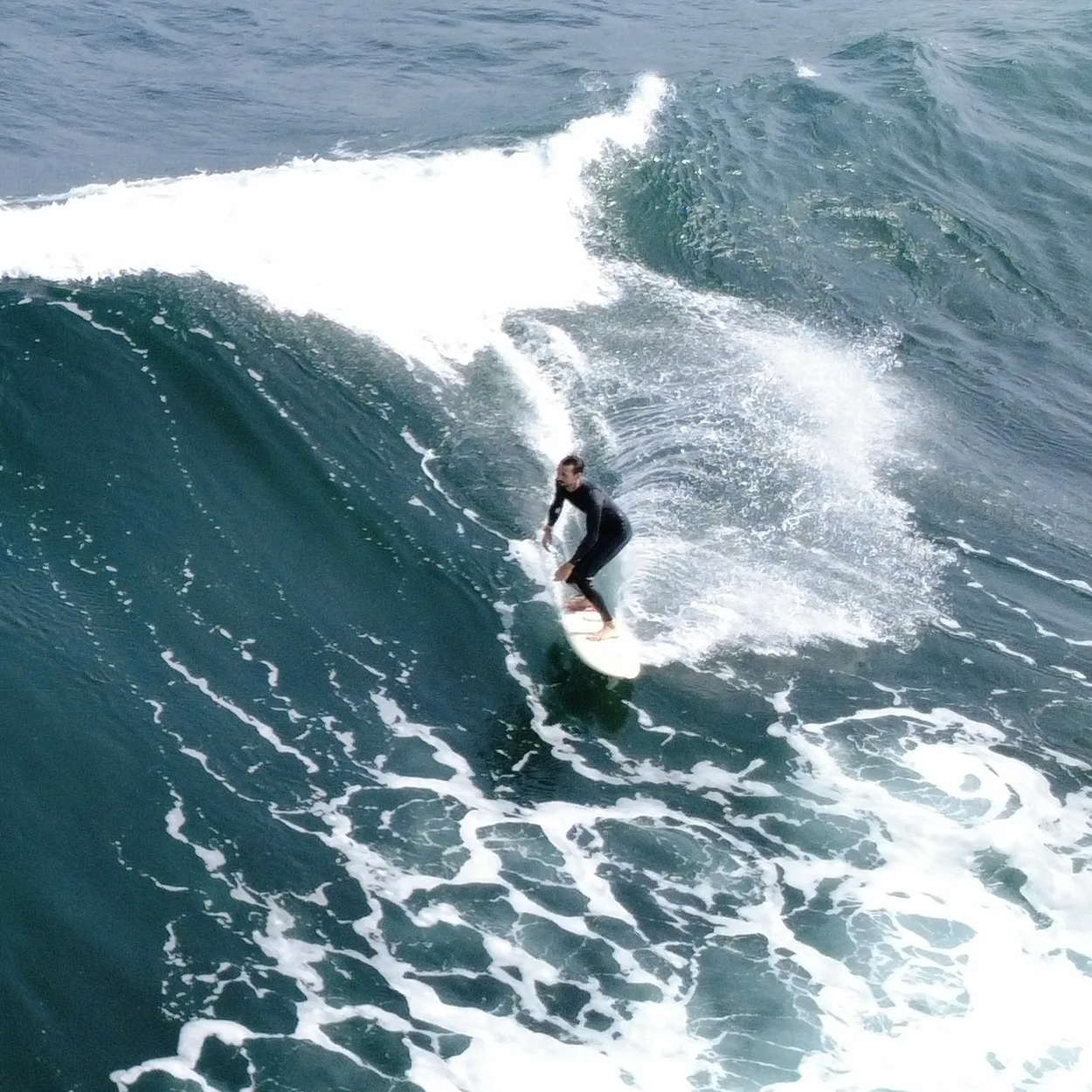
That is why video analysis is one of the most effective tools we use at Ngor Surfcamp Teranga on Ngor Island, 400 metres off Dakar. In a setting where you can surf both the fast, hollow Ngor Right and the longer, mellower Ngor Left, filmed feedback turns good sessions into real progression.
Why video changes surfers faster than more water time alone
Most surfers remember a wave by feeling, not by fact. You think you were low and compressed on takeoff, but on camera your legs are almost straight. You remember driving hard off the bottom, yet the footage shows a rushed drop, a high line, and no real set-up for the turn. This mismatch is normal. Surfing happens fast, and memory gets distorted by adrenaline.
Video analysis closes that gap.
At Ngor Surfcamp Teranga, the process is simple but powerful: surf, film, review, repeat. You get objective feedback instead of guesswork. For intermediates, that often means finally understanding why certain waves feel unstable or why turns never seem to open up. For advanced surfers, it is often about refining details that create more speed, better positioning, and cleaner lines.
The reason this works especially well in Senegal is consistency of environment. During the prime season from November to April, we can repeatedly coach on waves with clear personalities. Ngor Right asks for precision, commitment, and composure on a reef break that can be fast and hollow. Ngor Left gives more room to work on line choice, trim, linking sections, and surfing with less panic. Those two waves reveal mistakes very clearly on screen.
The camera doesn’t judge you. It just tells the truth quickly.
A lot of guests arrive expecting video analysis to be intimidating. In practice, it usually becomes the moment everything starts making sense.

If you have been stuck at the same level for months, one filmed session often reveals the single correction that matters more than ten generic surf tips.
How video analysis works at Ngor Surfcamp Teranga
Our sessions are built around real surf conditions, not staged drills detached from the ocean. Depending on tide, swell angle, and your level, the coaching team chooses where filming will be most useful. That may be a session on Ngor Left to examine fundamentals, or on Ngor Right to study timing under more pressure.
The day usually begins with a surf and coaching brief. We discuss the goal before anyone paddles out. That matters because good video analysis is not just collecting clips. It is filming for a purpose.
For one surfer, the theme may be pop-up efficiency. For another, it may be wave selection, frontside bottom turns, finishing the top turn, or holding composure through a steeper takeoff. Once the objective is clear, the filming becomes more useful and the review later is sharper.
The actual surf session is filmed from the best available angle. On Ngor Island, that can mean shoreline, reef vantage points, or positions that show the takeoff zone and line down the wave clearly. Because access from the mainland is just a five-minute bateau crossing from Ngor beach, the rhythm of surf and review is efficient. You are not losing half a day in transport or trying to force analysis into an awkward schedule.
After the session, the review happens back at camp in a focused but relaxed setting. Guests have breakfast and dinner included, and the camp setup makes it easy to come out of the water, recover, and sit down for theory or footage review while the memory of the session is still fresh. That timing is important. The surfer can still describe what they felt on each wave, and the coach can compare that feeling to what appears on screen.
We stop, replay, and isolate moments. Where were your eyes? When did you stand too tall? Did you take the high line too early? Did your first pump kill speed instead of creating it? Did you start the turn with your shoulders, or did the board ever really get put on rail?
The goal is not to overwhelm you with ten faults at once. The Ngor coaching team usually identifies one to three priorities, because that is where real progression happens.
What coaches look for first in the footage
People often imagine coaches are searching for advanced manoeuvre errors. In reality, the biggest gains usually come from simpler things. The fundamentals are what unlock everything else.
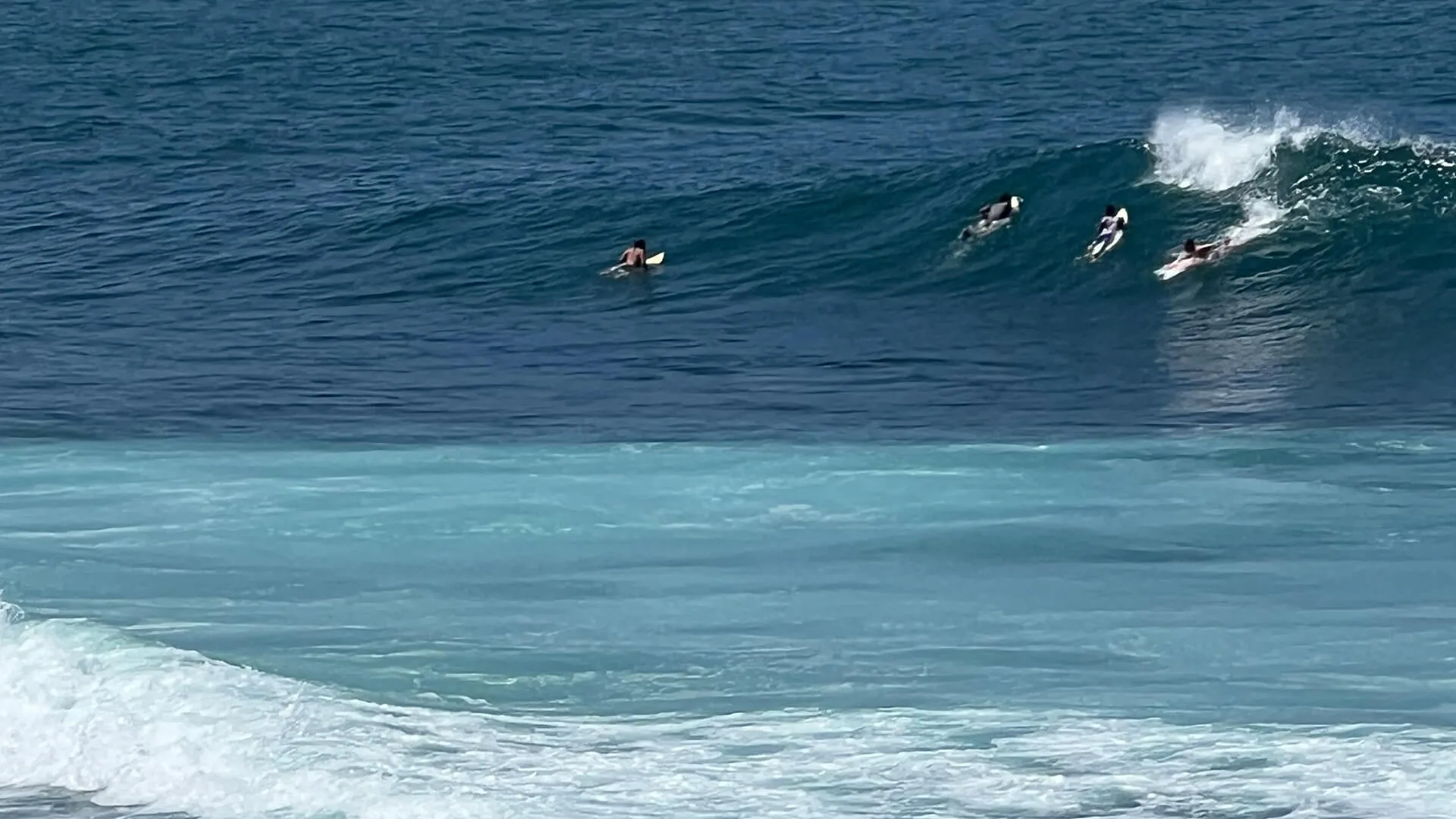
The first area we look at is wave choice. Many surf problems begin before the surfer even stands up. Were you too deep? Too wide? Paddling for waves that were already running away from you? On Ngor Right especially, poor positioning gets punished fast. Video shows whether the issue was technique or simply committing to the wrong wave from the wrong place.
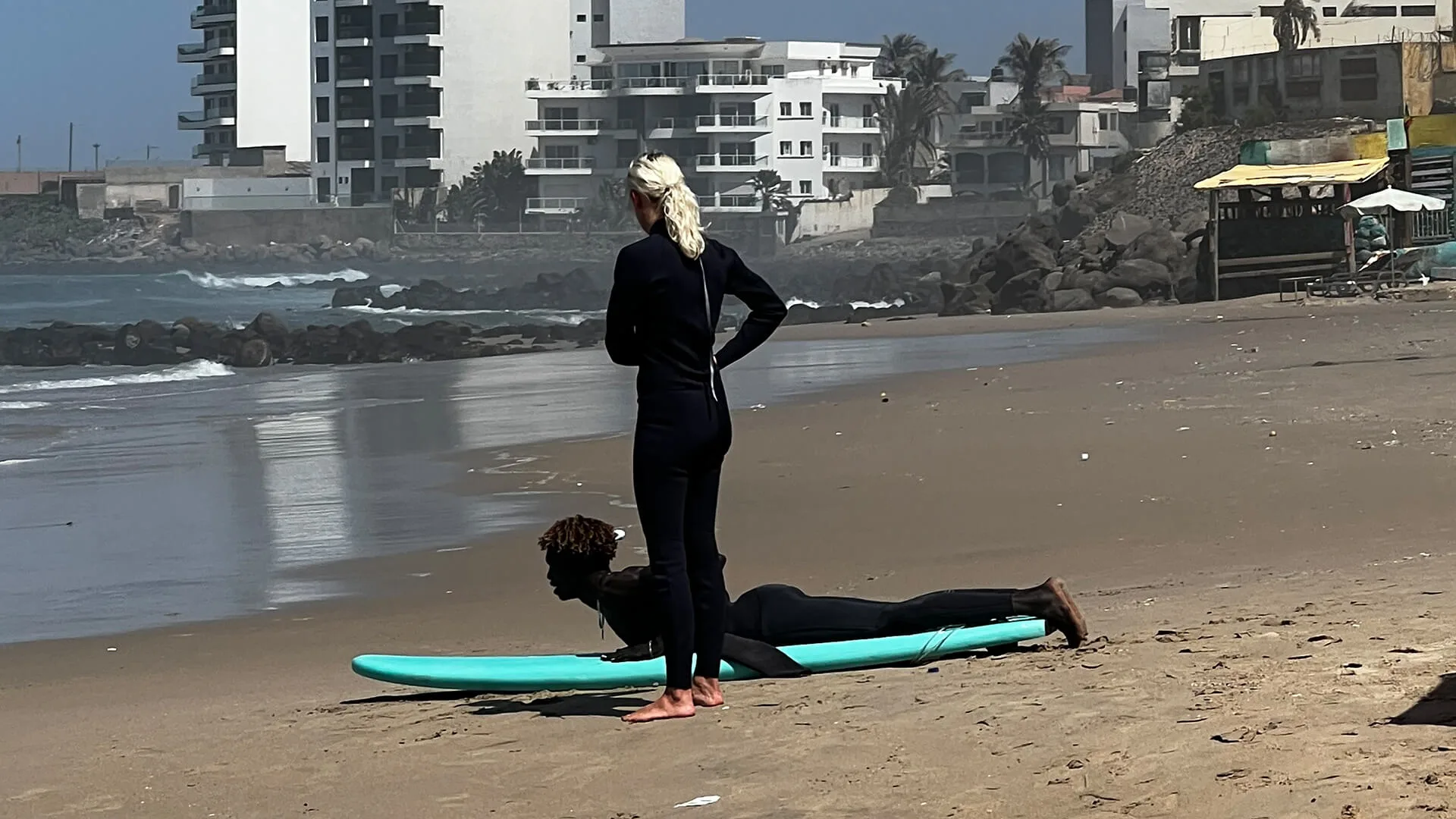
Next comes paddle entry and takeoff timing. Are you paddling with urgency at the right moment, or hesitating and then scrambling late? Are your hands landing too far forward in the pop-up? Are you standing in two steps instead of one fluid movement? These errors are common and highly correctable because they are visible, repeatable, and easy to understand once seen.
Then we assess stance and posture. This is where many intermediates get their biggest breakthrough. On film, surfers often discover they are too upright, too narrow in stance, too static through the knees, or carrying their arms in positions that block rotation and balance. What felt athletic in the water often looks rigid on land.
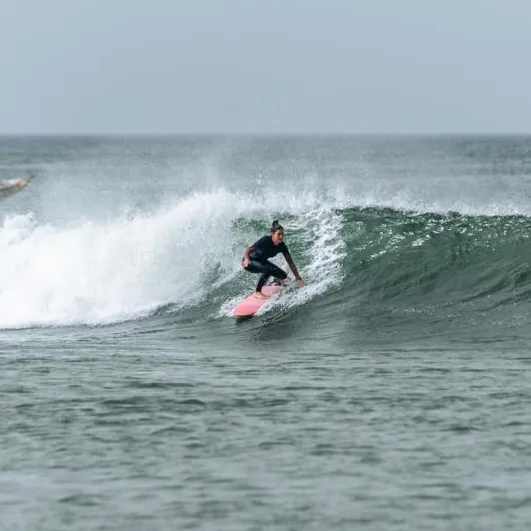
From there, we move into line choice and speed management. Are you dropping to the bottom with intention, or just surviving the takeoff? Are you trimming through the open face, or pumping without purpose? On Ngor Left, where there is more room to draw a longer line, these details become especially obvious. The footage tells us whether you are surfing the wave in sections or actually connecting it as one continuous path.
Finally, we analyse the turn itself. Was the bottom turn a real set-up or just a change of direction? Did the top turn come from lower body pressure and timing, or from upper body flailing? Did you finish manoeuvres with control, or lose your line immediately after impact?

Ngor Right and Ngor Left are close enough in character and access that surfers can work on different coaching themes without losing the rhythm of a dedicated progression trip.
The review process: from raw clips to actionable feedback
A good review is not a highlight reel. It is a learning conversation.
At Ngor Surfcamp Teranga, the best reviews usually follow a clear structure. First, we watch a few waves uninterrupted. This gives context and helps the surfer see patterns across a full session rather than obsessing over one mistake on one wave. Then we begin pausing and breaking down details.
We compare good waves and weak waves. That contrast is one of the most powerful teaching tools in surf coaching. Often, your best wave already contains the answer to your worst one. Maybe on one takeoff your chest stayed low and your eyes were already down the line; on the next, you stood up too early and looked at the nose. Maybe one bottom turn loaded compression and released through the section; another stayed flat and rushed.
The point is to identify repeatable success, not just repeatable error.
This is also where theory sessions matter. Video on its own can show what happened, but theory explains why it happened. When we connect the footage to timing, body mechanics, and wave reading, the surfer leaves with something practical to test in the next session.
The strongest reviews are specific. Not “bend your knees more,” but “stay compressed for one extra beat after the pop-up before trying to generate speed.” Not “turn harder,” but “set a lower bottom turn line so you actually have space to come back to the lip.” Specific cues translate into better surfing immediately.
Because the camp offers surf guiding, coaching, and optional video analysis in the same environment, you are not bouncing between disconnected experiences. The person helping you understand the footage also understands the wave, the tide, the board you are riding, and the session context. That makes the feedback much more relevant than generic online instruction.
The mistakes that video corrects fastest
Some faults improve quickly once a surfer sees them. Others take more repetition. The fastest corrections usually share one trait: they are obvious on camera and simple to reframe mentally.
The pop-up is a classic example. Many surfers have no idea how slow or uneven their takeoff looks until they watch it. Once they see the delay between hands, feet, and first direction of travel, progress can happen in a day or two. The correction is immediate because the cause is clear.
Another fast win is head and eye positioning. Looking down, checking the board, or staring at the lip instead of the line often creates a chain reaction through the whole body. Once the surfer understands where their focus should be, stance and balance often improve at the same time.
Arms are another big one. Flared arms, frozen arms, or arms swinging independently of the turn are easy to spot on film. Correcting arm usage can instantly make a surfer look calmer and more connected.
Wave selection also improves quickly. When a coach can show three missed opportunities and three smart choices from the same session, the surfer begins to see the lineup differently on the next paddle-out. This is especially valuable on reef setups, where positioning is more exact.
Where progress takes longer is usually in deeper movement patterns: generating speed efficiently, committing to a steeper bottom turn, holding rail through a carve, or relaxing under pressure on more critical takeoffs. These changes are achievable, but they require repetition and trust.

The biggest breakthroughs often come from very small corrections. One cleaner takeoff or one better eye line can change the whole wave.”, The Ngor coaching team
Before-and-after comparisons: why they matter so much
Nothing motivates a surfer like proof.
Before-and-after video comparison is where coaching becomes real. It lets you see not just that you understood the feedback, but that your surfing actually changed. At Ngor Surfcamp Teranga, this may happen over a few days or across a full stay, depending on conditions and the surfer’s goals.
A typical comparison might show an early-session takeoff beside one from later in the week. In the first clip, the surfer pops up late, lands heavy on the front foot, and races down the line without setting a rail. In the later clip, the same surfer commits earlier, lands lower, and holds a composed line into a proper bottom turn. The difference is visible immediately.
For intermediates, these comparisons build confidence. They confirm that progress is not imaginary. For advanced surfers, comparisons help refine details that are otherwise hard to measure: tighter timing, cleaner transitions, more efficient speed generation, more commitment in the pocket.
There is also a psychological benefit. Many surfers focus too much on what still feels weak. Comparison footage reminds them how far they have already come. That shift in mindset matters because confidence changes performance.
On waves like Ngor Left, where there is time to link sections, before-and-after clips often reveal improved flow. On Ngor Right, they may reveal something different: better positioning, more decisive entry, or a calmer body under speed. Different waves expose different improvements, and that variety is one reason a stay here works so well for progression-focused surfers.
Progress feels faster when you can see it frame by frame.

- Video shows the gap between what you felt and what actually happened
- Fastest gains usually come from fixing fundamentals, not flashy moves
- Before-and-after clips turn small corrections into visible proof of progress
Why Ngor Island is such a good place for coached video sessions
Some surf destinations are fun for free surfing but awkward for structured progression. Ngor Island is different. The logistics are compact, the wave options are close, and the surf culture is deep. That combination makes filmed coaching far more effective.
Ngor Surfcamp Teranga is based right on Ngor Island, just a short bateau crossing from the mainland. Once you are here, your day revolves around surf, recovery, review, and the next session. You are not burning energy in traffic or trying to analyse waves hours after the fact.
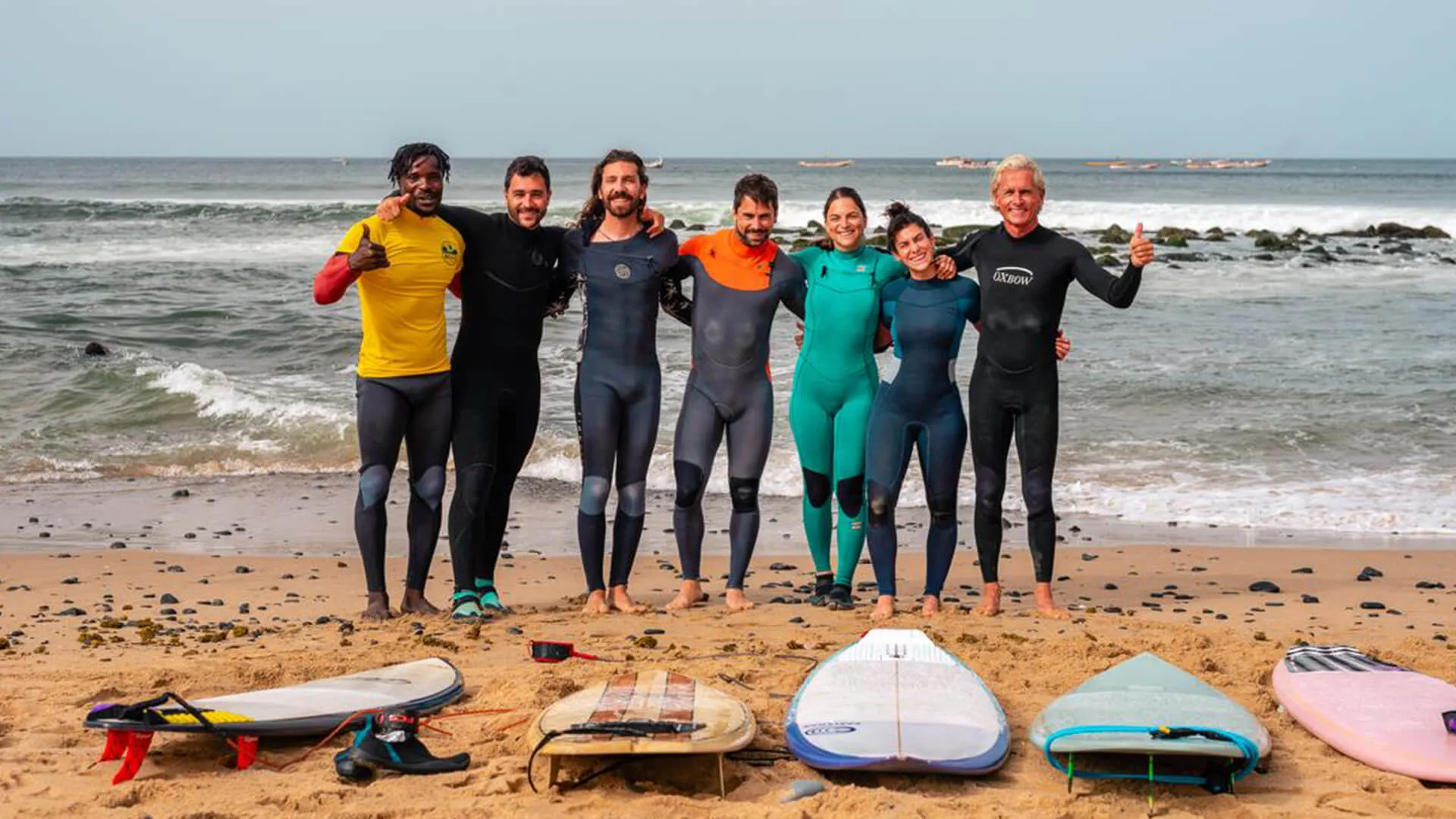
The camp itself supports the process well. There are room options from private to shared and dorm, a pool to recover between sessions, breakfast and dinner included, and the possibility to add extras like airport transfer, lunch, board rental at €15 per day, wetsuit rental at €5 per day, and extra coaching support. The camp is also officially FSS licensed, which matters if you care about professionalism and proper surf operations in Senegal.
Most importantly, the waves allow meaningful contrast. If a surfer needs to settle fundamentals, we can often use the longer, mellower shape of Ngor Left to establish rhythm and cleaner lines. If they are ready to sharpen timing and commitment, Ngor Right gives immediate feedback. Together, those waves create a natural progression framework.
This is one reason Senegal appeals to surfers who want more than a casual holiday. During the prime season from November to April, you can surf with real intent. If you want the broader picture of the destination beyond coaching, the camp’s guides and surfing in Senegal resources are worth exploring before you come.
Who benefits most from video analysis here
The honest answer is almost everyone, but especially intermediates and advanced surfers.
If you are already catching your own waves, trimming, making basic turns, and trying to surf with more purpose, video accelerates the learning curve dramatically. At this level, the issue is rarely effort. It is usually awareness. You are close enough to doing things right that one visual correction can unlock a lot.
Advanced surfers benefit differently. They often know what they want to do, but video reveals whether they are truly surfing to their intention. The margins are smaller, and that is exactly why film matters.
Beginners can still gain from video, but only when the feedback is kept simple and matched to their stage. The objective is not to overload a first-timer with body mechanics. It is to help them understand safety, stance, and first-wave fundamentals. Since the camp suits all levels, the coaching approach adjusts accordingly.
A lot depends on mindset. The surfers who progress fastest are not necessarily the most talented. They are the ones willing to look honestly at the footage without ego. If you can treat video as useful information rather than criticism, improvement comes much faster.

- Arrive with one clear goal for your surfing, not ten
- Be ready to watch your footage more than once and take notes
- Use the next session to apply only one or two corrections at a time
How to get the most from your own filmed sessions
The biggest mistake surfers make with video analysis is trying to fix everything at once. That usually leads to stiffness and frustration. A better approach is narrower.
Choose one theme per session. If the day’s focus is takeoff timing, judge success by that standard first. If the next session is about bottom-turn set-up, shift your attention there. Surfing improves in layers.
It also helps to communicate clearly with the coaches. Tell them what you feel is happening on your waves. Then compare that feeling with the footage. This conversation often reveals the root problem faster than silent review.
Board choice matters too. If you are on equipment that is far above your current level, the footage may expose symptoms without solving the cause. The team can help with rentals and practical advice so your board suits the coaching goal.
Expect some discomfort. Almost everyone feels awkward the first time they watch themselves surf. That passes quickly. Once the emotional reaction fades, the footage becomes incredibly useful.
Finally, use repetition wisely. A correction only becomes part of your surfing when you test it across different waves and different days. The value of staying at a camp rather than doing one isolated lesson is that you can build on the same coaching language session after session. That continuity is often what turns understanding into habit.
If you want a feel for the setting, the island rhythm, and what a progression stay looks like in practice, browse the camp’s island page, gallery, and recent blog stories. It helps to arrive with a clear picture of how your week can flow.
Ngor Surfcamp Teranga combines surf guiding, theory sessions, and optional video analysis in one island-based setup, making it easier to turn feedback into action the very next surf.
Why honest feedback is part of the Teranga approach
The best coaching atmosphere is supportive, but it is never vague. At Ngor Surfcamp Teranga, honest feedback matters because empty encouragement does not help a surfer improve.
Teranga in Senegalese culture is about hospitality, generosity, and making people feel welcome. In a surf camp context, that does not mean telling everyone they shredded. It means giving people the right environment to learn well: warm energy, direct coaching, and respect for where each surfer is actually at.
That combination is powerful. You get clear technical feedback without the coldness some surfers associate with performance coaching. You can review a weak wave, laugh at it, understand it, and go back out better prepared.
This is also why many guests leave with a more realistic and more positive understanding of their surfing. They stop guessing. They stop hiding from weak points. And because the feedback is tied to actual footage from actual sessions at Ngor, it feels relevant rather than theoretical.
We are not filming to catch you out. We are filming to help you see what the ocean already told us on the wave.”, The Ngor coaching team
The real value: carrying progress home after Senegal
A successful video analysis session is not just one where you surf better that afternoon. It is one where you leave Senegal with a clearer model of your own surfing.
That is the lasting advantage. Once you understand what your takeoff really looks like, what your natural stance tendencies are, and what your recurring line choices tend to be, you can keep working on those things anywhere. The lesson stays with you.
For many surfers, a week here becomes a reset. They come in with scattered habits and too much information from too many sources. They leave with a cleaner blueprint: what to keep, what to change, and what to practice next. In a world full of generic surf advice, that clarity is rare.
And because the camp is rooted in a real place with distinct waves, local knowledge, and a licensed operation, the coaching does not feel abstract. It is grounded in daily surf life on Ngor Island, with the Atlantic right outside and a clear rhythm to each day.
If that sounds like the kind of progress trip you want, the next step is simple: plan your stay during the November to April season, choose the room setup that suits you, and book a coaching-focused surf week with time for filmed review. See the options and secure your dates on the booking page.