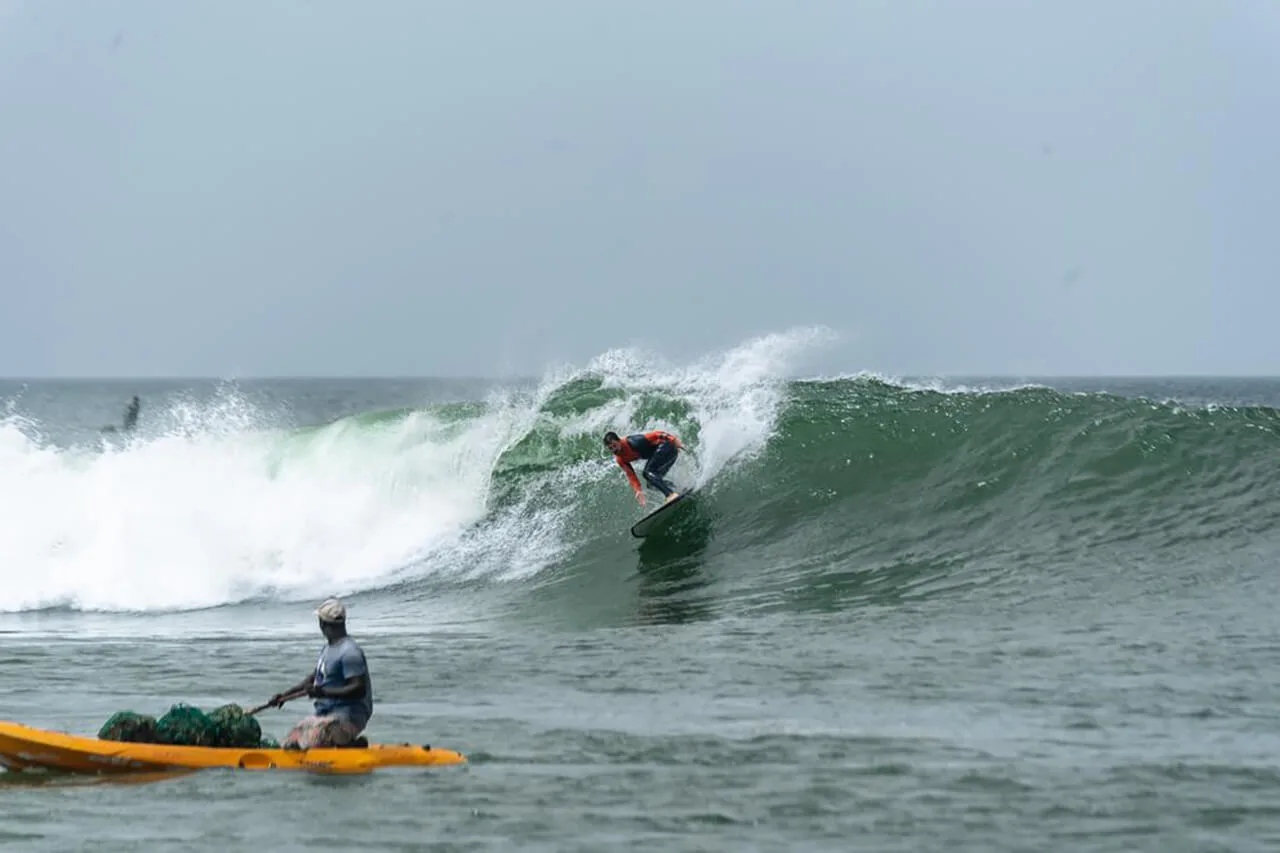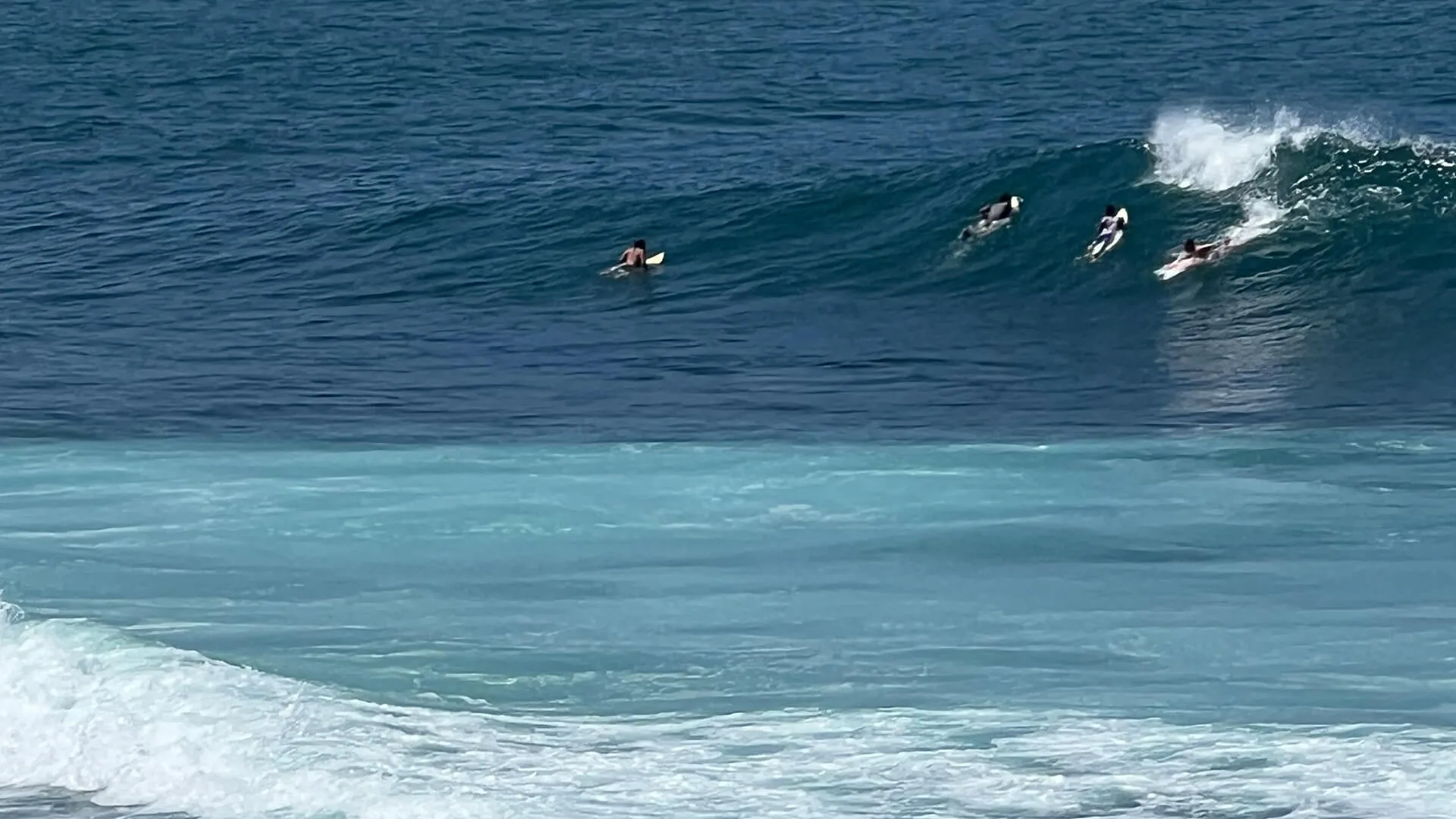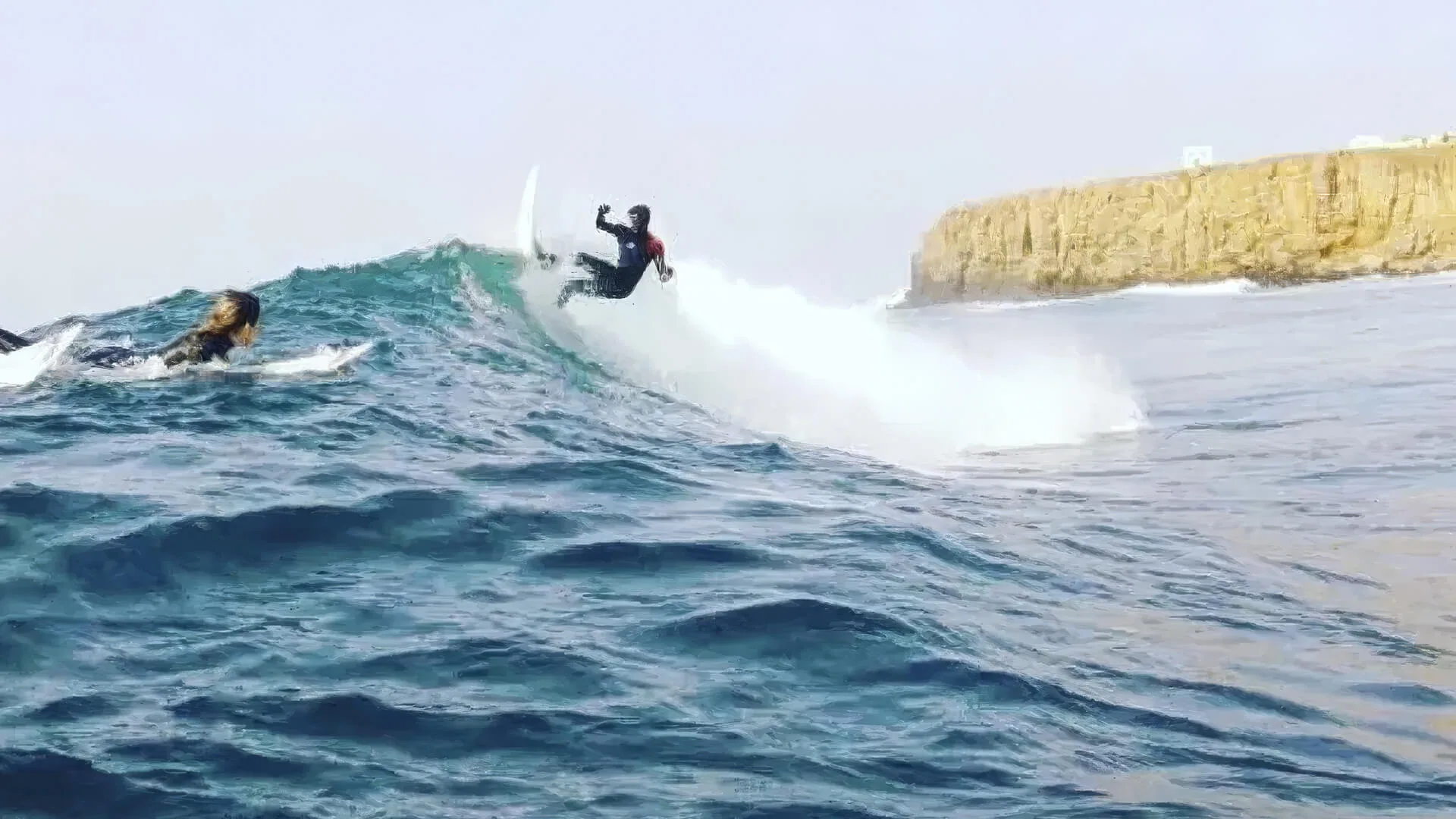
Good surf coaching is rarely just about catching more waves. At its best, it gives structure to what can otherwise feel chaotic: reading the ocean, choosing the right take-off spot, understanding why one wave works and the next does not, and building habits that hold up under pressure. At Ngor Surfcamp Teranga, that structure matters because the setting itself asks for it.
On Ngor Island, 400 metres off the Dakar coast, the camp sits close to one of West Africa's best-known surf zones. The island is reached by a five-minute bateau ride from Ngor beach on the mainland, and the coaching approach reflects that geography: practical, wave-aware and shaped by the realities of reef breaks, changing conditions and different ability levels. For guests looking into surf coaching ngor surfcamp, the method is not a single lesson format but a progression system built around theory sessions, guided water time, observation and feedback.
Why structure matters in a place like Ngor
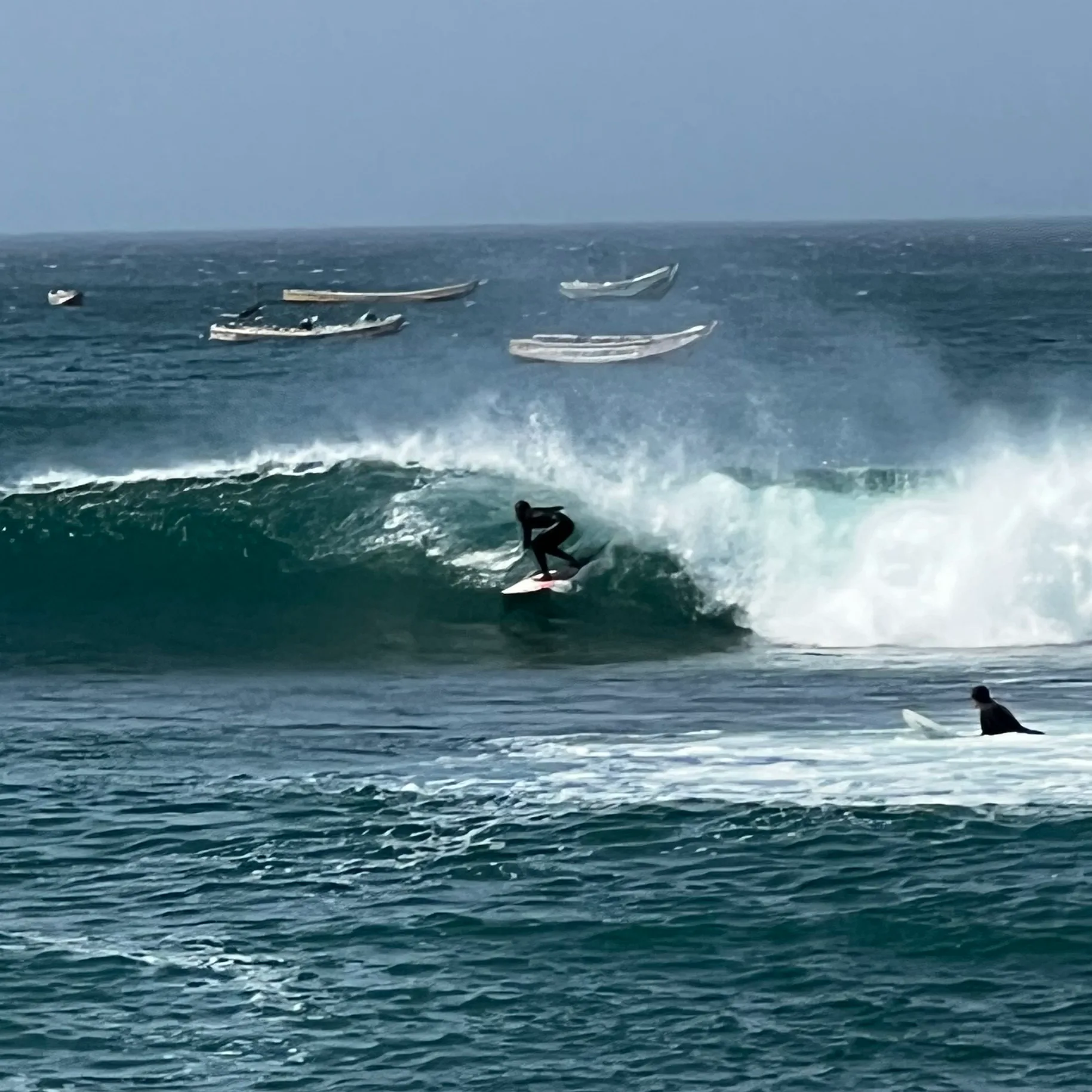
Ngor is not a blank-slate surf destination where every wave asks the same question. The island is known for two distinct breaks: Ngor Right, a reef break described as fast, hollow and heavy, and Ngor Left, a mellower, longer option. That contrast is central to how coaching is organised. A surfer does not simply get sent into the water and told to figure it out. The first task is matching the person to the wave, and the wave to the goal.
For beginners and lower intermediates, progression depends on repetition in manageable conditions. For stronger intermediates and advanced surfers, progression often depends on precision: cleaner positioning, better timing, more committed rail work, or a more composed approach when the wave gets steeper and more technical. Because Ngor Surfcamp Teranga is suited to all levels but especially intermediates to advanced, the coaching framework has to do both jobs at once.
That is where structure becomes useful. It turns a surf trip into a learning environment.
The best coaching does not remove the challenge of surfing; it makes the challenge legible.
A typical coaching rhythm at the camp combines three elements included in the stay: surf guiding, theory sessions and time in the water. Extras such as surf coaching and video analysis can deepen that process further. Together, they create a loop: assess, explain, surf, review, adjust, repeat.

Ngor Island lies 400 metres off the village of Ngor on the tip of the Almadies peninsula, near Dakar, and is reached by a five-minute bateau ride.
The first step: reading the surfer before reading the wave
Any useful coaching plan starts with a simple question: what does this surfer actually need right now? Not what they eventually want to do, not what they think they should be doing, but what will move them forward in the next session.
At Ngor Surfcamp Teranga, that means coaches first look at level, confidence and experience in different kinds of surf. Someone may be comfortable standing up but inconsistent with direction changes. Another surfer may paddle well and catch waves independently, yet lose speed through turns. A more advanced guest may be chasing a tighter line on a faster section, or trying to understand how to approach a hollow reef wave with more control.
This early assessment shapes everything that follows:
- which break makes sense that day
- whether the session should focus on fundamentals or performance
- how much explanation is useful before entering the water
- what kind of feedback will be most actionable afterward
The point is not to label a surfer permanently as beginner, intermediate or advanced. It is to identify the current bottleneck. In surf coaching, progress usually comes from solving one problem at a time.
For some, that problem is the pop-up. For others, it is where they look on take-off. For others still, it is wave selection, body positioning, or hesitation when the section starts to run. A structured camp environment is valuable because it can isolate those issues quickly.
Theory sessions: turning instinct into understanding
Theory sessions are one of the most overlooked parts of surf progression, especially among travellers who imagine improvement happens only in the water. In reality, many surfers plateau because they repeat movements without understanding the wave or the sequence of decisions behind the movement.
At Ngor Surfcamp Teranga, theory sessions are part of the included camp experience, and they provide the framework for what happens later in the lineup. These sessions can help surfers understand not just what to do, but why.
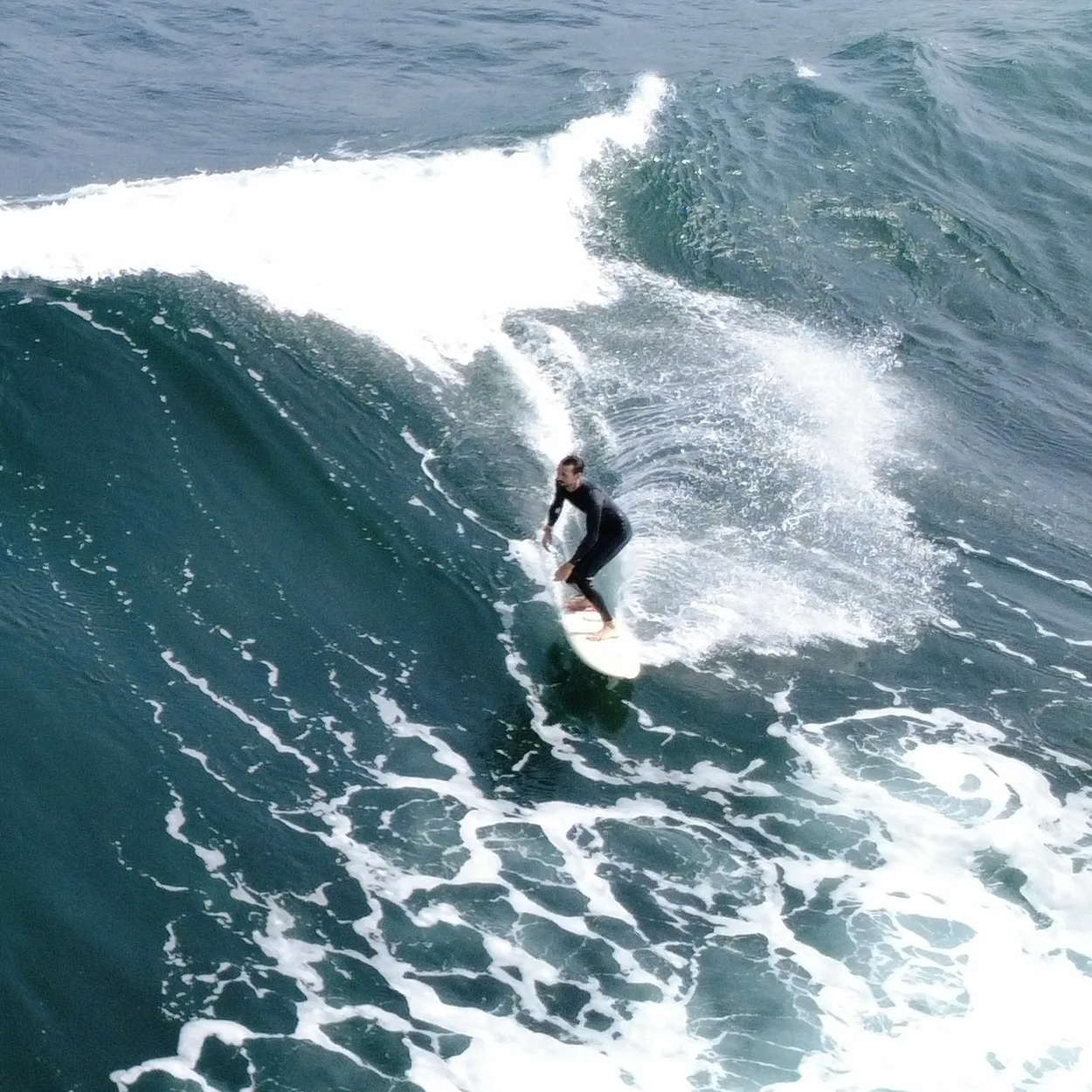
That often begins with the basics of wave reading. On an island with reef breaks, positioning matters. A surfer needs to know where the wave starts to stand up, how the section changes shape, and what that means for take-off timing. On a mellower, longer wave such as Ngor Left, the lesson may be about trimming, staying relaxed and linking sections. On a faster, hollower wave such as Ngor Right, the lesson may shift toward commitment, line choice and respecting the speed of the wave.
Theory also helps break down technique into smaller parts. Instead of hearing a vague instruction like “be quicker” or “turn harder”, surfers can work through a sequence:
- where the eyes go first
- how the hands and chest set the pop-up
- where weight sits over the board
- when to compress and when to extend
- how to keep speed before asking the board to change direction
This matters because surfing is full of chain reactions. A late look leads to a late pop-up. A rushed pop-up leads to a poor stance. A poor stance makes the bottom turn weak. A weak bottom turn leaves no room for a proper top turn. Good theory sessions make those links visible.

Use theory sessions to focus on one change only for the next surf; too many corrections at once usually dilute progress.
Guided water time: where coaching becomes specific
Once the goals are clear, the water session becomes more than free surf. Guided water time is where the coach helps translate theory into decisions made in real conditions.
This is especially important around Ngor because the breaks are not interchangeable. Ngor Left and Ngor Right ask for different approaches, and the mainland spots around Dakar can also offer different learning environments. Verified reporting on Dakar's surf scene has long noted that Yoff is a beginner break, while areas such as Almadies, Ouakam and Virage can present different levels of challenge. That wider geography gives context to coaching choices, even when the island remains the centre of the experience.
In the water, guidance often revolves around a few recurring themes.
Positioning
Many surfers think they have a technique problem when they really have a positioning problem. If the take-off spot is wrong, the rest of the wave is compromised before the board even planes. Coaches therefore pay close attention to where surfers sit, how they paddle into the wave, and whether they are too deep, too wide or too hesitant.
Wave selection
Not every wave is worth taking, and not every good-looking wave is right for the surfer's current goal. A structured session helps narrow the field. If the aim is to improve pop-up consistency, the coach may steer the surfer toward cleaner, more predictable shoulders. If the aim is to work on speed and turns, the focus may shift to waves with a longer wall.
Timing
Timing is often the hidden difference between surviving a wave and surfing it well. On a reef break, that can mean the moment of commitment. Paddle too early and the wave passes under. Paddle too late and the drop becomes reactive rather than controlled. Coaching in the water helps surfers feel that timing rather than just hear about it.
Priority of skills
A good coach does not ask for advanced manoeuvres before the foundation is stable. If a surfer cannot consistently stand up in balance and set a line, there is little value in talking about more ambitious turns. The session is structured around what the wave allows and what the surfer can realistically absorb.
Progress in surfing is often less about doing more and more about doing the right thing earlier.
The feedback loop: surf, review, refine
One of the clearest signs of a serious coaching setup is the presence of a feedback loop. Surfing without feedback can be enjoyable, but it is slow as a learning method. A surfer may repeat the same mistake for days without recognising it. Coaching shortens that cycle.
At Ngor Surfcamp Teranga, the loop is built from observation during the session, discussion afterward, and, for those who add it, video analysis. This is where many breakthroughs happen. A surfer may feel they are low and compressed on take-off, only to see on video that they are standing too upright. Another may think they are looking down the line, while footage shows their head turning late. Video does not replace coaching, but it can make coaching more precise.
The value of review is not in criticism for its own sake. It is in turning a broad impression into a practical next step. Instead of “your turns need work”, the feedback becomes “set the rail earlier” or “finish the bottom turn before opening the shoulders”. Instead of “you looked uncomfortable”, it becomes “your stance narrowed when the wave got steeper”.
This kind of refinement is especially useful for intermediates, who often have enough ability to catch waves but not yet enough consistency to understand why one ride feels connected and the next falls apart.

Structured coaching works best when each session has a clear focus, then the feedback stays simple enough to apply on the very next wave.”, The Ngor coaching team
How progression is built, from pop-up to turns
The phrase “all levels” can be misleading in surf travel if it suggests everyone receives the same lesson. In practice, progression has to be staged. At Ngor Surfcamp Teranga, the coaching approach is better understood as a ladder: each rung supports the next.
Stage one: pop-up and stance
For newer surfers, the pop-up is not just about getting to the feet. It is about arriving in a stance that allows the rest of the wave to happen. Coaches therefore look at hand placement, speed of movement, balance and where the surfer's eyes are directed.
A stable stance creates options. Without it, the surfer is simply reacting.
Stage two: trimming and line choice
Once the surfer can stand consistently, the next task is staying with the wave rather than outrunning or stalling on it. This is where trimming enters the picture: subtle weight shifts, relaxed posture and an understanding of where the energy of the wave is strongest.
On a longer, mellower wave, this stage can be transformative. The surfer begins to feel that speed is not only generated by pumping or force, but also by choosing the right line.
Stage three: bottom turns and top turns
For intermediates, this is often the heart of progression. The bottom turn is the setup move that gives shape to everything else. If it is rushed, flat or mistimed, the top turn becomes an afterthought. Coaches therefore tend to focus on entry line, compression, rail engagement and where the surfer looks before the board changes direction.
The top turn then becomes less of a random hit and more of a response to the section. The surfer learns to meet the wave where it is steepest, rather than arriving too early or too late.
Stage four: speed, flow and linking sections
At this point, the surfer is no longer just making isolated manoeuvres. The goal becomes connection: carrying speed out of one movement and into the next. This is where coaching often shifts from single corrections to rhythm and decision-making.
A surfer may be asked to simplify, not complicate. Fewer unnecessary movements. Better use of the wave face. More patience before committing to a turn.
Stage five: approaching hollow waves
Ngor Right has a reputation for being fast, hollow and heavy, with reef beneath. That makes it a canonical wave, but not a casual one. For advanced surfers, coaching around this kind of wave is less about bravado and more about discipline. Positioning, commitment and respect for the section matter more than forcing a performance.
If the surfer is working toward more confidence in hollow surf, the coaching focus may include take-off line, body compactness and reading the section early. The aim is not to romanticise barrels as a final badge of progress, but to treat them as another technical environment requiring preparation.
Ngor Right is widely recognised as the island's advanced wave: fast, hollow and breaking over reef.
How coaches adapt to different levels
The strongest coaching systems are not rigid. They are structured, but flexible enough to meet the surfer where they are.
For beginners, adaptation usually means reducing complexity. The coach may emphasise safety, ocean awareness, paddling rhythm and simple repeatable movements. The language stays clear and direct. The goal is confidence built on fundamentals.
For lower intermediates, adaptation often means identifying the one habit that is holding everything else back. That might be poor take-off angle, inconsistent stance width, or a tendency to freeze when the wave steepens. The coach narrows the focus so the surfer can feel progress quickly.
For stronger intermediates, the adaptation becomes more tactical. Which waves should they ignore? Where should they sit relative to the peak? Are they trying to turn before they have enough speed? Are they surfing too high or too low on the face? At this level, coaching often becomes a conversation about choices.
For advanced surfers, adaptation is usually about detail. Small changes in line, timing or body position can make a large difference on a fast reef wave. The coach's role is not to overload the surfer with commentary, but to sharpen what is already there.
This level-based approach is one reason a camp setting works well. Accommodation, meals, guiding and theory sessions create continuity. The surfer is not dropping into a one-off lesson with no follow-up. They are living inside a progression process for several days, with time to absorb, test and revisit.

- Coaching starts with assessing the surfer, not forcing a fixed lesson plan
- Theory sessions and guided water time work together as one system
- Progression moves from fundamentals to turns, speed and more technical waves
Why the island setting helps learning
Ngor Island is small, with about two kilometres of coastline and a long-standing Lébou fishing heritage. It is also a place with a distinct rhythm, separate from the mainland despite being only a short bateau ride away. That separation can be useful for learning.
A surf camp on an island naturally creates focus. The day is organised around tides, conditions, meals, rest and review. There is less friction between deciding to surf and actually surfing. That matters because progression in surfing depends on continuity. A single good session can be memorable; a sequence of connected sessions is what usually changes a surfer.
The camp itself includes rooms in private, shared and dorm formats, breakfast and dinner, surf guiding, theory sessions and a pool. Those details are practical, but they also support the coaching structure. Recovery, conversation and reflection all happen around the surf rather than apart from it.
There is also a historical dimension to Ngor that gives the place unusual weight in surf culture. The island became famous through the filming of The Endless Summer in 1964, released in 1966. That legacy still shapes how surfers imagine the wave, but coaching here is not about nostalgia. It is about helping guests surf the place in front of them, with the level of preparation that place deserves.
Ngor's appeal is not only that it is storied, but that it still rewards careful surfing.
The role of extras: video analysis, rentals and practical support
While the core camp stay already includes guiding and theory sessions, some guests will want a more detailed coaching track. That is where extras such as surf coaching and video analysis become especially useful.
Video analysis can accelerate learning because it removes guesswork. It is one thing to hear that your shoulders are opening too early; it is another to see the exact moment it happens. For surfers working on turns or trying to become more composed on steeper take-offs, that visual evidence can be the difference between vague effort and targeted change.
Practical extras also matter. Board rental and wetsuit rental make it easier to travel light or test what works best in the conditions. Across the year, Senegal's water temperatures range from 18 to 26°C, so equipment choices can vary by season and personal preference. Airport transfer and lunch options help simplify the logistics around the surf day, which in turn keeps the coaching rhythm intact.
None of these extras replace time in the water. But they can make that time more productive.

- Arrive with one clear goal for your first coached session
- Ask for feedback you can apply immediately on the next surf
- Review what changed after each session before moving to a new skill
What a productive coaching week usually feels like
Even without a rigid timetable, most successful coaching stays follow a recognisable arc. Early sessions establish the baseline. The middle of the stay is where repetition and feedback begin to settle in. Later sessions often bring the first signs of real integration, when the surfer stops thinking about every instruction and starts feeling the pattern.
That arc is important because surf progression is rarely linear. One day the pop-up feels automatic; the next day the timing disappears. One session produces the best turn of the trip; the next feels awkward. Structured coaching helps normalise that inconsistency. It reminds the surfer that setbacks are not evidence of failure, only part of learning a variable sport in a variable environment.
The camp's season also shapes expectations. November to April is the prime period, while May to October is flatter and considered off-season. During the prime months, coaching can make the most of more consistent surf opportunities. For guests aiming to improve on the island's best-known waves, that seasonal window matters.
At the same time, the lesson remains the same in any conditions: improvement comes from matching the surfer's level to the right task, then repeating that task with attention.
Who this coaching structure suits best
Because Ngor Surfcamp Teranga is suited to all levels but especially intermediates to advanced surfers, the coaching structure is particularly strong for guests who already have some independence in the water and want to become more deliberate about their surfing.
That does not exclude newer surfers. It simply means the environment is most rewarding for those ready to engage with feedback, theory and wave-specific decision-making. If you want a trip where surfing is treated as a craft rather than a casual add-on, this format makes sense.
Beginners can benefit from the clarity and support. Intermediates can benefit from the feedback loop and progression ladder. Advanced surfers can benefit from local guidance and a more analytical approach to technical waves. The common thread is intention.
In a destination made famous by a film, it is easy to focus on the image of the wave. The more interesting story, though, is what happens when that image is translated into learning: when a surfer understands why a take-off worked, why a turn connected, or why a section that once felt intimidating now feels readable.
If you are an intermediate surfer, ask your coach whether your biggest limit is technique, positioning or wave selection; the answer often saves days of trial and error.
For travellers researching surf coaching ngor surfcamp, that is the real value of the method at Ngor Surfcamp Teranga. It is not simply access to a famous island break. It is a structured way of making sense of that access, with theory sessions, guided water time, feedback and level-based adaptation all working together.
If you want a surf trip where progression is part of the plan rather than left to chance, explore the camp, browse the gallery, and head to booking to organise your stay on Ngor Island.