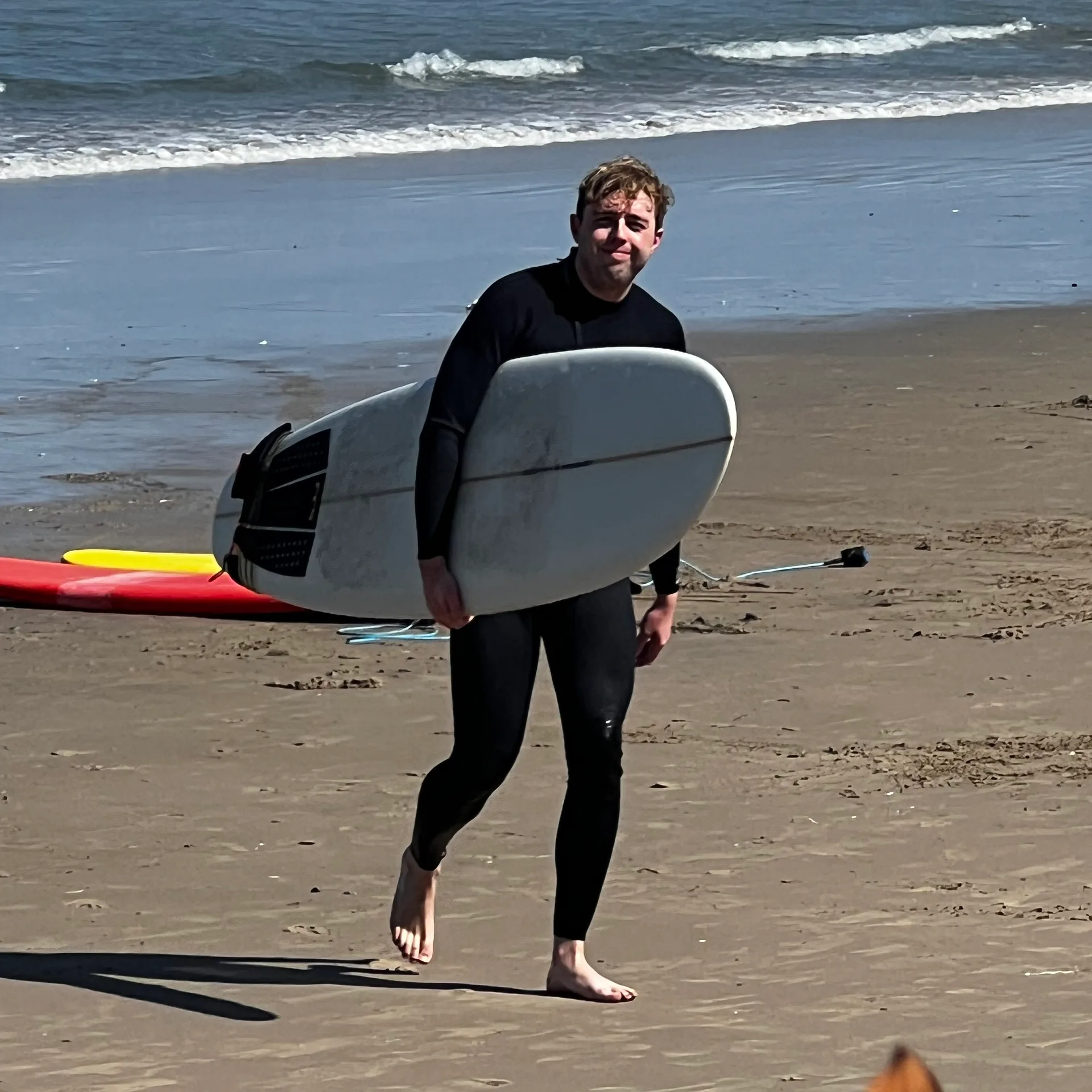
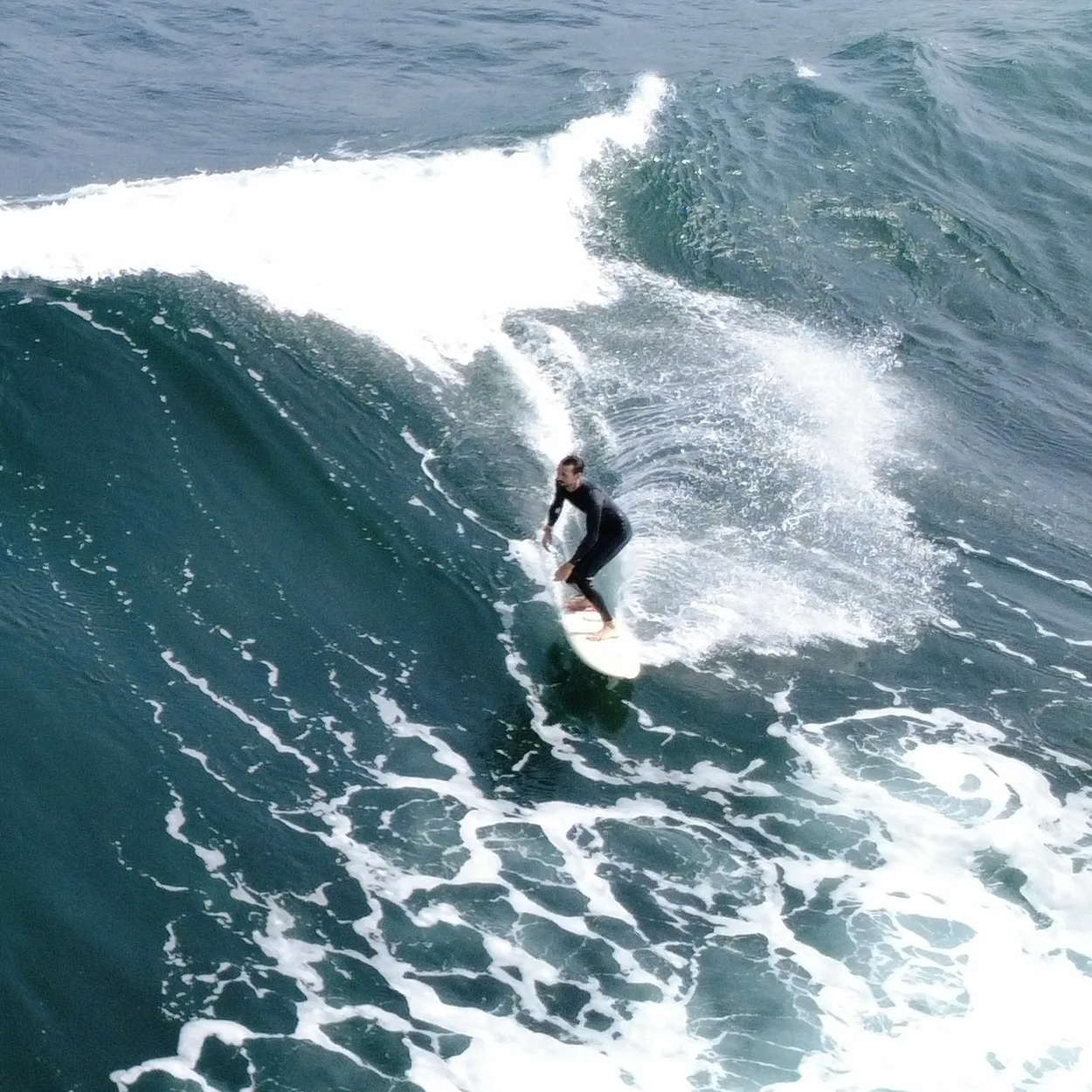
If you are searching for a senegal surf camp beginners guide, the first thing to know is this: Ngor Island can be a rewarding place to learn, but it is not a fantasy version of surfing where every wave is soft, sandy and forgiving. It is a real surf destination with a famous island setting, a reef break nearby, and a mix of options that can work for newer surfers when approached honestly and with the right support.
For many first-timers, that honesty is exactly what matters. The question is not simply whether Senegal has surf. It is whether Ngor Island, and a stay at Ngor Surfcamp Teranga, matches your current level, your confidence in the water, and the kind of progress you can realistically expect in a first week.
Why beginners look at Senegal in the first place
Senegal has long held a place in surf travel because of Dakar's position on the Atlantic and the concentration of breaks around the peninsula. Ngor Island sits 400 metres off the coast near Dakar, reached by a five-minute bateau ride from Ngor beach on the mainland. That short crossing is part of the appeal: you are close to the city, but once on the island the rhythm changes.
Ngor is also tied to surf history. The island became widely known after The Endless Summer was filmed there in 1964 and released in 1966. That connection still shapes how many surfers imagine the place: warm light, Atlantic lines, and a compact island with a break just offshore.
But beginners should separate the romance from the practical reality. Ngor is not only for experts, yet it is also not a one-size-fits-all beginner playground. The island is best understood as a base with access to different kinds of surf experiences: some more suitable for learning, some better left for later.
The best beginner surf trip is not the one with the most famous wave. It is the one where you can repeat good habits often enough to improve.
At Ngor Surfcamp Teranga, that distinction matters. The camp is suited for all levels, but especially intermediates to advanced surfers. For beginners, that does not mean “do not come.” It means come with clear expectations, a willingness to learn fundamentals, and an understanding that wave choice is everything.

Ngor Island lies 400m off the village of Ngor near Dakar, and the crossing by bateau from the mainland takes about five minutes.
Is Ngor Island actually good for beginner surfers?
The short answer is: it can be, depending on what kind of beginner you are.
There is a big difference between someone who has never stood up on a board and someone who has already taken a few lessons elsewhere, can paddle independently, and wants to build consistency. Ngor tends to make more sense for the second type of beginner, especially if that surfer is comfortable in open water and ready to learn how to read conditions rather than simply follow instructions in waist-deep foam.
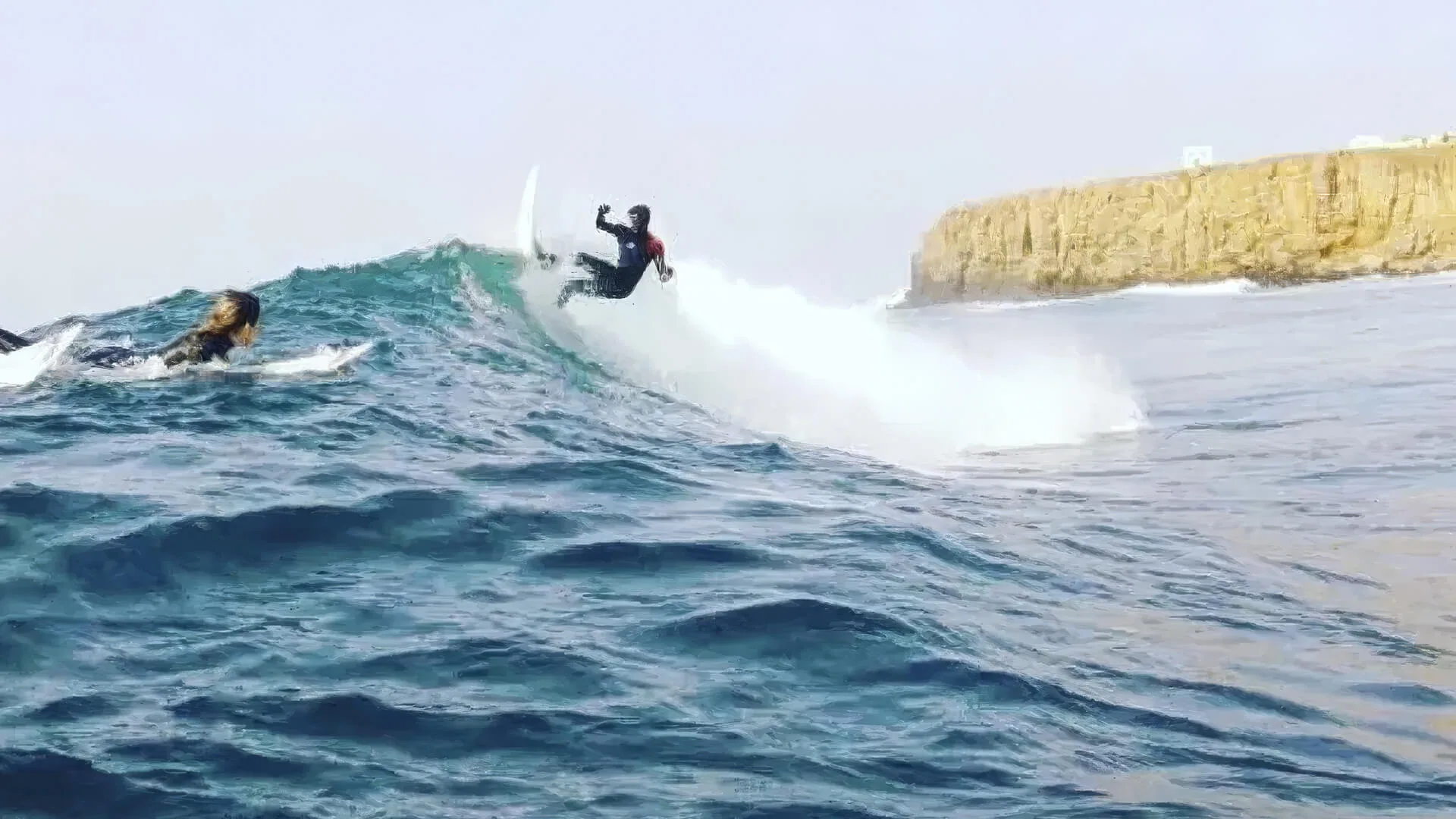
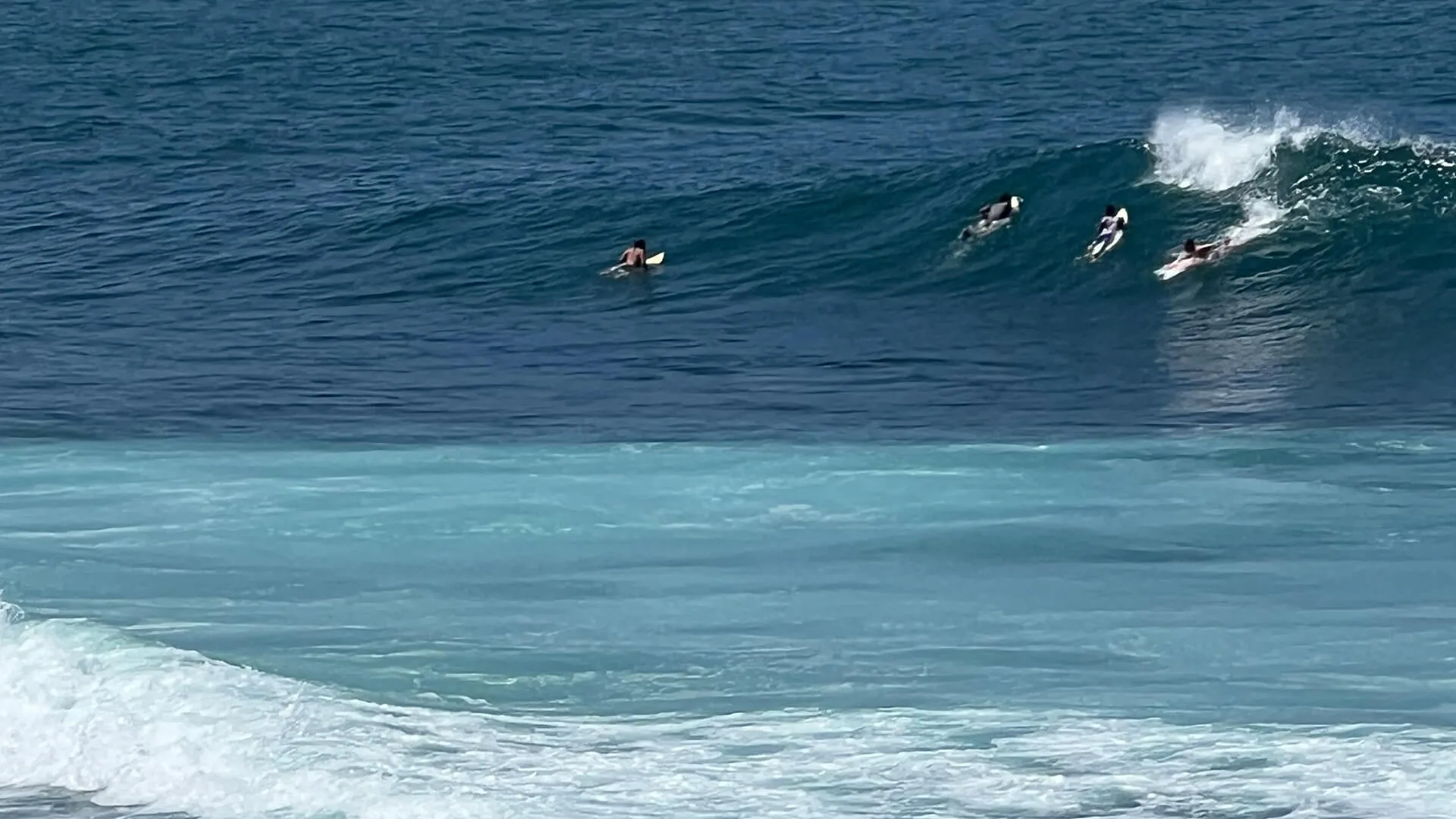
The best-known wave here is Ngor Right, a reef break described in reliable reporting as fast, hollow and heavy, with reef beneath. That is not a beginner wave. It is the kind of wave that gives Ngor its reputation, but it is also the clearest reason why beginners need guidance and realistic planning.
There is also Ngor Left, which is mellower and longer. That makes it the more approachable of the two island options. “Approachable,” however, should not be confused with effortless. A mellower reef wave can still demand timing, positioning and confidence that many first-week surfers are only just beginning to develop.
This is why a beginner stay on Ngor Island works best when the island is treated as a comfortable, well-located base rather than a promise that every session will happen on the most famous wave in front of camp. The wider Dakar area includes mainland spots as well. Verified reporting identifies Virage as an easy beach break on the mainland, while Yoff is described as a beginner break. Those are the kinds of places that often make more sense for early lessons and first green-wave attempts.
So, is Ngor Island right for you? If you want a surf trip where coaching, wave selection and progression matter more than ego, yes. If you specifically want only soft beach-break learning directly in front of your room every day, Ngor may not be the simplest fit.
Understanding the waves: what beginners should surf, and what they should avoid
A lot of disappointment on surf trips comes from one problem: surfers book based on destination images, not on wave type. For beginners, wave type is the whole story.
Ngor Right
Ngor Right is the wave most people have heard of. It is the canonical break here, and cross-source reporting makes clear that it is advanced only. It is fast, hollow and breaks over reef. Along the line of the break are two large rocks known as Mami and Papi. Even if you never paddle out there, understanding what this wave is helps you understand the island: Ngor has serious surf heritage, and some of its best-known surf is not designed for first-timers.
For a beginner, Ngor Right is usually a wave to watch, learn from and maybe aim toward in the future rather than surf immediately.
Ngor Left
Ngor Left is the softer counterpart: mellower, longer, and more forgiving than the right. For improving beginners, especially those who can already pop up and trim, it can be a useful step up when conditions are suitable and when a coach decides it is appropriate. The longer shape can give you more time to think, more time to set your line, and more time to feel what a proper ride should be.
Still, it remains part of a reef environment. That means entries, exits, tide awareness and positioning all matter. A beginner should not assume that “mellower” means “risk-free.”
Mainland alternatives
For true beginners, the mainland often provides the most productive sessions. Verified reporting identifies Virage as an easy beach break and Yoff as a beginner break. Those descriptions matter because beach breaks generally offer a more forgiving learning environment than a reef. They are often better for first pop-ups, first turns, and the repetition needed to build confidence.
A good beginner surf week in this part of Senegal may therefore include a mix: easier mainland sessions for fundamentals, then selective island sessions or observation when conditions and ability line up.

If you are still learning to paddle straight, pop up consistently and control your board, ask for the easiest available session rather than the most famous wave.
What coaching should look like for a beginner at Ngor
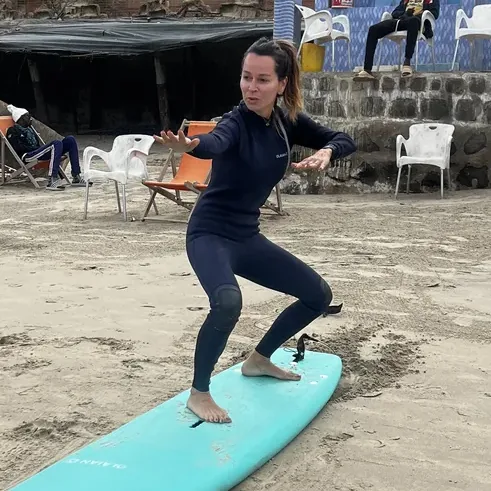
The biggest misconception about beginner surf coaching is that it is only about standing up. In reality, the first week is about building a system: how to carry the board, enter the water, paddle efficiently, choose a wave, get to your feet, and finish a ride without losing control.
At Ngor Surfcamp Teranga, the structure includes surf guiding and theory sessions, with extras such as surf coaching and video analysis available. For beginners, that combination matters because progress usually comes from three layers working together.
1. In-water guidance
This is the visible part: where to sit, when to paddle, when not to go, how to angle your takeoff, and how to stay calm when a set appears. In the first days, beginners need simple, repeated cues rather than too much technical language.
2. Theory sessions
Theory is where many beginners make their fastest gains. A short explanation on priority, wave shape, paddling posture or how to read a section can save hours of confusion in the water. It also helps newer surfers understand why they are being taken to one spot and not another.
3. Video analysis
Video can be especially useful once you are catching waves regularly enough to compare attempts. Many beginners think they are standing too slowly when the real issue is looking down, placing feet too narrow, or paddling too late. Seeing yourself once can clarify what words alone cannot.
For beginners, steady progress usually comes from repeating the basics well, choosing suitable waves, and building confidence session by session.”, The Ngor coaching team
The most effective coaching is not dramatic. It is patient, observant and honest. If conditions are not right for a beginner on the island, good coaching means saying so and choosing a better option. That may not sound glamorous, but it is exactly how surfers improve safely.
What kind of beginner progresses fastest here?
Not all beginners learn at the same pace, and the setting around Ngor tends to reward certain attitudes.
The beginner who listens
The fastest improvers are usually not the strongest athletes. They are the ones who accept repetition. They do not chase every wave. They focus on one or two corrections at a time.
The beginner with some water confidence
Because Ngor Island sits offshore and some of the better-known waves are reef-based, a little comfort in open water helps. You do not need to be fearless, but you should be willing to learn in a real ocean environment rather than a tightly controlled lagoon-style setting.
The beginner who is happy to surf different spots
This is a major one. If you are open to surfing mainland beginner-friendly waves when needed and using the island as your base, you are far more likely to have a productive week than if you insist on surfing only the famous break.
The beginner who wants foundations, not shortcuts
A first surf trip should not be judged only by how many times you stood up. Better markers are whether you improved your paddling, learned to identify a workable wave, understood lineup behaviour, and started linking takeoff to trim. Those are the foundations that make later progress much faster.
A realistic first-week experience
People often ask what a first week at a senegal surf camp beginners trip actually feels like. The honest answer is that it usually starts with excitement, then a little overload, then gradual clarity.
Days one and two: orientation and humility
The first sessions are often about getting used to the board, the paddle, and the pace of the ocean. Even fit travellers can be surprised by how tiring surfing feels at first. You may spend more energy paddling and repositioning than riding waves.
This is also when beginners start to understand the difference between watching surf and doing it. Waves that looked gentle from shore can feel fast once you are in them. Timing seems obvious until you have to make the decision yourself.
Days three and four: first patterns emerge
By the middle of the week, most beginners begin to recognise recurring mistakes. Maybe you are popping up too late. Maybe you are looking at your feet. Maybe you are paddling with bent arms and losing speed. This is where coaching and theory sessions start to click.
If conditions are suitable and your level allows, this can also be the point where you move from whitewater practice toward cleaner takeoffs, or from simply standing up to actually riding along the face for a short distance.

- Expect the first sessions to feel more tiring than they look from shore
- Progress usually comes from repetition and wave choice, not from chasing the hardest break
- A good first week builds habits you can keep using after the trip
Days five and six: confidence, then inconsistency
This is often the most emotional part of a beginner week. You may have one very good session and assume you have “got it,” then struggle in the next one. That is normal. Surfing progress is rarely linear.
What matters is whether your average wave is improving. Are you paddling earlier? Are you getting to your feet with less hesitation? Are you finishing rides with more control? Those are the signs of real development.
Day seven: perspective
By the end of a week, many beginners leave with a more grounded relationship to surfing. They understand that progress is possible, but earned. They know more about conditions, equipment and their own reactions in the water. And they usually have a clearer sense of what kind of surfer they want to become.
A successful beginner trip is not one where every session is easy. It is one where each session teaches you something you can use in the next.
How fast can you expect to progress?
This is the question every beginner asks, and it deserves a careful answer. You can absolutely improve in a week, but the speed of that improvement depends on conditions, your starting point, your fitness, your comfort in the sea, and how coachable you are.
For complete beginners, a realistic goal is to learn the basic mechanics well enough to catch assisted waves, stand up more consistently, and understand the structure of a surf session. For beginners with some prior lessons, a realistic goal may be to catch more unassisted waves, improve your angle on takeoff, and start trimming with intention.
What you should not expect is instant mastery. Ngor is a place where the ocean can teach quickly, but not cheaply. The lessons are valuable precisely because the setting is real.
The camp's season also matters. The prime surf season runs from November to April, while May to October is flat or off-season. For beginners, that does not automatically mean one part of the season is “easy” and another is “hard,” but it does mean conditions vary and wave choice becomes even more important.
A useful way to think about progress is this:
- Week one teaches you how to participate in surfing properly.
- Later trips are where style, consistency and independent decision-making begin to grow.
If you leave Ngor understanding your limits better, catching more waves than when you arrived, and feeling less rushed in the water, that is meaningful progress.
Ngor Surfcamp Teranga's prime surf season runs from November to April, while May to October is the flat or off-season period.
Staying on Ngor Island: what the setup means for beginners
The practical side of a beginner surf trip matters more than many people realise. At Ngor Surfcamp Teranga, the camp includes private, shared and dorm rooms, breakfast and dinner, surf guiding, theory sessions and a pool. Extras include airport transfer, surf coaching, video analysis, board rental, wetsuit rental and lunch.
For beginners, that kind of setup can make the learning process smoother for a few reasons.
You stay close to the surf conversation
When you are learning, a lot happens outside the session itself. You ask questions over breakfast. You review what went wrong after dinner. You hear how conditions changed. Being in a surf-focused environment helps beginners absorb more than they would on a day trip.
Recovery matters
New surfers often underestimate fatigue. Paddling, carrying boards, sun, salt and concentration all add up. Having a comfortable base on the island can make it easier to recover between sessions and return to the water with better focus.
Equipment access is simpler
If you are not travelling with your own board or wetsuit, rentals are available. That removes one of the common barriers for first-time surf travellers.

- Be honest about whether you are a complete beginner or already catching waves on your own
- Ask for wave choices that match your level, even if they are less famous
- Use theory sessions and video analysis to understand mistakes faster
Common beginner concerns, answered honestly
“Will I be out of place if the camp suits intermediates to advanced?”
Not necessarily. A mixed-level surf camp can still work for beginners if coaching and spot choice are handled properly. In some ways, it can even be motivating. You see what is possible, while still focusing on your own stage.
“Do I need to surf Ngor Right to say I surfed Ngor?”
No. In fact, for many beginners the smartest Ngor trip is one where they do not surf Ngor Right. Watching a famous wave and understanding why it is not your wave yet is part of becoming a better surfer.
“Is reef automatically a bad idea for beginners?”
Not automatically, but it raises the importance of guidance, timing and conditions. A mellower reef wave can be manageable for some improving beginners. A fast, hollow reef wave is another matter entirely.
“What if I progress more slowly than I hoped?”
That is common. Surfing has a way of exposing impatience. The key is to measure the right things: better paddling, better positioning, calmer decision-making, and more controlled rides.
Who should book, and who should think twice?
Ngor Island is a strong choice for beginners who want a surf trip with character, history and access to real waves, and who are happy to learn through coaching rather than fantasy. It is especially suitable for beginners who already have a few lessons behind them and want to move toward more independent surfing.
It may be less suitable for travellers who want only ultra-soft beginner conditions every day, or who feel uncomfortable with the idea that some of the area's best-known waves are not for them yet.
That is not a criticism of the destination. It is simply the truth of it. The right surf camp is not the one that tells every surfer the same story. It is the one that helps you understand where you are now and what the next step should be.
Beginners usually improve faster when they treat the first week as skill-building, not as a test of bravery.
The honest verdict on Ngor for beginners
So, is Ngor Island right for beginner surfers? Yes, for the right kind of beginner.
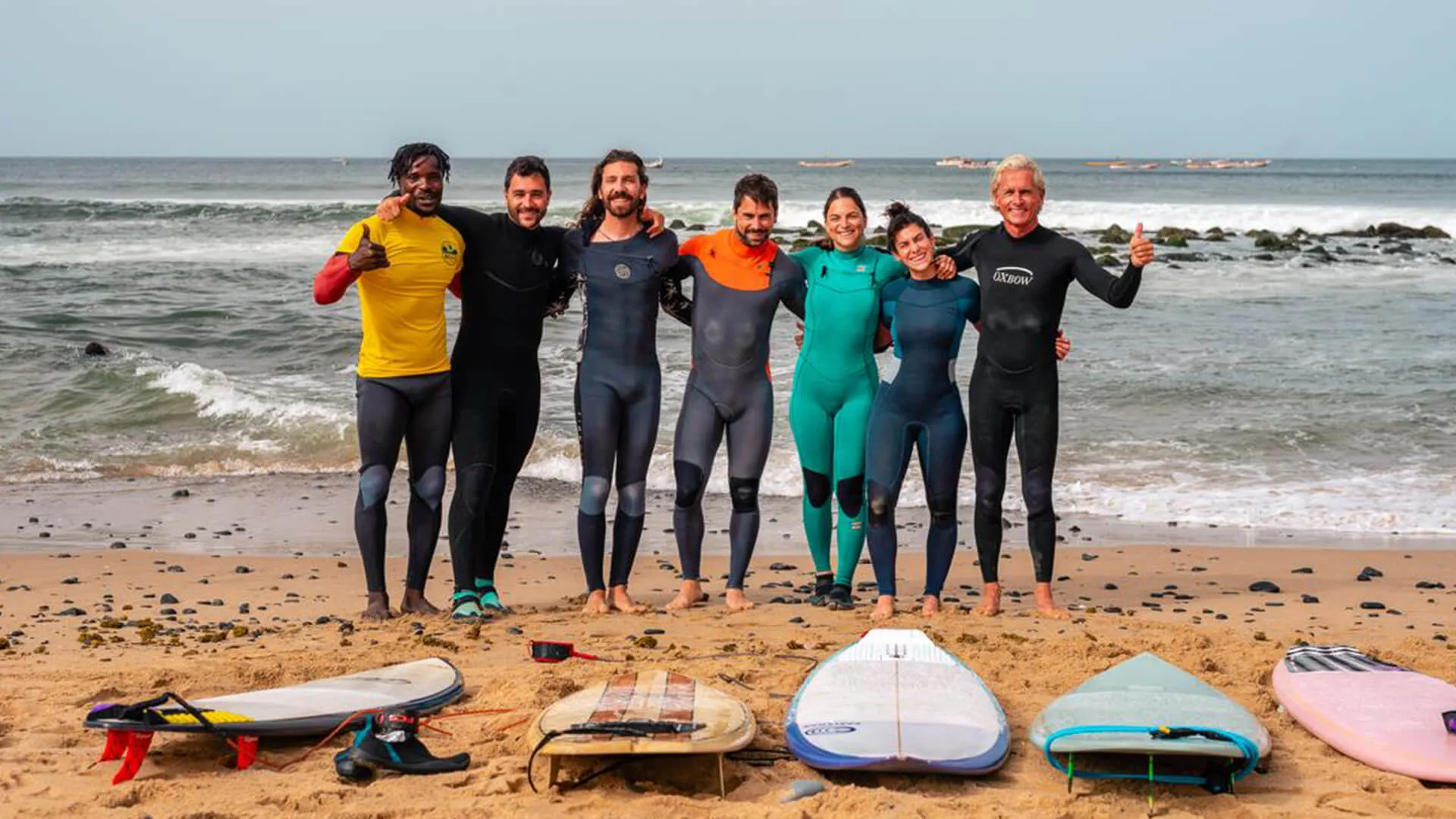
If you are open-minded, willing to be coached, and realistic about wave choice, Ngor can be an excellent base for a first or early surf trip in Senegal. You get the atmosphere of a historic island surf setting, access to guidance and theory, and the possibility of building real foundations in the water.
If, however, you want a destination where every session is automatically beginner-perfect and every famous wave is immediately accessible, this is probably not the most straightforward match.
The strength of Ngor is that it does not need to pretend. It offers a genuine surf environment: one famous advanced wave, one mellower island option, access to easier mainland breaks, and a camp structure that can support learning when expectations are set properly.
The best beginner destination is not the easiest place on earth. It is the place that teaches you what surfing really asks of you.
For many travellers, that is exactly why Ngor stays memorable long after the trip ends.
If you are considering a stay at Ngor Surfcamp Teranga, take the honest route: tell the team your level, ask which sessions are best for a beginner, and build your week around progression rather than prestige. That is the smartest way to turn a Senegal surf trip into the start of a lasting surfing habit.