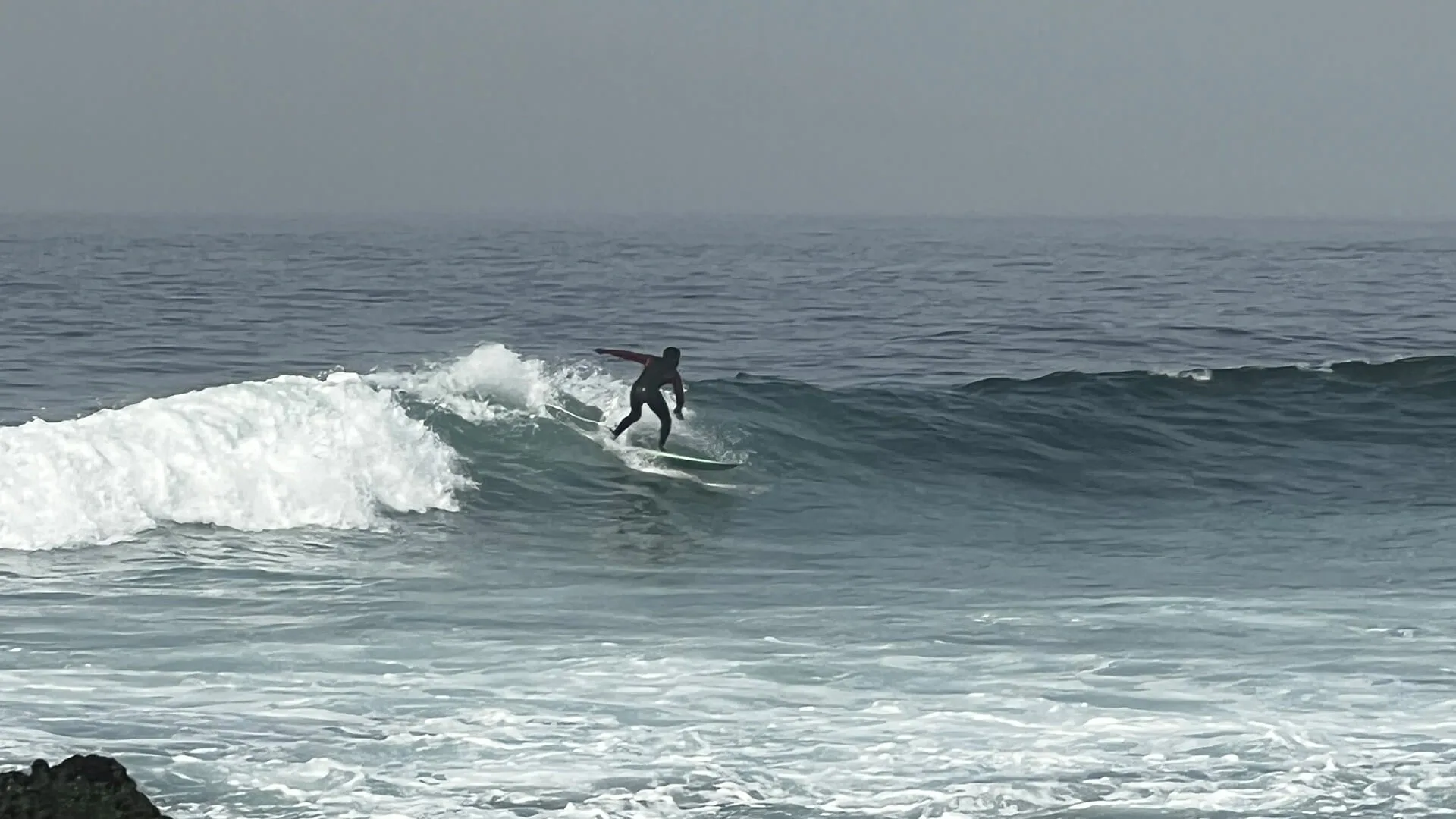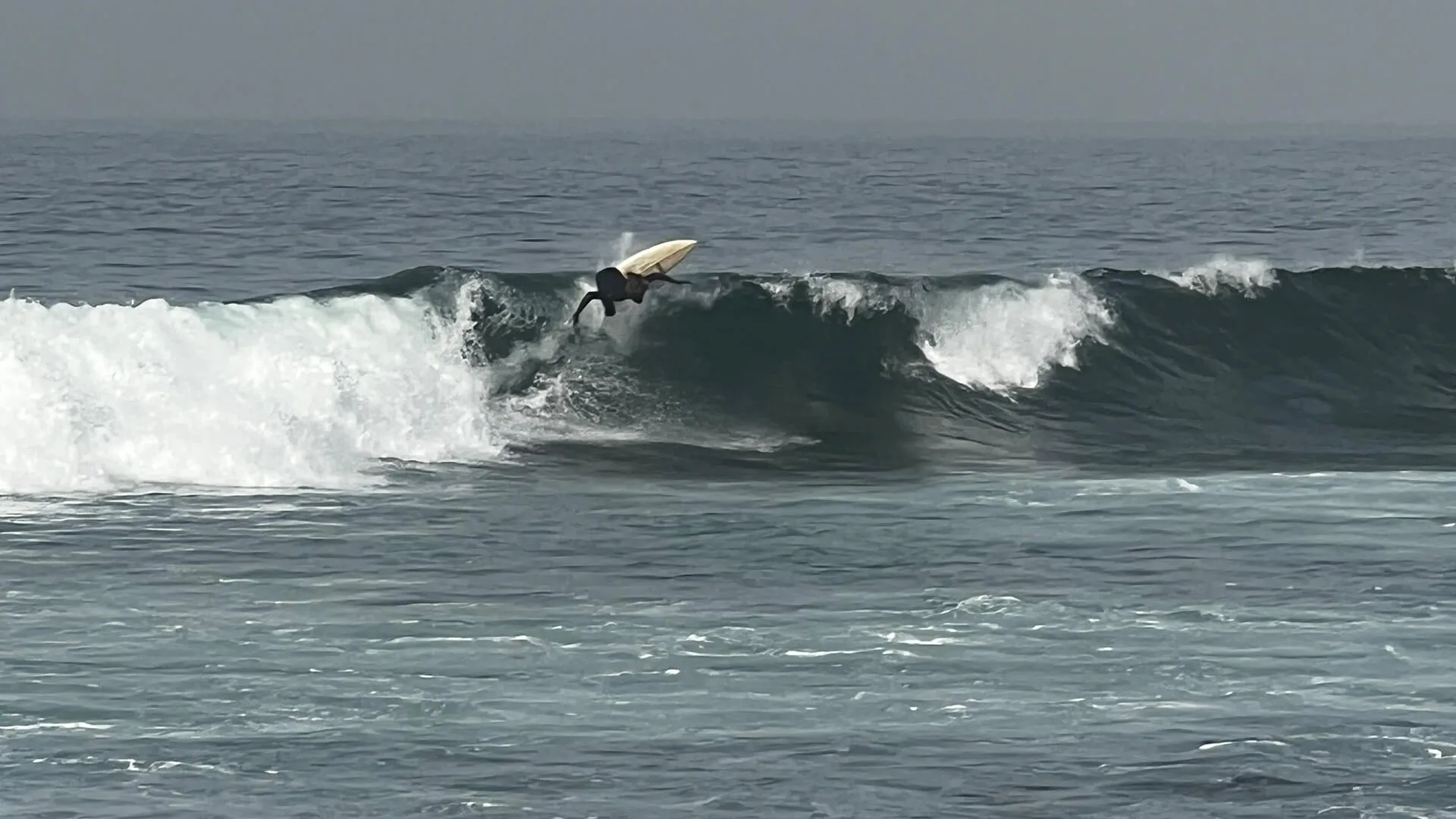
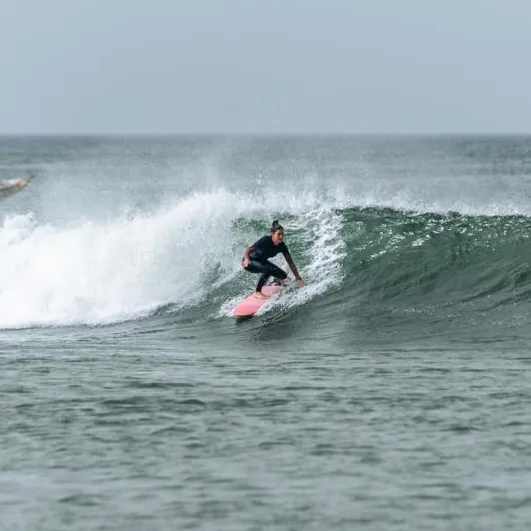
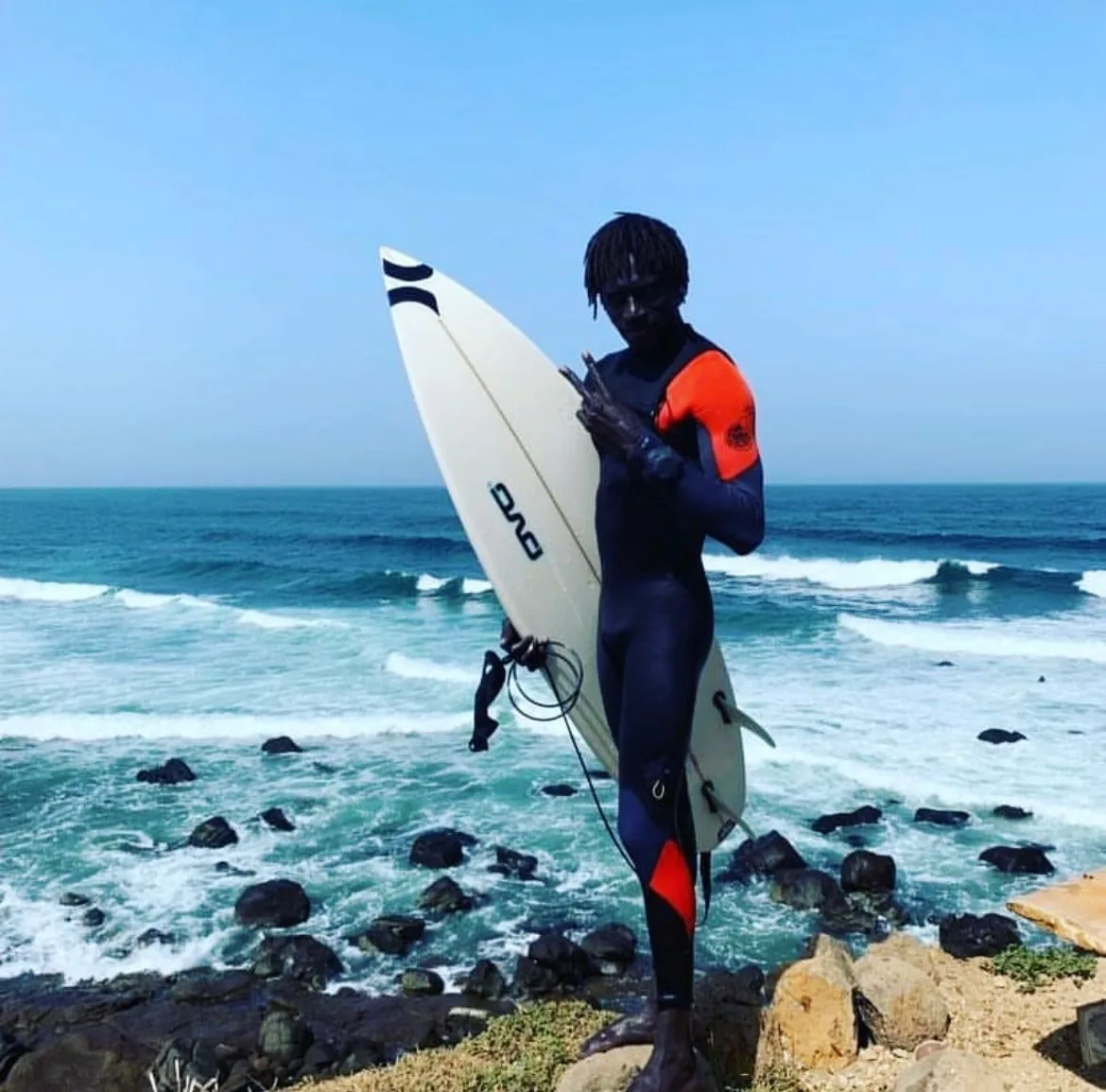
For many visiting surfers, surfing Ngor Right is the session that defines a trip to Dakar. The wave is famous for good reason: it breaks beside Ngor Island, it has deep roots in surf history, and when the conditions line up it offers a fast, hollow right over reef that demands timing, commitment and respect.
This is the kind of spot that rewards preparation. If you understand how to reach the lineup, where the take-off zone sits, how the wave changes through each section, and what sort of surfer it really suits, you give yourself a far better chance of getting the best from it. From Ngor Surfcamp Teranga on Ngor Island, the break is part of the daily rhythm of the place, and this guide is designed to help visitors approach it with clear eyes.
Why Ngor Right matters
Ngor Island is a small island off the Cap-Vert peninsula, around 400 metres from the village of Ngor near Dakar. It is closely tied to Senegal's surf identity, and its best-known wave has become one of the reference points of West African surfing. The island entered surf mythology when The Endless Summer was filmed here in 1964 and later released in 1966, helping make Ngor known far beyond Senegal.
That history still shapes expectations, but the reality in the water is more important than the legend. Ngor Right is not a novelty wave and not a casual photo stop. It is a serious reef break with a reputation for being fast, hollow and heavy, with reef beneath. That combination is exactly what makes it memorable.
Ngor Right is the wave many people come to Dakar dreaming about, but it is best surfed with patience rather than bravado.
For visitors staying on the island, the appeal is obvious. You are close to the break, close to the changing conditions, and close to local surf knowledge. That matters because surfing Ngor Right well is less about charging blindly and more about reading the lineup properly.

Ngor Island became internationally known in surf culture after The Endless Summer was filmed there in 1964 and released in 1966.
Getting there: island access and the approach to the break
One of the practical pleasures of a surf trip here is that Ngor Island is easy to reach from the mainland. The crossing from Ngor beach is a short bateau ride of about five minutes. For anyone staying at Ngor Surfcamp Teranga, that short transfer is part of the experience: the city feels close, but once you are on the island the pace changes.
The break itself sits off the island rather than directly on a sandy beach, so your surf day starts with logistics. Boards, timing and tide awareness all matter before you even hit the water. Compared with a simple beach break paddle-out, surfing Ngor Right asks you to think more carefully about entry, current, positioning and the people already in the lineup.
Visitors often imagine the approach as straightforward because the island is so near the mainland. In practice, the wave deserves the same respect you would give any established reef break. The route into the lineup can feel simple on a calm day and much more consequential when there is more swell, more wind or more crowd pressure.
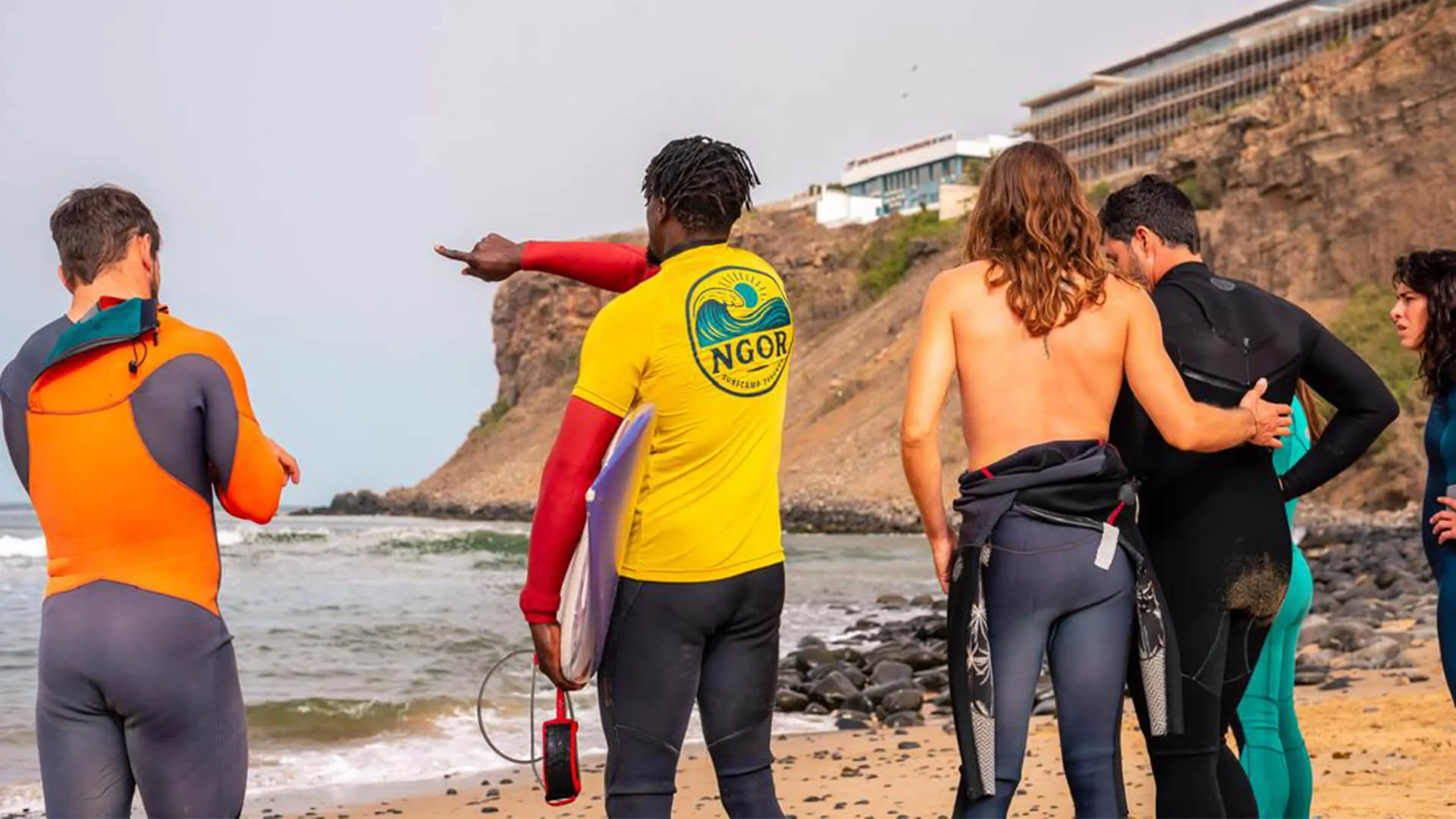
If you are new to the area, surf guiding is the sensible option. At Ngor Surfcamp Teranga, guiding and theory sessions are part of the camp setup, which is especially useful at a wave where small positioning errors can have outsized consequences.
Understanding the character of the wave
The first thing to know about surfing Ngor Right is that the wave has a clear identity. It is a right-hand reef break, and the descriptions that recur are consistent: fast, hollow and heavy. Those are not decorative adjectives. They tell you almost everything you need to know about how to approach it.
Fast means you need to be decisive from the moment you turn and commit. Hollow means the wave can stand up quickly and offer a more critical face than many visiting surfers expect. Heavy means wipeouts are not abstract possibilities; they are part of the equation, especially if you are late, too deep or unsure of your line.
The reef beneath the wave is another defining factor. This is not a forgiving sandy bottom where mistakes disappear into foam. Reef changes how surfers behave in the lineup. It sharpens take-off decisions, increases the importance of control, and usually narrows the margin for error.
There is also a visual marker often mentioned in descriptions of the break: Mami and Papi, two enormous spiky rocks along the line of the break. Even if you are not using them as technical reference points on your first session, they are part of the wave's physical identity and a reminder that this is a rugged, volcanic coastal environment rather than a manicured surf resort setting.
Paddle-out routes: how to enter the lineup sensibly
At any reef break, the paddle-out is part of the surf, not just the prelude. Surfing Ngor Right starts before your first wave, because the route you choose into the lineup affects your energy, your safety and your first impression on everyone already sitting outside.
The basic principle is simple: avoid paddling straight through the impact zone unless there is no better option. A clean channel or less exposed shoulder route is always preferable to taking repeated sets on the head. On a wave with speed and hollow sections, that principle becomes even more important.
The exact route can vary with swell direction, size and tide, which is why local guidance matters. On smaller, cleaner days, the paddle may feel manageable and relatively direct. On stronger days, the same route can become much more demanding, with more water moving across the reef and less room for hesitation.
A good first session strategy is to spend time watching before entering. Look for where surfers are making it out with the least effort. Notice where broken waves are detonating most consistently. Watch whether surfers are angling wide before turning toward the peak, or whether they are using a more direct line. Those observations tell you more than guesswork ever will.

Before paddling out, watch several full set cycles from shore or from the island edge so you can identify the safest route and the true take-off zone.
If you are surfing with a guide, ask specifically about entry and exit rather than only asking where the best waves are. Visitors often focus on the peak and forget that getting in and out cleanly is half the battle at a reef break.
The take-off zone: where the wave really begins
The take-off at Ngor Right is where the wave's reputation becomes real. Because the break is known for being fast and hollow, the take-off zone is not somewhere to drift into casually. You want to be close enough to catch the wave with intent, but not so deep that you are constantly late.
This balance is what separates a productive session from a frustrating one. Sit too wide and the wave can race away before you are properly in. Sit too deep and you may find yourself dropping into a section that is already pitching. The right position depends on the day, but the principle remains the same: read the first steepening part of the wall, not just the general area where surfers are sitting.
On a wave like this, body language in the lineup matters. Experienced surfers tend to make small, early adjustments rather than dramatic last-second scrambles. Watch who is consistently taking off cleanly. They are usually reading the wave earlier and positioning with more precision.
The take-off also rewards commitment. Half-paddling into a fast reef wave is often worse than not going at all. If you decide to go, go properly. That does not mean forcing every wave. It means choosing waves you can genuinely make and then paddling with conviction.
For many visitors, the best approach is to treat the first part of the session as reconnaissance. Catch fewer waves, but learn more from each one. A single clean take-off that teaches you the line is worth more than several rushed attempts.
Breaking the wave into sections
One of the most useful ways to think about surfing Ngor Right is to divide it into sections rather than imagining it as one uniform wall. Fast reef waves often ask different questions at different points along the ride.
The entry section
This is the moment of commitment. The wave stands up, the face reveals its speed, and you need to get to your feet quickly and set your line. The key here is economy. Too much movement wastes time. A clean pop-up and immediate direction are essential.
If the wave is showing its hollower side, the entry section can feel abrupt. Surfers who hesitate often end up behind the section or dropping too late. Surfers who over-force the take-off can lose control before the wave has even opened up.
The running wall
Once you are in, Ngor Right often becomes a race between your line and the wave's pace. This is where the break's speed is most obvious. The wall can ask for trimming, projection and a calm upper body. It is not usually a wave that invites unnecessary turns for their own sake. The better approach is often to surf with the wave's natural direction and tempo.
This is also where board choice and confidence show. A board that helps you get in early and hold speed can make the difference between linking the ride and getting caught behind.
The more critical section
On a wave described as hollow and heavy, there is usually a point where the ride asks a more direct question: are you in the right place, with enough speed, to make the section in front of you? That may mean driving high, staying compact and trusting the line rather than trying to reset the ride.
For intermediate surfers stepping up to more serious reef waves, this is often the decisive learning moment. The wave stops feeling like a postcard and starts feeling like a technical challenge.
The finish and exit
Finishing a wave well matters at Ngor Right because the ride does not end when the excitement does. You still need to exit cleanly, avoid drifting into danger, and reset for the paddle back out. On reef breaks, poor exits can be as awkward as poor take-offs.

At a wave like Ngor Right, the best sessions usually come from reading the lineup carefully, choosing the right waves, and surfing with control from the take-off to the exit.”, The Ngor coaching team
What conditions suit Ngor Right best
The broad surf season for the camp is November to April, with May to October considered flatter or off-season. Within that season, Ngor Right is at its most appealing when there is enough swell to activate the reef properly and when the wind allows the face to stay organised.
The Guardian's broad description of Dakar's surf rhythm is useful context: winter from November to March brings bigger waves, while spring and summer are more manageable. For Ngor Right, that means visitors in the prime season should expect the possibility of more powerful surf, not just more frequent surf.
Because this is a right-hand reef break known for speed and hollowness, clean conditions matter. Too much wind can quickly turn a technical wave into a disorganised one. A wave that already moves fast does not need extra surface chop to become difficult.
Swell size is only one part of the equation. The shape of the wave, the interval between sets, and the amount of water moving across the reef all affect how approachable it feels. A moderate, clean day can be more enjoyable and more productive than a larger day with more disorder.
Visitors often ask for a simple formula for when Ngor Right is best. In reality, the best answer is practical rather than absolute: it works best when there is enough swell to make the reef break properly and when the wind is not spoiling the face. That is exactly why local daily guidance is valuable.
Who should surf Ngor Right?
This is the question many travellers should ask first, not last. Ngor Surfcamp Teranga welcomes all levels, but the camp is especially suited to intermediates and advanced surfers, and that distinction matters here. Ngor Right is not the obvious first choice for a beginner.
The wave's defining traits tell the story. Fast, hollow, heavy, reef beneath: those are characteristics that favour surfers with solid paddling, reliable take-offs, good board control and some comfort in more consequential water.
That does not mean only elite surfers can enjoy it. Strong intermediates can absolutely have rewarding sessions here, especially with guidance, careful wave selection and realistic expectations. But there is a difference between being able to stand up consistently in mellow surf and being ready for a fast reef right.
If you are still building confidence, the wider Dakar area offers other options. Verified reporting has long described Yoff as a beginner break, and Virage on the mainland as an easy beach break. Those spots can be better places to build rhythm before stepping into a more demanding lineup.

- Ngor Right is best suited to confident intermediates and advanced surfers
- The wave is fast, hollow and breaks over reef, so positioning and control matter
- Visitors unsure of their level should consider guidance or easier mainland options first
How to get more from the lineup
A good session at Ngor Right is rarely about surfing the most waves. It is about surfing the right waves. That starts with lineup awareness.
First, spend time observing priority and rhythm. Established lineups work best when surfers understand where the peak is, who is in position and how sets are moving through. If you paddle straight to the inside and start scrambling for leftovers, you learn very little and create unnecessary tension.
Second, choose quality over quantity. At a fast reef wave, one clean set wave can be worth several poor ones. Wait for waves that fit your positioning and your confidence level. If you are forcing marginal take-offs, you are probably not learning the wave properly.
Third, keep your movements efficient. Extra strokes, late angle changes and dramatic corrections all cost time. Ngor Right tends to reward surfers who look composed.
Fourth, use the first session to map the break. Where do the sets first show? Which waves run cleanest? Where do surfers kick out? Where does the paddle back out become easiest? These are the details that turn a famous wave into a readable one.
Finally, consider coaching or video analysis if you want to progress quickly. At Ngor Surfcamp Teranga, both are available as extras, and they make particular sense at a technical wave where small errors in positioning or timing can be hard to diagnose from memory alone.
The best way to surf a famous wave is to stop thinking about its fame and start paying attention to its details.
Equipment, comfort and practical planning
Board choice is personal, but the principle for surfing Ngor Right is straightforward: bring equipment that helps you paddle efficiently, enter early enough and hold a line on a fast face. This is usually not the place to make life harder for yourself with an overly demanding setup.
If you are travelling light, board rental is available at the camp for €15 per day, and wetsuit rental for €5 per day. Water temperatures across the year range from 18 to 26°C, so what you wear depends on season and personal tolerance.
The camp itself includes rooms in private, shared or dorm formats, breakfast and dinner, surf guiding, theory sessions and a pool. That setup is useful for a spot-focused trip because it keeps the practical side simple: you can concentrate on conditions, recovery and timing rather than spending energy on logistics.
The short bateau access from the mainland also shapes the rhythm of a stay. You are close to Dakar, but the island setting creates a more contained surf routine. For many visitors, that is part of the appeal of staying on the island rather than commuting in and out each day.
Surf etiquette and local awareness
Any guide to surfing Ngor Right would be incomplete without etiquette. A wave with history, visibility and limited take-off space depends on mutual respect.
Do not paddle around people to gain inside position. Do not assume that being on holiday gives you a free pass in the lineup. Do not turn a technical wave into a chaotic one by chasing every set. If you are unsure where to sit, ask or watch longer.
There is also a broader cultural context. Ngor is not just a surf backdrop; it is an island with a long history and Lébou fishing heritage. Approaching the place with curiosity and respect improves the trip in ways that go beyond surfing.
Visitors often get more from Dakar's surf scene when they understand that Ngor Right is one part of a wider coastline that includes Almadies, Yoff, Ouakam and Virage. Even if Ngor Right is your focus, it helps to see it as part of a living local surf landscape rather than an isolated attraction.
Ngor Island lies about 400 metres off the village of Ngor near Dakar, and the mainland crossing by bateau takes about five minutes.
Common mistakes visitors make
The most common mistake is overestimating suitability. Because Ngor Right is famous, some surfers convince themselves they should surf it before they are ready. A better approach is honesty. If the wave looks beyond you, there is no shame in watching, learning and choosing another spot that day.
The second mistake is underestimating the paddle and positioning. Visitors sometimes treat the lineup like a beach break and assume they can adjust late. At a fast reef wave, late adjustments are often exactly what gets punished.
The third mistake is surfing too reactively. If every take-off feels rushed, you are probably sitting in the wrong place or choosing the wrong waves. Slow the session down mentally. Observe more. Commit more selectively.
The fourth mistake is ignoring fatigue. Reef waves demand concentration. Once your paddling drops and your decisions become slower, the quality of your session usually falls quickly.

- Watch the lineup before entering and identify the cleanest paddle-out route
- Start with conservative wave selection until you understand the take-off and sections
- Use guiding or coaching if you want faster progress and safer decision-making
Staying at Ngor Surfcamp Teranga for a spot-focused trip
For surfers planning a trip built around surfing Ngor Right, the practical advantages of Ngor Surfcamp Teranga are clear. The camp is on Ngor Island, reached by a short bateau crossing from the mainland, and it is set up around surf travel rather than generic accommodation.
Included in the stay are breakfast and dinner, surf guiding, theory sessions and access to the pool, with room options ranging from private to shared and dorm. Extras include airport transfer, surf coaching, video analysis, board rental, wetsuit rental and lunch. The camp is also licensed by the Fédération Sénégalaise de Surf.
That combination matters because a wave like Ngor Right is best approached with structure. You want to know when to surf, when to rest, when to review what happened in the water and when to switch to another spot if conditions call for it. A camp that understands the local surf rhythm helps make those decisions easier.
If you want a fuller sense of the setting before you travel, browse the gallery, read more on the blog, or check practical trip details in the faq.
Final thoughts on surfing Ngor Right
Surfing Ngor Right is not just about ticking off a famous wave. At its best, it is about learning how a serious reef break works: how to approach it, how to read it, and how to surf it with enough humility to enjoy it properly. The wave's reputation is deserved, but the best sessions usually come from simple things done well, careful observation, smart positioning, committed take-offs and respect for the lineup.
For visitors to Dakar, that is what makes Ngor Right memorable. It sits at the meeting point of surf history, island life and technical wave-riding. Come prepared, choose your moments, and let the wave reveal itself one section at a time.
If you are planning a stay focused on surfing Ngor Right, explore booking options at Ngor Surfcamp Teranga and set up a trip that puts you close to the island, the lineup and the local guidance that makes all the difference.