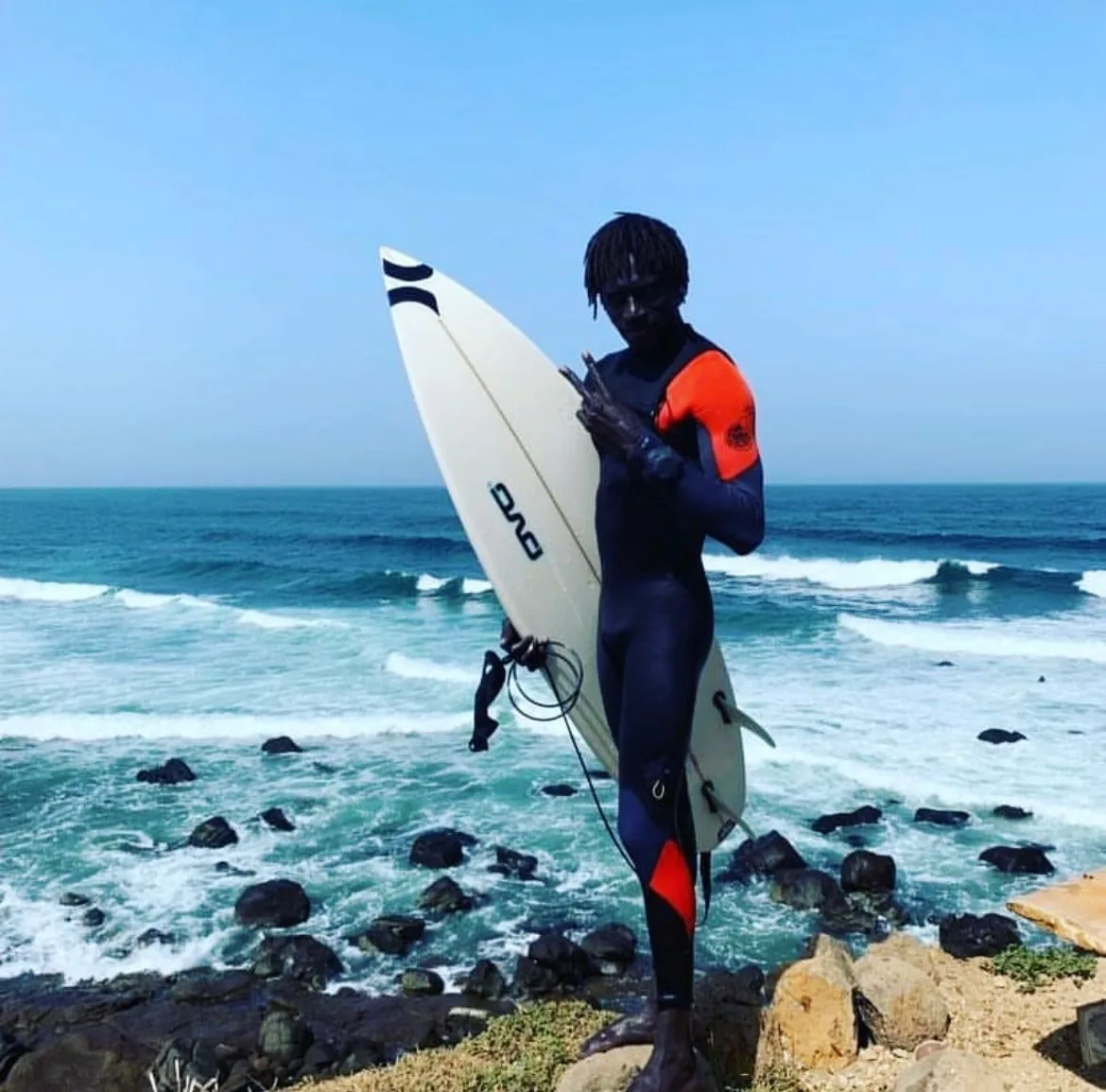
There comes a moment that every traveler inevitably waits for.
The one where the still-damp wetsuit dries on a railing, where the sun slowly sinks toward the Atlantic, and where the scent of charcoal begins to fill the streets.
In Senegal, the day doesn't end when the waves disappear with the tide.
It continues around a table.
Surfing teaches you how to read the ocean.
The kitchen teaches you to understand it.
Everything starts at the market
At dawn, Dakar's markets come alive long before the restaurants do.
Mountains of tomatoes sit alongside baskets of okra, bundles of fresh mint, vibrant chili peppers, and mangoes still glistening with dew. Further on, fish arrive straight from the pirogues: thiof, capitaine, dorade, sole, barracuda, or sardinella change hands in a precise, almost silent ballet.
The cooks don't talk about recipes.
They speak of freshness.
They gaze at the eyes of a fish, the color of a lemon, the scent of a parsley bouquet.
The meal begins here, long before the first pot is on the stove.
Cooking as a language
In Senegal, people rarely eat alone.
The dishes arrive at the center of the table. Everyone gathers around a large bowl, shares the same meal, and takes time to chat before even taking the first bite.
It's not just about eating.
It's about sharing.
Rice becomes a conversation starter.
The sauce brings generations together.
The meal slows down time.
In a world where everything is speeding up, this way of eating feels almost like an act of resistance.
Thieboudienne, a Story of the Ocean
If Senegal had to be told through a single dish, it would undoubtedly be Thieboudienne.
Freshly caught fish, stuffed with herbs and spices, rests on a bed of rice soaked in a broth blending tomatoes, vegetables, and the scent of the open sea.
Each family has its own version.
Every neighborhood defends its own.
No leader claims to hold the truth.
Because Thiéboudienne is not just a recipe.
It's a passing of knowledge.
We prepare it like telling a story, with gestures passed down from mothers, grandmothers, and those who have always known how to turn the simplest ingredients into a feast.
Fire, Salt, and Wind
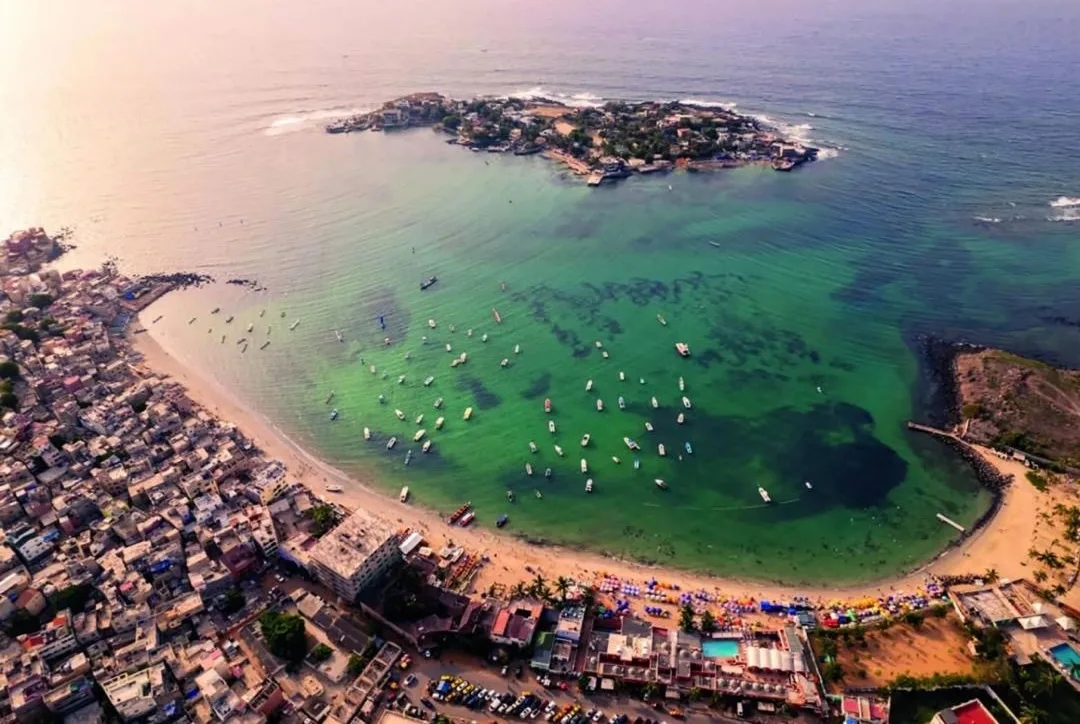
On the beaches of Ngor, Yoff, or Mbour, the fish often travels just a few meters from the sea to the grill.
A slick of oil.
A few spices.
A bit of lemon.
Charcoal does the rest.
The smoke mingles with the sea air, conversations rise above the sound of the waves, and children play around the pirogues pulled up on the sand.
Luxury is never complicated.
Sometimes it's all in a grilled fish eaten with your fingers, watching a sunset.
The Flavors of Travel
Senegalese cuisine bears the marks of the trade routes that crisscrossed West Africa.
Sahelian influences meet spices from afar. Rice converses with millet, tamarind with ginger, hibiscus with fresh mint.
Each dish tells a story of geography.
Each spice evokes a journey.
Yet, nothing seems set in stone.
The recipes evolve, adapt, and continue to thrive without ever losing their identity.
After the session
There's a ritual that everyone who spends a few days surfing in Senegal comes to know.
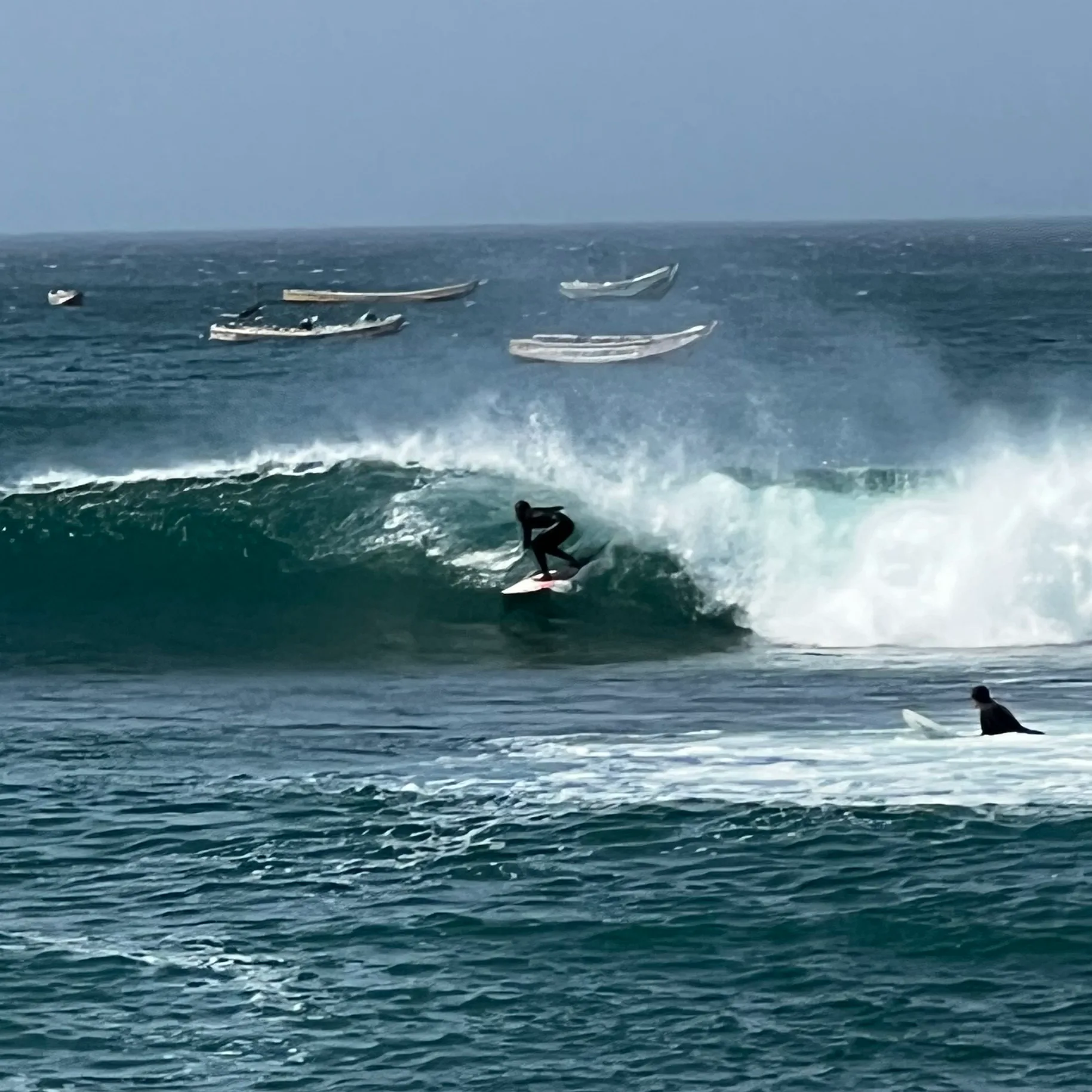
We come out of the water tired, skin still salty, shoulders heavy after several hours spent paddling.
Then someone brings a glass of chilled hibiscus juice.
Or a bouye, this creamy drink made from the fruit of the baobab tree.
The body slowly regains its energy.
The conversations are coming back.
We talk about the last wave, the next swell, a fisherman we met in the morning, or a kid who was already taking the best lines.
At its core, the meal simply extends the session.
Teranga on a Plate
The word Teranga is often translated as "hospitality."
But this definition remains incomplete.
Teranga is that way of insisting on serving you another spoonful of rice.
It's sharing the best piece of fish with a guest.
It’s believing that a table always expands to welcome one more person.
You rarely grasp this value in museums.
You understand it by eating.
More than just a kitchen
Senegal doesn't aim to impress with fancy plates.
Its strength lies elsewhere.
In the quality of the products.
In the patience of cooking.
In recipes passed down unwritten.
In the markets that come alive before sunrise.
In the pirogues that return each morning.
And above all in this obvious truth: a good meal has never been just about the food.
It tells the story of a landscape.
It tells the story of a family.
It tells of a sea.
Last bite
As night falls over Dakar, the embers still glow in front of the seaside food stalls. Surfers fold up their fins, fishermen untangle their nets for the next day's outing, and the scent of grilled fish drifts through the salty air.
You quickly realize that Senegalese cuisine is much more than just a series of iconic dishes.
It is the natural extension of the ocean.
Every wave eventually reaches the shore.
Every fish finds its place on the table.
And every meal reminds us that in Senegal, the most beautiful way to celebrate the sea might not be to just gaze at it.
It's about sharing it.
This text follows the rhythm and sensibility of The Surfer's Journal: it favors atmospheres, daily rituals, and encounters, letting the cuisine tell the story of the land through its deep connection with the Atlantic and Teranga.